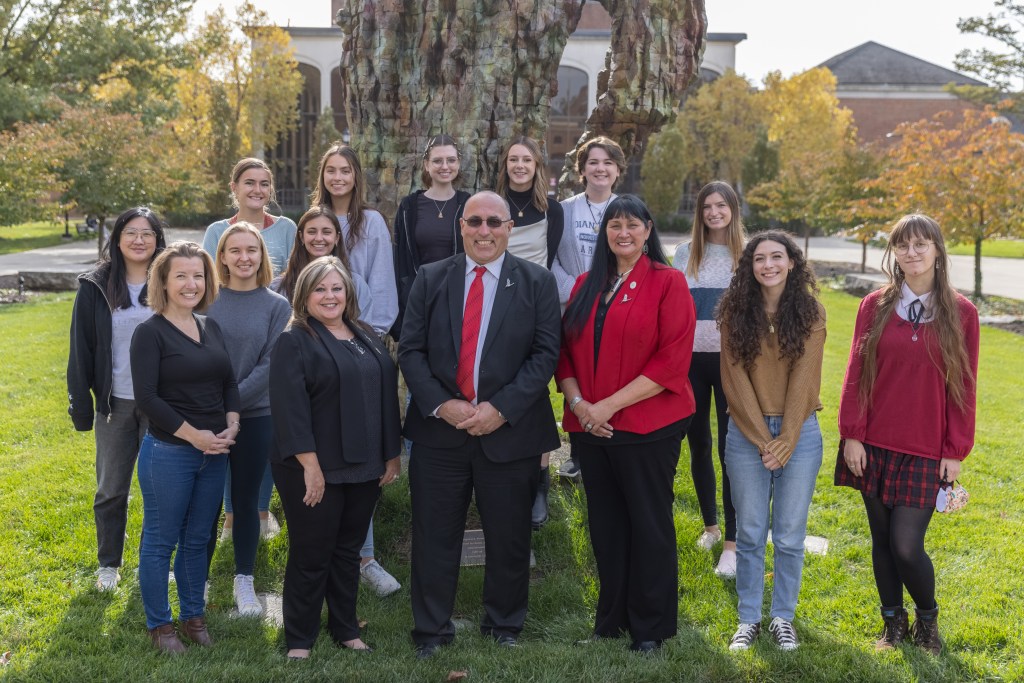
Teaching about other cultures can be a unique challenge for instructors in the classroom. Recognizing this gap in her curriculum, Stephanie Danker, a professor of Art Education at Miami University, hoped to fill some gaps in her class preparing preservice art educators to gain K-12 teaching licensures in Ohio.
In 2017, she reached out to the Myaamia Center about collaboration opportunities. Working together with the Myaamia Center education office, goals for Stephanie’s class were established which included students gaining experience building relationships with Myaamia people and the collaborative process of planning lessons about Myaamia culture.
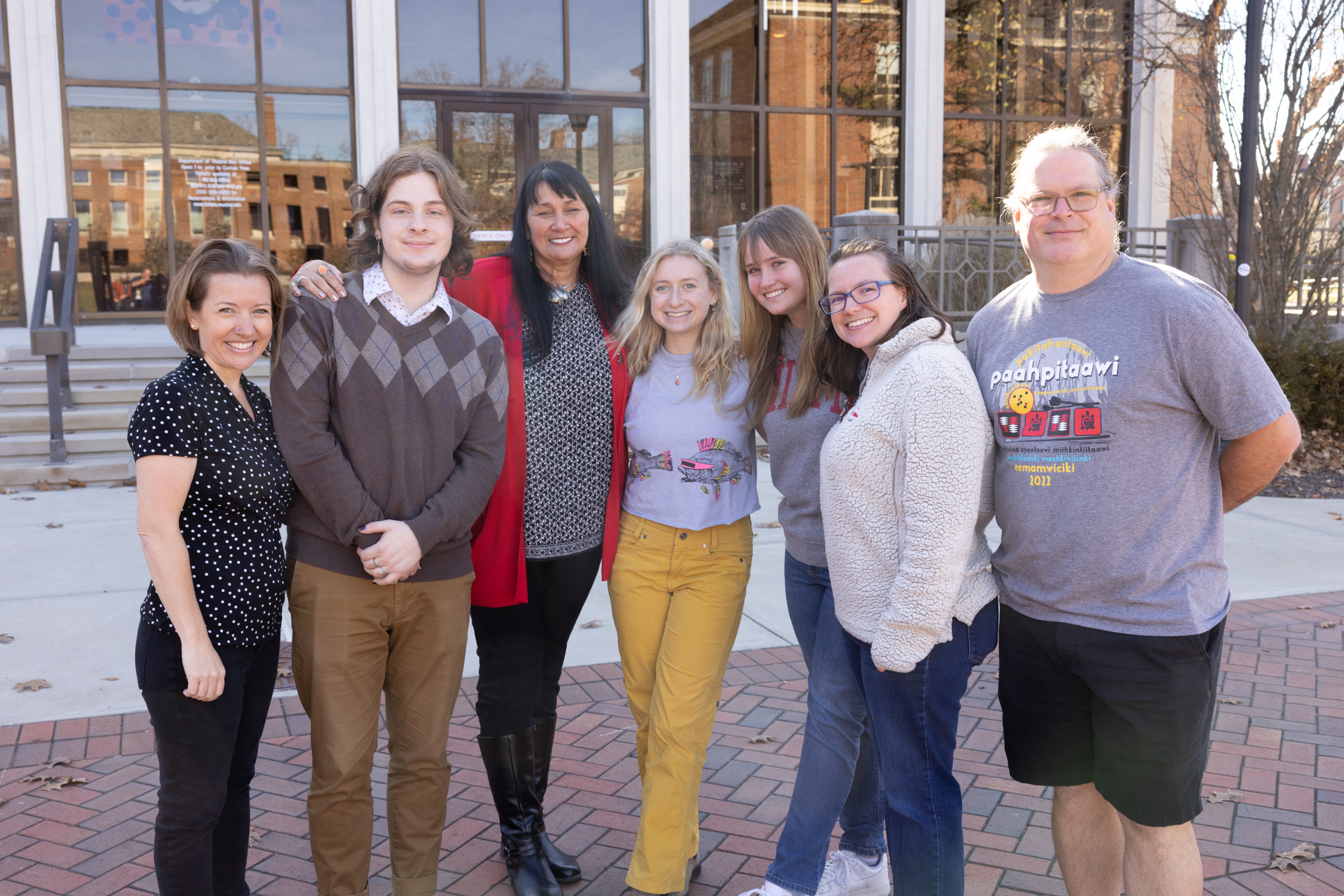
Today, Myaamia Center staff work with Stephanie’s class each year to prepare the preservice educators to deliver lessons about the Miami Tribe to local elementary students. There are only seven educational standards for K-12 students about Indigenous people in the state of Ohio. These standards only cover pre-1900 content, meaning most children are learning about Indigenous communities as history lessons, the implication being that these distinct cultural and political Indigenous communities don’t exist in the 21st century.
The collaboration between the class and the Myaamia Center not only allows preservice educators to gain priceless experiences developing and teaching material but also allows the local elementary students to learn more about the people with whom they share the land.

As the collaboration continues to grow and develop, I asked some Miami University graduates how this experience impacted their education and career development.
For Molly Ensor, a 2023 graduate, this experience was invaluable. In Stephanie’s class, she worked with the Myaamia Center to create, develop, and revise a lesson about Myaamia ribbonwork, and to teach students about cultural appreciation.
She says this experience taught her that working as an art educator also means teaching history, culture, and current events in her classroom. The experience left her feeling a responsibility to introduce interesting, thought-provoking topics in her classroom, even if they may seem daunting or challenging.

She also learned how collaboration and relationship-building can make those challenging lessons easier. She felt encouraged to stay open-minded, ask questions, and have open conversations during the class and appreciates the Myaamia Center for their patience and understanding as the class learned.
Participation in Stephanie’s class led Mitchell Meikle, a 2022 graduate, to reach out to the Myaamia Center when he was tasked with organizing an outdoor, educational experience as a program manager at Pyramid Hill Sculpture Park in Hamilton, Ohio.
Due to Pyramid Hill’s audience primarily being those interested in local culture and history, and Mitchell’s previous experience working with the Myaamia Center, he wanted to include information about the Myaamia people in his programming at the park.
Since it was a summertime activity, with one of the primary goals being connecting participants with nature, Mitchell worked with Myaamia Center staff to develop an activity about the Green Corn Moon and the ecological changes it signals. Participants created a craft focused on Myaamia vocabulary and agricultural practices taking place during that time of year. Andrew Sawyer, Myaamia Center outreach specialist, also attended the event to help answer questions from participants and their guardians about Myaamia culture.
Mitchell would like to say mihši neewe ‘a big thank you’ to the Myaamia Center staff, especially Kristina Fox and Andrew Sawyer, for their help in developing and participating in this program. He is grateful for this experience and hopes to work with the Myaamia Center in the future as he transitions to teaching at a local high school.

 Aacimotaatiiyankwi
Leave a comment