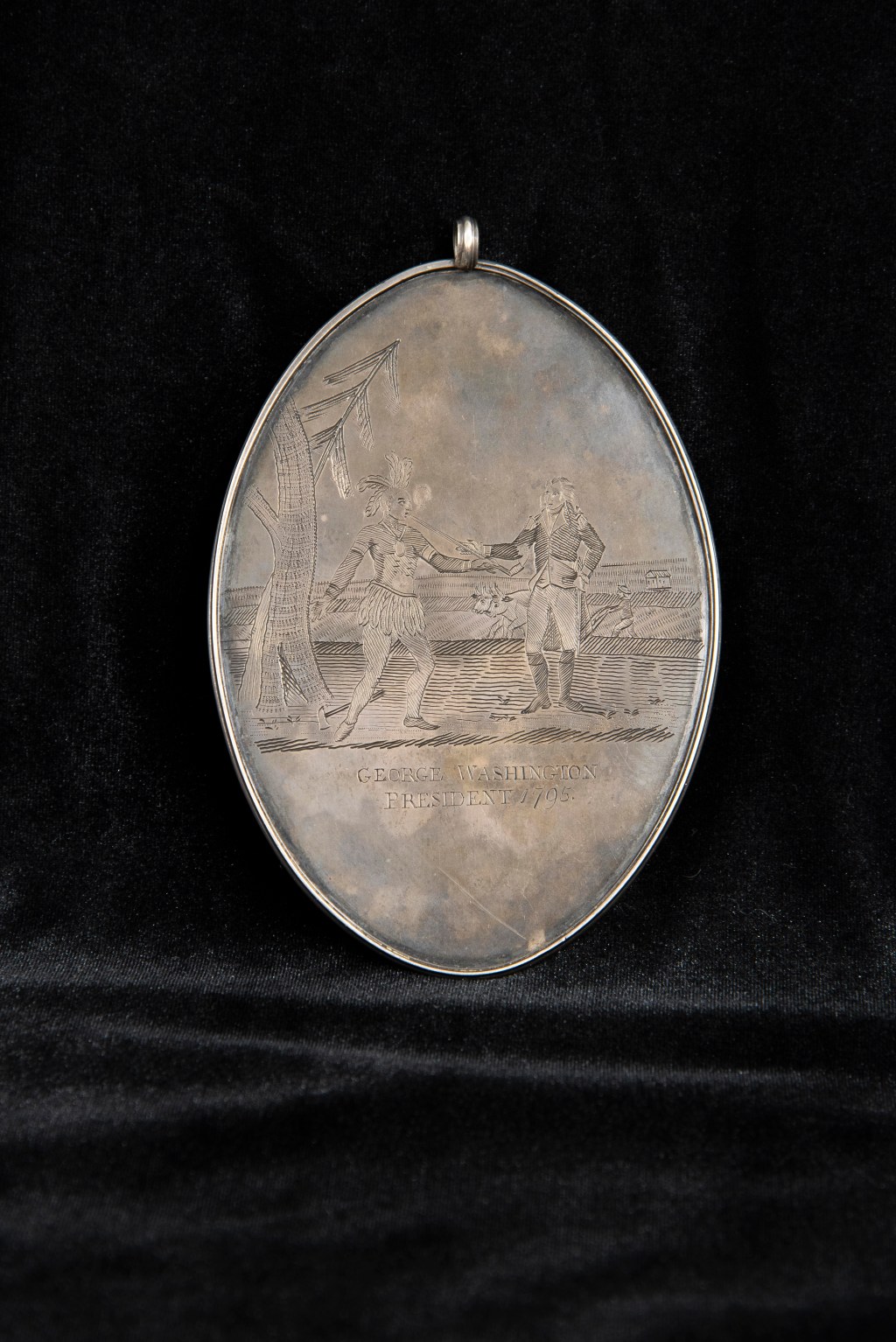
After signing the Treaty of Greenville, on August 7, 1795, Gen. Anthony Wayne addressed the assembled leaders:
“The medals which I shall have the honor to deliver to you, you will consider as presented by the hands of your father, the Fifteen Fires of America. These you will hand down to your children’s children, in commemoration of this day–a day in which the United States of America gives peace to you and all your Nations, and receives you and them under the protecting wings of her eagle.” 1
And with this, Mihšihkinaahkwa (Little Turtle) received a large silver oval meant to symbolize his nation’s new relationship with the United States.

Peace medals, like those hand-engraved by American silversmiths for the Treaty of Greenville, became one part of the diplomatic outfit of North America in the eighteenth and nineteenth centuries. 2 They indicated an alliance between the community leader who displayed the medal (such as a Myaamia akima) and the community leader displayed on the medal itself (such as a European monarch or an American president). Like a Euro-American version of wampum, the 1795 George Washington medal bestowed to Mihšihkinaahkwa was a physical reminder of the relationship between the two nations.3


In the 1820s, a Myaamia informant told C. C. Trowbridge that a chief’s helper–the role called kaapia–was supposed to keep “all the [wampum] belts, pipes, medals and other insignia of authority” for presentation at important diplomatic events. 4 We do not know the circumstances that led this peace medal to leave Myaamia hands in the 1820s.
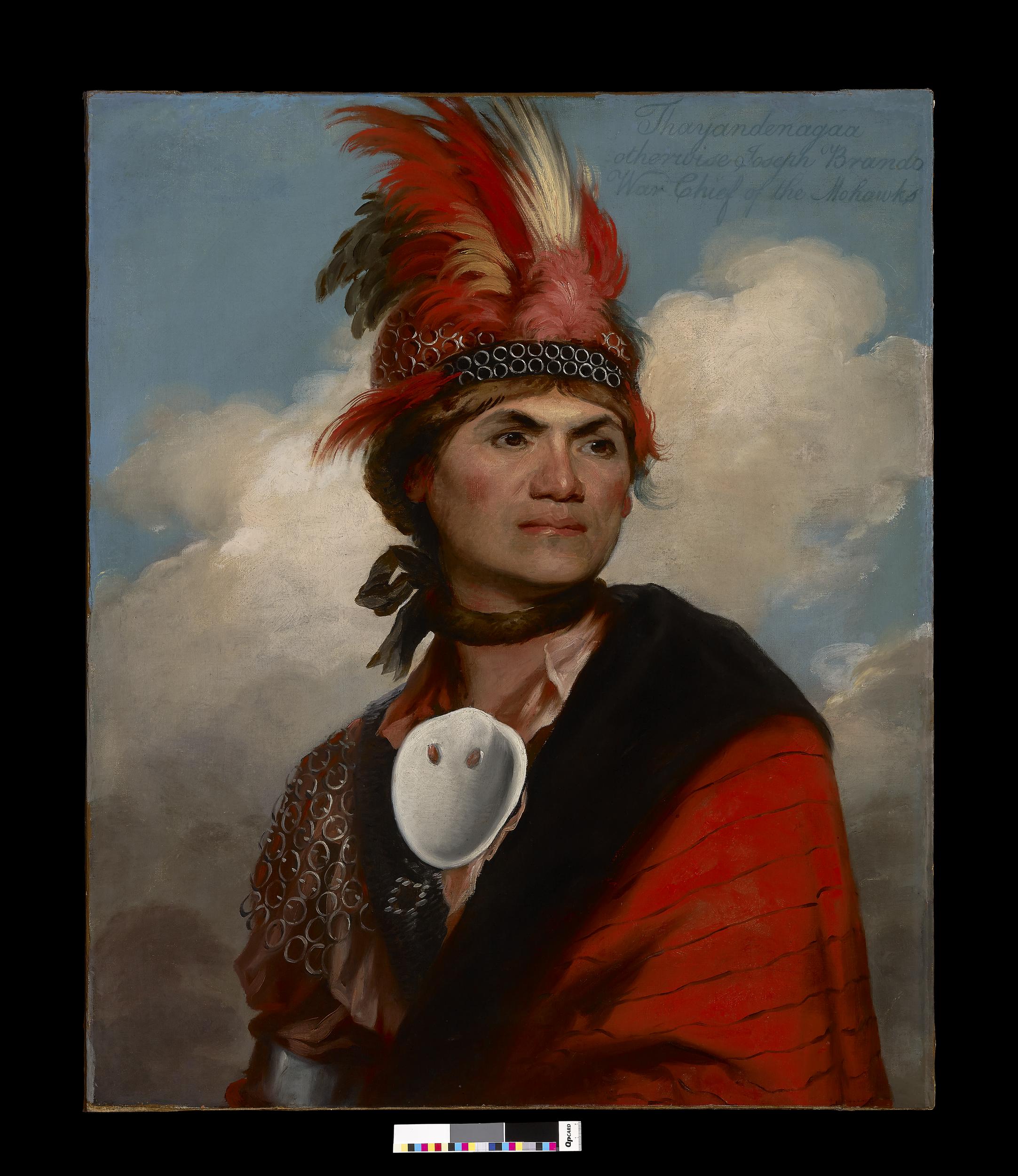
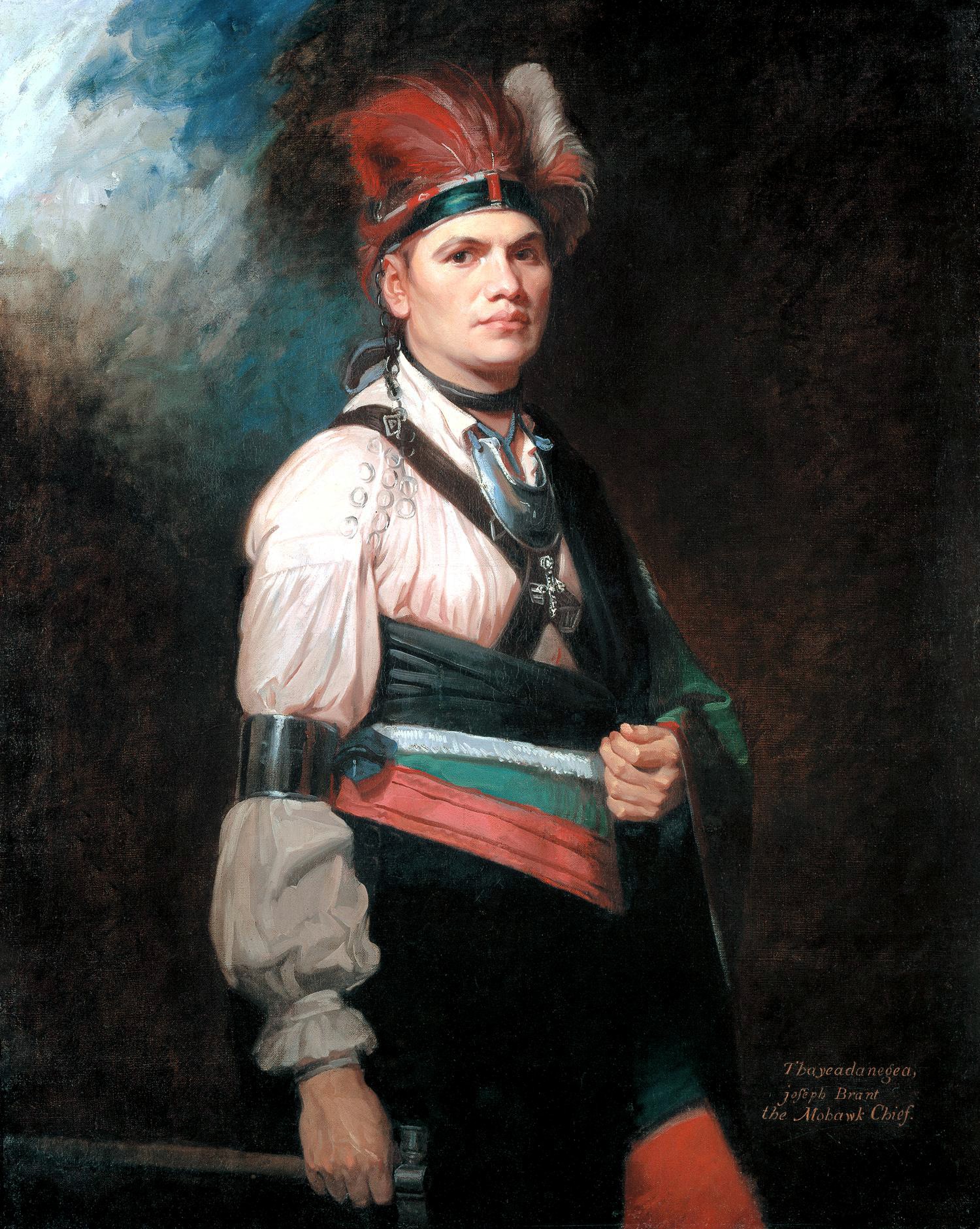
Like ribbonwork, silverwork, beadwork, and shellwork, the wearing or presentation of a peace medal suggested a leader’s credentials. Turbans and pipes also demonstrate (or have conveyed) community leadership in Myaamia culture. Peace medals fit the “bling culture” of Myaamia fashion, which has emphasized sunlight reflection and the idea that Myaamia scholars dub waawaahsinaakwahki ‘shimmering’ effected through ribbonwork patterning. Let’s look at Mohawk leader Joseph Brant to see how shells, gorgets, and medals could serve similar functions. While Brant was not Miami, I think his personal presentation helps us to imagine peace medals in Myaamia bling culture. Like today, bling draws the eye and represents power. (Unlike today, the bling of the 1700s did not necessarily intend to demonstrate financial wealth.)
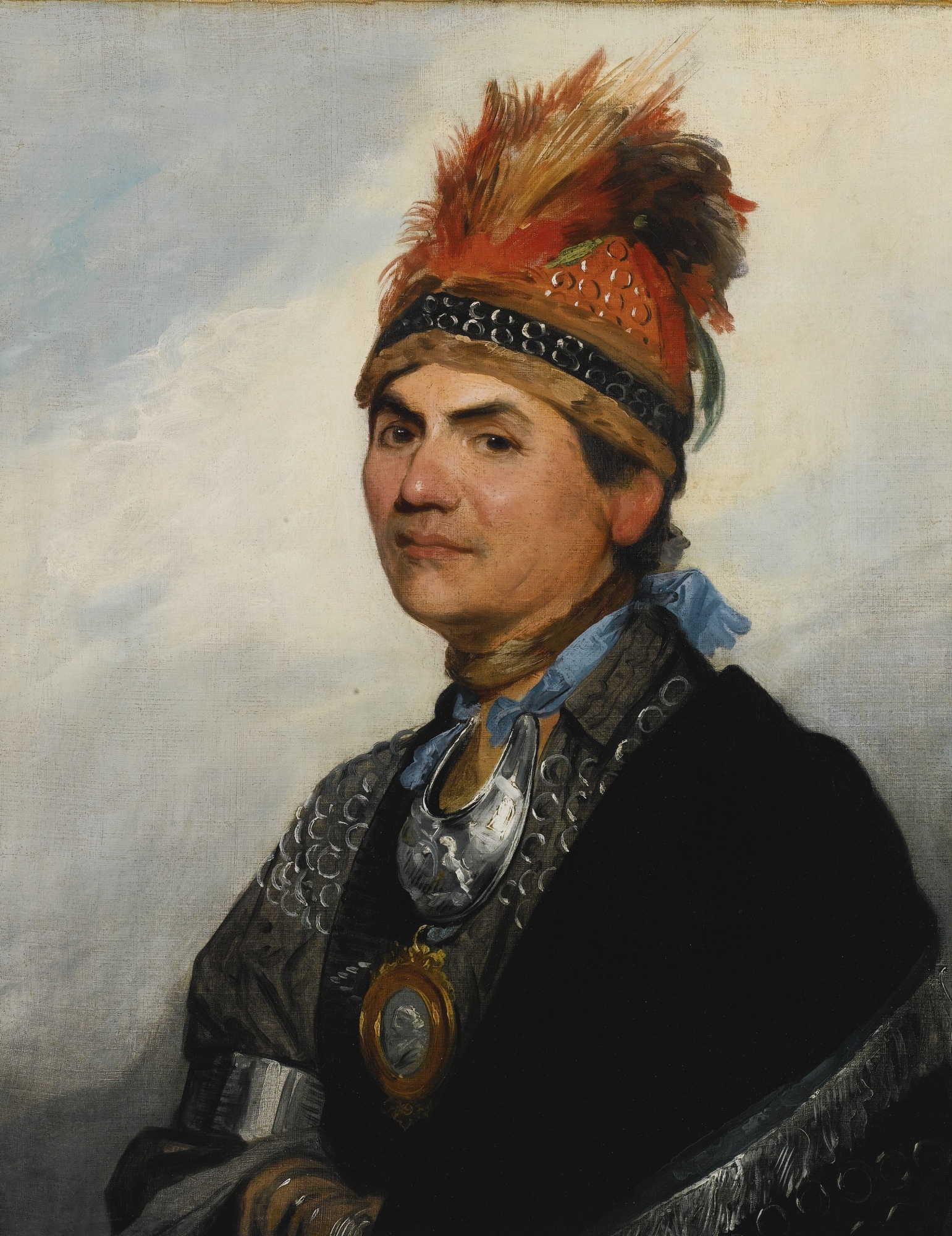
This painting of a Piankeshaw man likewise displays his community’s peace medal. It fits well with his other circular silver, marking him as somebody important–although his name was not recorded by the artist.

Photo courtesy of Bonhams.com
There are additional images of people wearing peace medals. The closest in time and place is probably Red Jacket who, after negotiating the Treaty of Canandaigua in 1794, frequently displayed a George Washington peace medal as personal adornment.

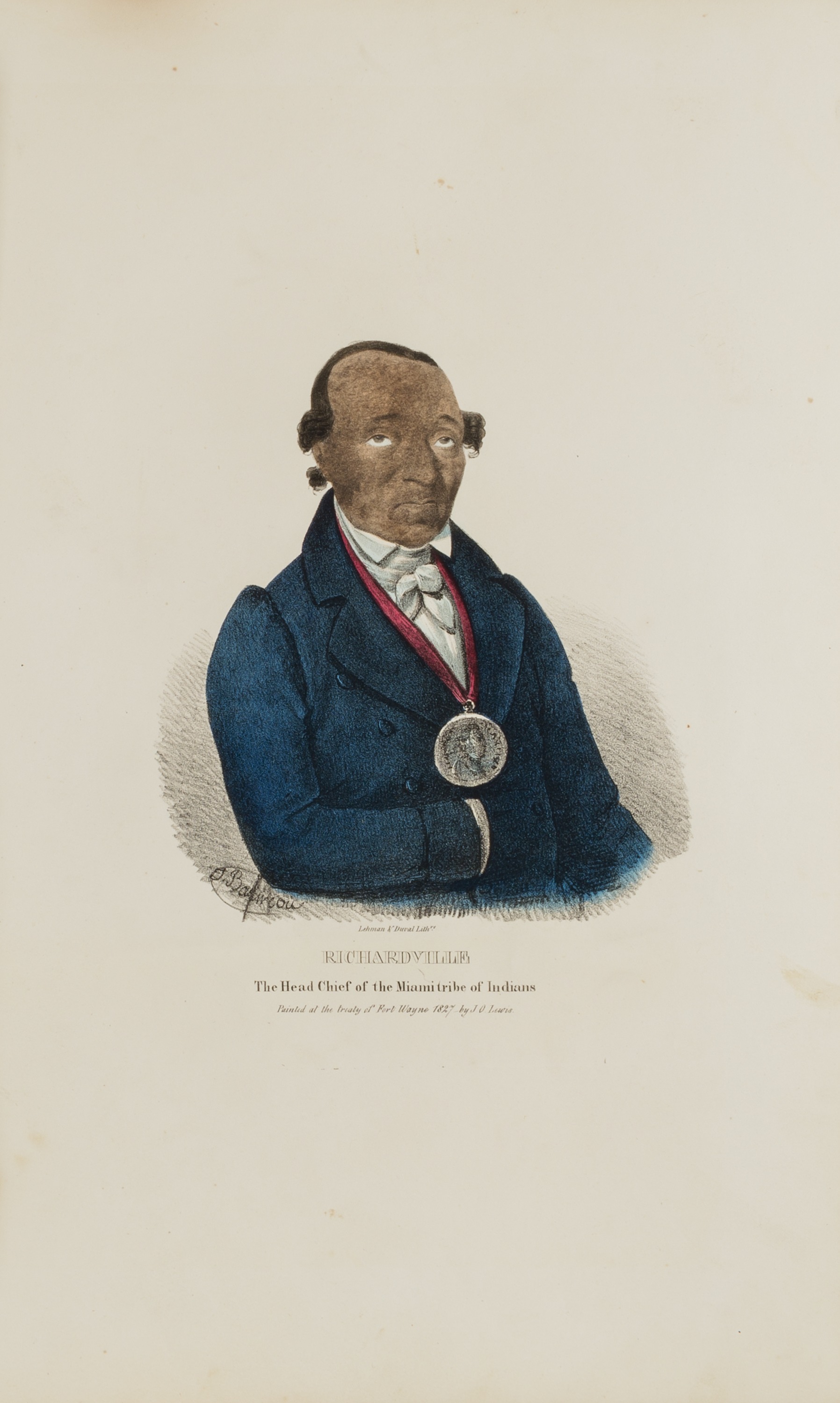
Miami men sometimes wore peace medals, although we lack details of which medals and under what circumstances. For example, J. O. Lewis painted many delegates during treaty negotiations in the 1820s, including several Myaamiaki. Here, Pinšiwa ‘John B. Richardville,’ Teekwakia ‘Jean B. Brouillette,’ and an unnamed man display silver on their body.


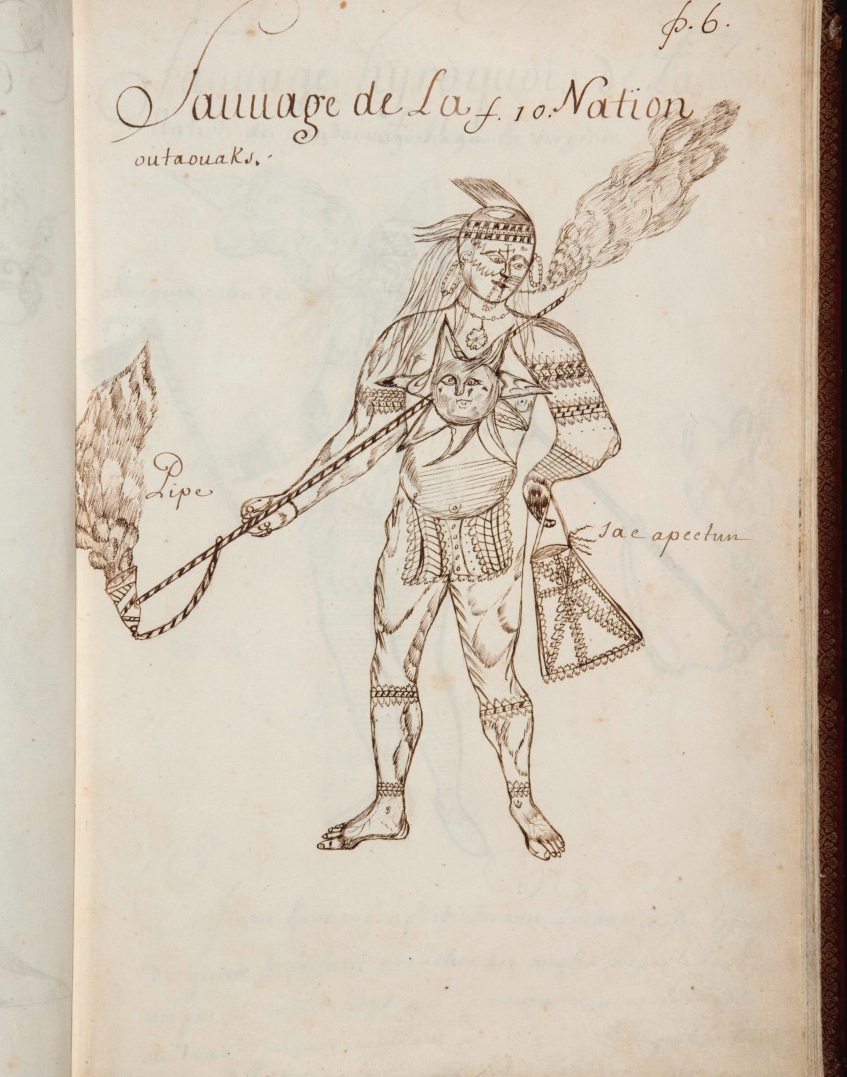
There are, of course, alternative ways to draw the eye. The Codex Canadensis of Louis Nicolas (created about 1700) sketched many individuals with sun and/or moon imagery marked upon the chest. See, for example, an Ottawa man with a large sun tattoo as well as what may be a shell or wampum pendant necklace.
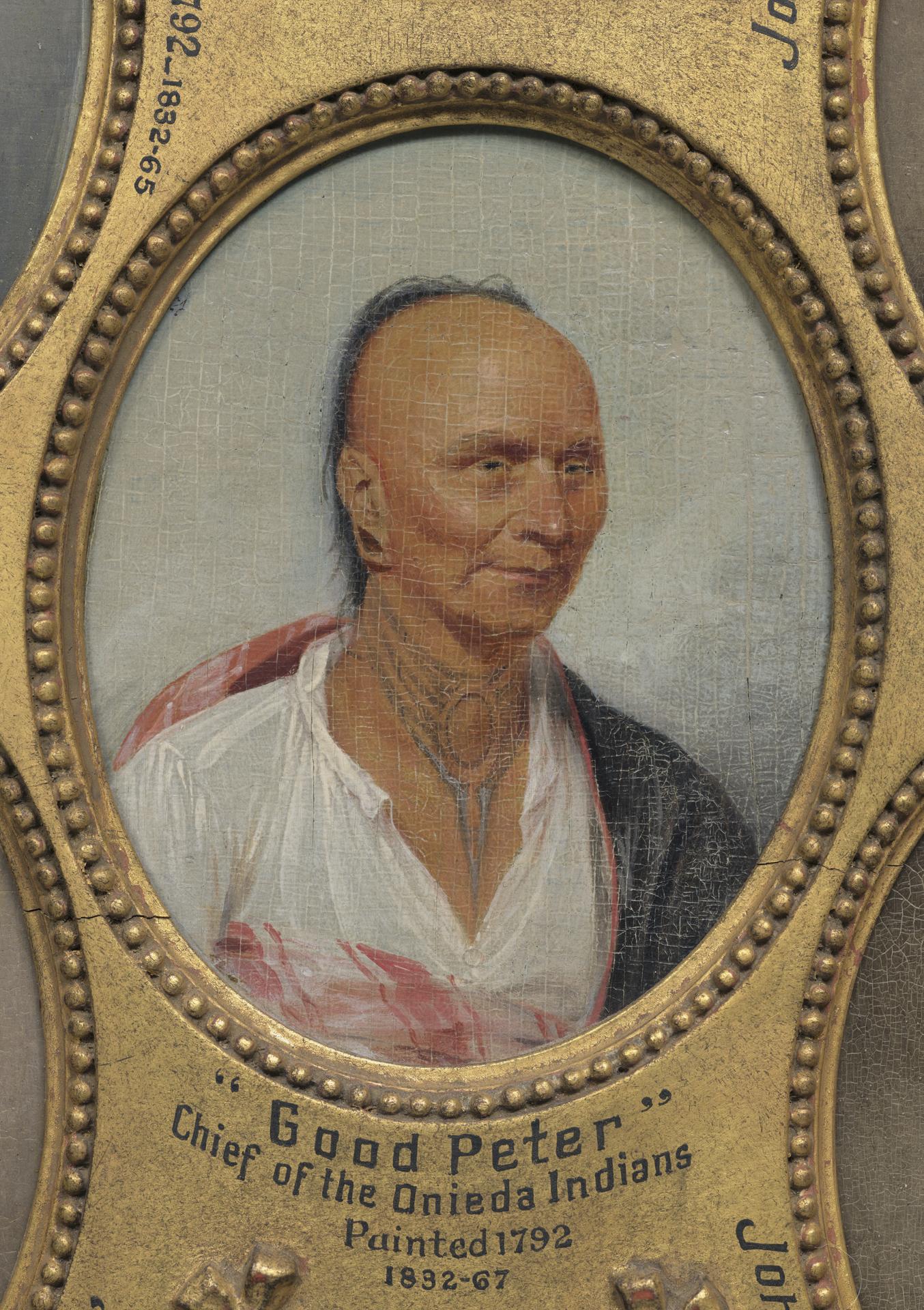
Lastly, this miniature painting of the Oneida leader known as Good Peter in 1792 reflects the aesthetic similarity between wearing silver and tattoo chest ornamentation.
The 1795 peace medal recently re-acquired by the Miami Nation is not the only material remaining from this treaty. As George Ironstrack wrote about on this blog, the family of Šimaakenehsia retained a flag from the negotiations. The Greenville calumet was also a crucial marker of the negotiations. For the Americans, the most important artifact was the written document itself, now held by the U.S. National Archives.
Updated: 10/3/25
- Treaty of Greenville minutes, American State Papers; Indian Affairs 1: 580. ↩︎
- Francis Paul Prucha, “Early Indian Peace Medals,” Wisconsin Magazine of History (1962): 281. The medal itself, in this period, may have been engraved by a French artisan; see Volker Depkat, “Peace Medal Diplomacy in Indian White Relations in Nineteenth-Century North America,” in Material Culture in Modern Diplomacy from the 15th to the 20th Century, ed. by Harriet Rudolph (Boston: De Gruyter, 2016), 90.
↩︎ - Steven Infanti and Andrew Stednitz, The noble Peace Prizes: A Study of the George Washington Administration and Treaty of Greenville Indian Peace Medals (1990).
↩︎ - C. C. Trowbridge, Meearmeear Traditions (Ann Arbor: University of Michigan Press, 1938). ↩︎
 Aacimotaatiiyankwi
Leave a comment