As many of us navigate our multifaceted identities, it is really common to ask this question – “What makes something Myaamia?” It is important to note here that when I say “thing” throughout this post, I am talking both about material goods and also about thoughts, ideas, beliefs, and more. This is an important question as differentiating helps us perceive and understand the boundaries both between and across the various components of our lives that make us who we are.
However, I don’t think there is necessarily a “right” answer to this question. As with any philosophical pondering, it is normal to have variation and diversity of thought within the community. I wanted to share my personal, current perspective on this after reflecting on it for some time throughout the creation of the nahi meehtohseeniwinki model. We needed to attempt to answer this question when considering the concept of “health” through solely a Myaamia lens. So my response comes from many discussions with Myaamia Center staff, tribal leadership, and tribal citizens.
It is challenging to define something as being Myaamia or as possessing Myaamia qualities. Many of us start this journey by assuming “anything I have/make is Myaamia because I am Myaamia.” I want to pose a few scenarios and ask you, “Are these things Myaamia?”
- A table that a Myaamia citizen buys from Ikea
- A song written by a Myaamia citizen
- A poster created by a non-citizen tribal spouse and hung in the home
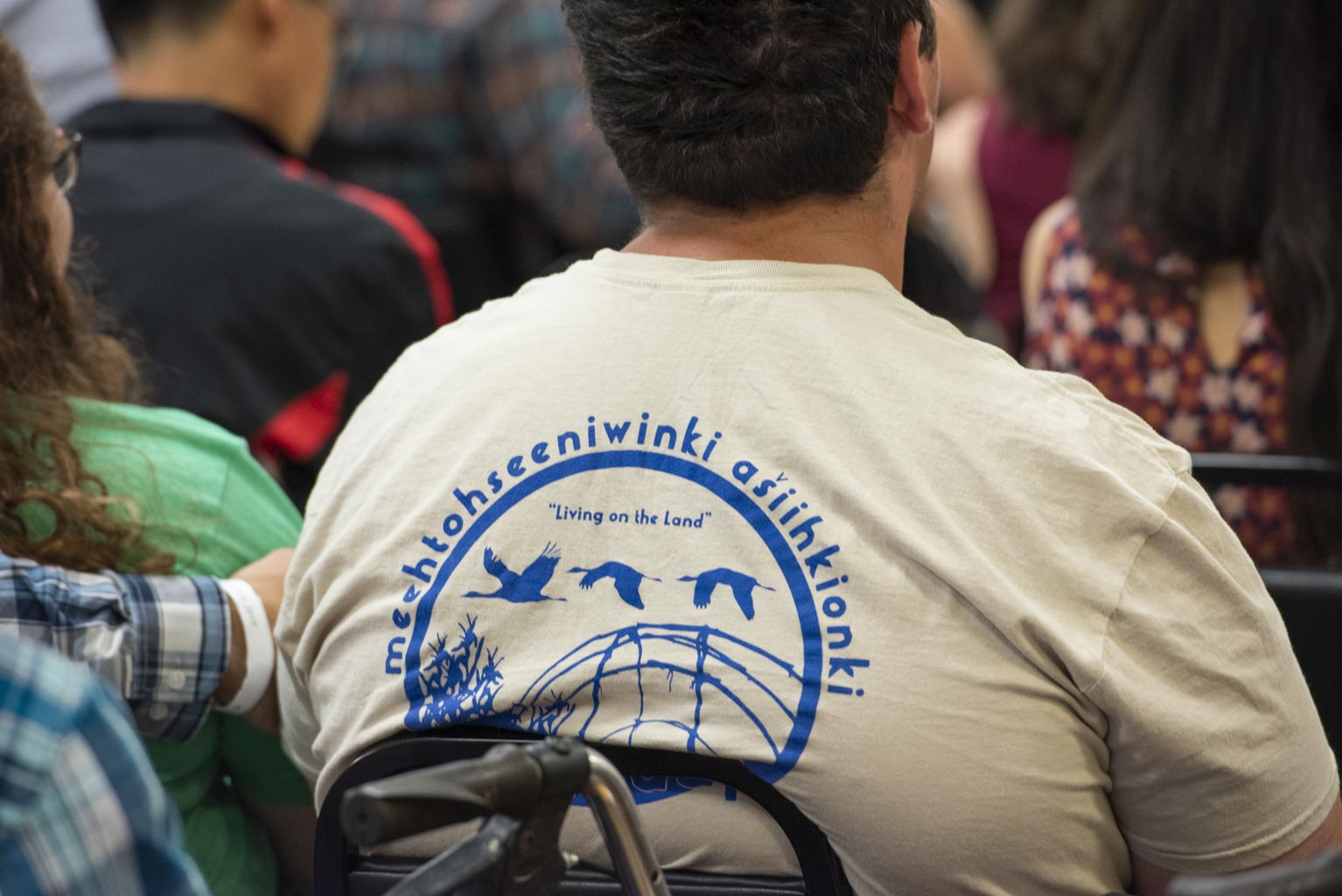
- A t-shirt designed by a non-citizen Miami Tribe of Oklahoma employee for a community event
- A Polish garment owned and worn, passed down for generations within a Myaamia family
- A necklace made by an Anishinaabe artist and purchased by a Myaamia citizen
I imagine some of these were easy to answer, others were “well, it depends,” and others you might be torn on. This is inherently a question dealing with ownership, relationality, kinship, aesthetics, sovereignty, individual and collective identity, intellectual property, and more. It is complicated, and I imagine makes many of us feel sort of uncomfortable – that’s okay and to be expected.
Individual and Community Acceptance
One of the first things to consider is individual and community acceptance of Myaamia features. Let’s take the table example from above. A person might buy a table from Ikea and claim, “This is my table, and I’m Myaamia, so it is a Myaamia table.” This may or may not be true. But what happens when that table is used to share family and community meals? When it is passed down from one Myaamia generation to each subsequent? When they paint ribbonwork designs on it? When a little Myaamia kid writes their Myaamia name on the underside of it? At what point in this process does it become Myaamia? Again, no right or wrong answer.
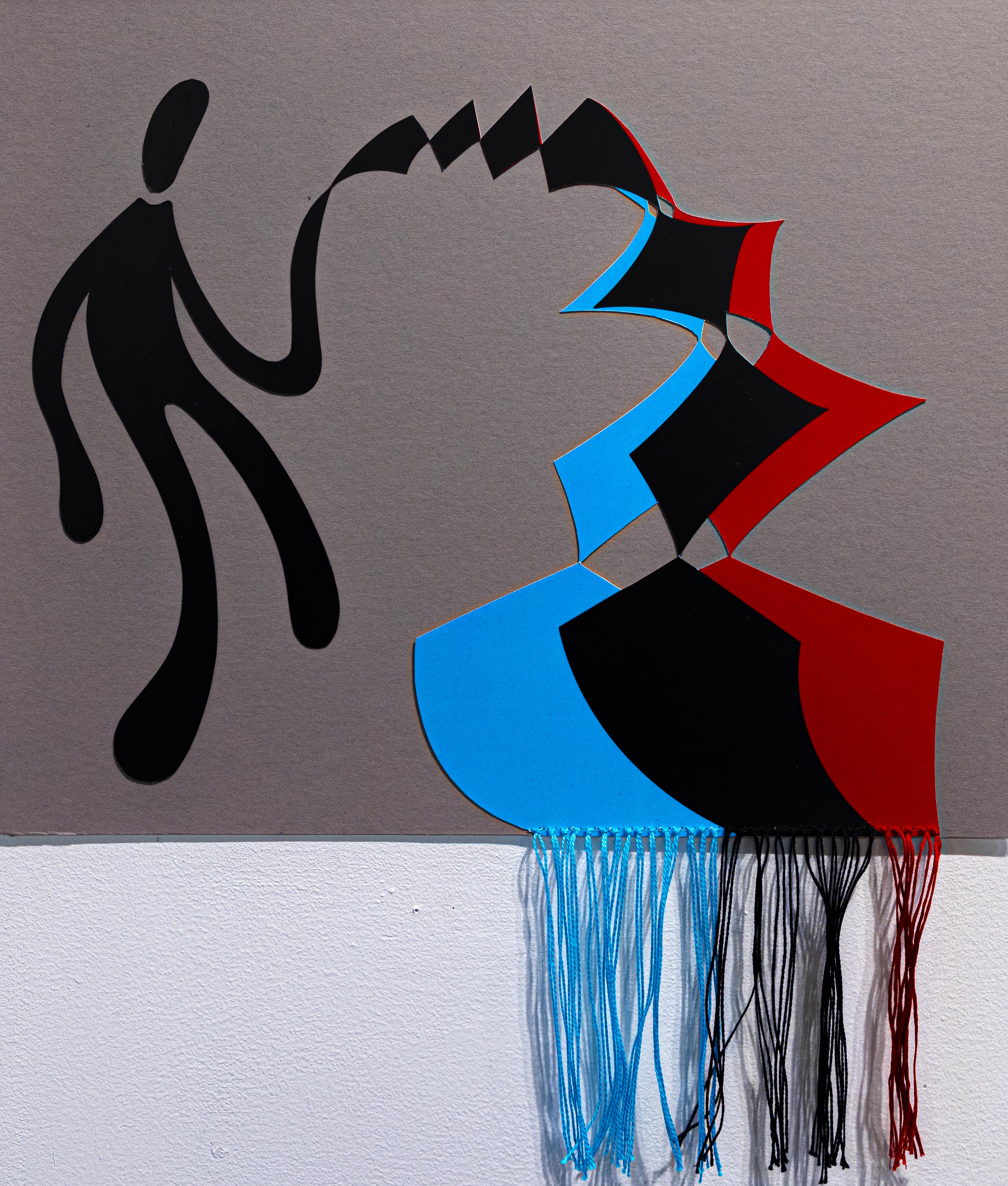
I do think when an object is new/different or on the periphery, there is a point where something shifts from being identified as Myaamia by an individual to when the community as a whole recognizes and accepts it as Myaamia. When that happens is really based on conversation, relationships, time, and a general vibe.
Transgenerational Acceptance
There are particular features or qualities that are recognizably Myaamia across time. For example, particular colors show up in clothing and artwork, sounds within Myaamia songs, and values within Myaamia stories. Many of the elements that have persisted through generations into the present are well-established thoughts, beliefs, and actions, which can then transform any contemporary object or event into something uniquely identifiable as possessing a Myaamia trait. In order for continuity to persist over time, knowledge has to be shared, promoted, reinforced, and encouraged among the community. It is the interaction and reinforcement of commonality that leads to expressive elements that can be said to be myaamiinaakwahki ‘it is Myaamia (expressively).’
Contextual Origin
Next is the question of the historical context of the particular thing. The context in which a thing was created (where, when, and by who) matters and connects that thing to a cultural story. At the same time, the identity of the individual(s) creating the thing is not the only factor that matters. Things can be made by Myaamia people, but not representative of the Myaamia community. Conversely, things can be made by non-Myaamia people and be representative of the Myaamia community. Therefore, we know that the features or elements of the thing itself are critical to our ability to define it as Myaamia (or not).
Though we likely have always approached the world around us with questions like these, identifying things as Myaamia was made both necessary and difficult because of the historical oppression our community faced. It is through revitalization efforts that we are more readily able to delineate these boundaries and use them to understand and promote our own Myaamia identities.
Credits:
Featured photo by Doug Peconge, Miami Tribe of Oklahoma.
 Aacimotaatiiyankwi
Leave a comment