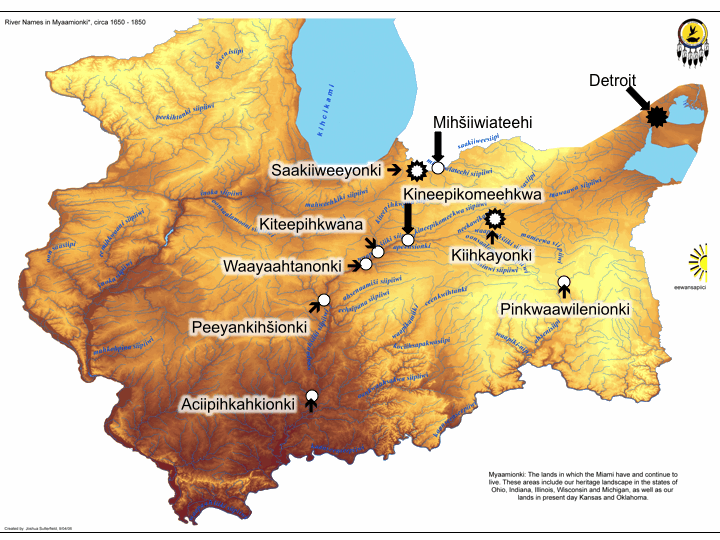
An Indigenous land acknowledgment is a statement (written or oral) that attempts to recognize the Indigenous people who have historic relationships with and ties to the land upon which a given institution/event/etc. sits. I personally have seen these acknowledgments in more and more spaces – like at University events, conferences, and other gatherings.
As a Native person, I have always had mixed feelings about them myself. On the one hand, it does feel validating to have the history of my people recognized and it represents what I hope is the start of many people’s journey of learning about Indigenous histories, presents, and futures. On the other hand, it can also feel like an empty gesture where people/institutions want to show they’re on the up and up but don’t do anything beyond that. Is it really better to have awareness and do nothing with that awareness than to be ignorant (or claim ignorance)? I don’t know if there’s a right answer to that question.
Following discussions about these acknowledgments across many groups and events I find myself in, I thought it might be helpful to write this blog post to help people understand potential issues with them and some starting points for folks who wish to engage in them. It is my hope that this spurs introspection and awareness for all.
Why do we do land acknowledgments?
It is important to ask oneself “Why do I/we want to do a land acknowledgment?”
I do believe the intention behind a land acknowledgment is to signal allyship with Indigenous peoples, acknowledge the experience (past and present) and values of Indigenous peoples, recognize the inherent sovereignty of Indigenous peoples, and increase the general public’s awareness of Indigenous peoples on lands and histories of removal and oppression. I hope that all steps of the acknowledgment process – from the process of writing, publishing, or reading the statement, and following up with an action plan resulting from that statement – will provide allies with the opportunity to reflect on history, privilege, and oppression with regards to Indigenous peoples.
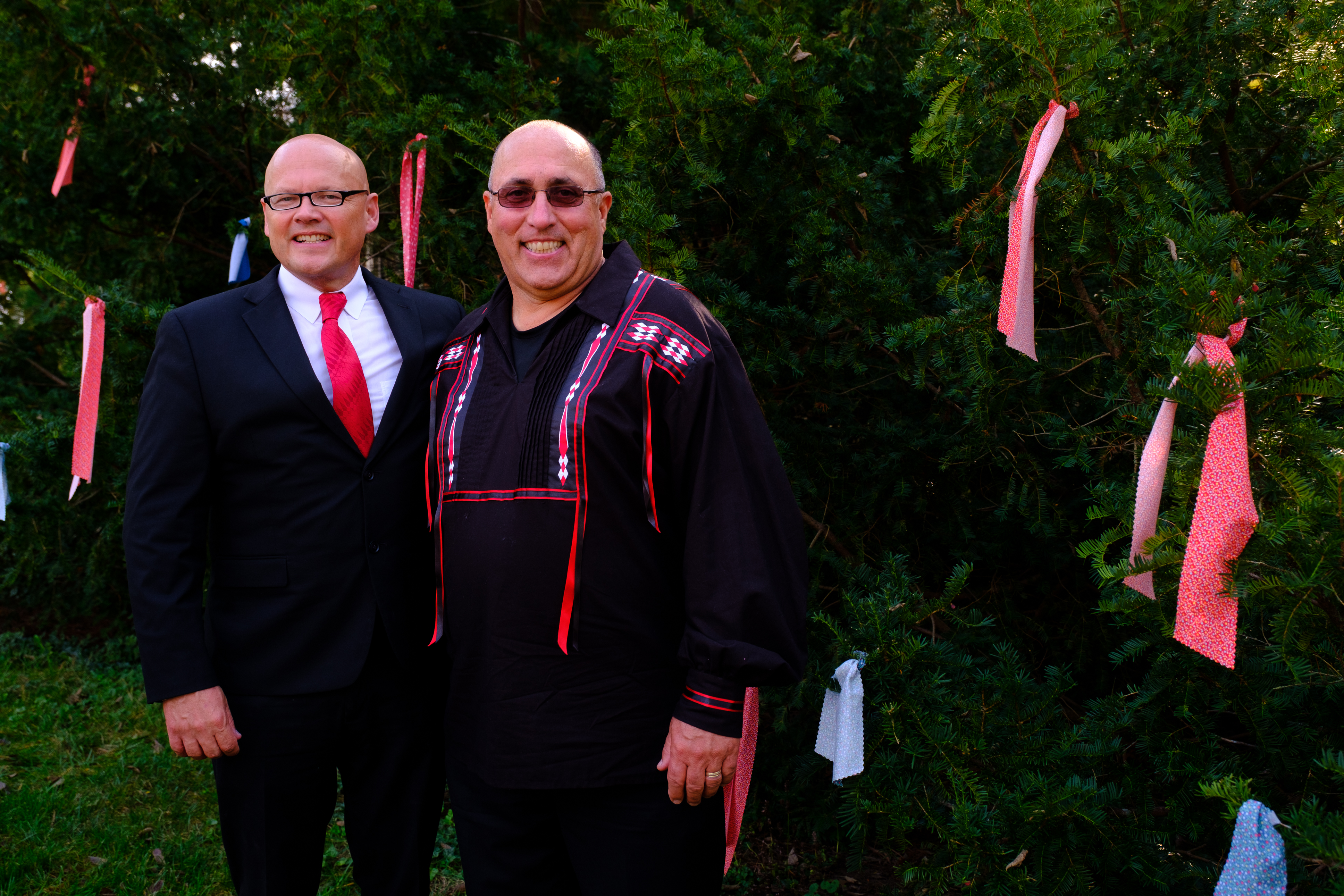
However, I want to highlight a key part of that purpose statement that is often overlooked and/or neglected – the action plan. In my opinion, a good land acknowledgment will also provide resources and plans for following through with supporting Indigenous people of today and the future.
Potential Problems with Land Acknowledgements
Now, intentions matter. So does the impact of our words and actions. Even if we have the best of intentions behind something like a land acknowledgment, if the impact of that further perpetuates harm, then that is a problem. So, I want to share some of the ways that land acknowledgments can be problematic and perpetuate harm.
First, many people/groups who wish to do a land acknowledgment are afraid of doing or saying the wrong things. This fear leads them to reach out to tribal and/or Indigenous serving entities for support in constructing and delivering the acknowledgments. I am a strong advocate for building relationships with and serving to support these entities in general, but these types of requests without the relationship in place (and perhaps even if it is) put a tremendous burden upon said entities.
Consider it this way: Google’s AI features tell me there are over 60 Universities in Indiana and over 70 in Illinois. This means I can confidently say that there are more than 130 such institutions in the traditional homelands of Myaamia people (and that’s ignoring where we are headquartered today) – and this is just Universities. Consider also libraries, museums, theaters, and any other institutions that may hold events and wish to include such a land acknowledgment. If all were to reach out to the Miami Tribe and/or the Myaamia Center for support in writing/delivering an acknowledgment, we would do little else. The time and resources spent on this taxes our staff even just considering the time (though it also has an emotional impact). This is particularly extractive when there is no compensation for said labor.
Second, land acknowledgments frequently talk about Indigenous peoples in the past tense, failing to recognize our current lived experiences and futures. This perpetuates the notion or stereotype that we are people of the past. This is painful for many reasons but particularly has been used to justify the taking of land that has led us to where we are today. As mentioned previously, I also believe that one of the purposes of the acknowledgments is to recognize the sovereignty of Indigenous peoples and therefore historic groups (like the Adena or Hopewell) should not be included within them. This demonstrates a lack of understanding of the difference between sovereign tribal nations and archaeological cultures.
Third, harkening back to the previous section, the “why” behind the acknowledgment matters. If the purpose of the land acknowledgment is because you feel you “should” do it or to seem like you understand Indigenous peoples, then there is a good chance that it is an empty or performative gesture. Additionally, land acknowledgments should be accompanied by some sort of action plan that includes building relationships with those communities and/or giving back resources (time, money, emotional labor, land, etc.).
Fourth, I often see land acknowledgments get literally copied and pasted from another group’s statement with a few tribal names or small details being adjusted to seem more accurate. These statements should be tailored to the specific tribes/groups they are being written about and consider the relationship that this individual/institution also has with the tribe and the land they are on. Therefore, a land acknowledgment should never be copied and pasted.
Fifth (and the final point I will raise), I have witnessed people provide land acknowledgments with inaccurate information and/or with information that sugarcoats Indigenous histories. When this happens, it is harmful from the viewpoint of spreading misinformation but is also incredibly invalidating to the people(s) being referenced.
What to do:
In the spirit of not just saying “Here’s what’s wrong with land acknowledgments” without providing suggestions on what to do, here are my recommendations for how to go about writing and delivering them (if you’ve come to this point and still think it’s important for you/your institution).
- Build relationships with the tribal nations and entities serving them (positively) in your area. A foundation of trust and respect for Indigenous people is built upon and maintained within the context of relationships and it is a great entry point into learning from that community’s lived experiences. Chances are good that if you build relationships, listen, and respect the community, then you’ll know what to say in such a land acknowledgment.
- Do the work yourself. I consider this an ongoing task as none of us ever “arrive” at truly understanding a complex and living community (including those of us who are “members” of that community). Therefore, I implore folks to self-reflect, read books, understand and discuss histories with their colleagues, and more. Once you feel you’ve done that, then try researching and writing a land acknowledgment that you yourself (or someone within your institution) will give. At the same time, be open to feedback at any point in this process. To give an (imperfect) example of why this is important, let’s say you have a friend who you hurt – either with your words or actions. Would you go up to that friend and ask them how to properly acknowledge what you did and exactly what to say? I doubt it. It also isn’t an acceptable way to handle land acknowledgments.
- Include an action plan as part of your acknowledgment. Use land acknowledgments as a jumping-off point for people to learn more, build relationships, and support Indigenous peoples. Talk about the myriad ways that people can give back to tribal communities and potentially ways that you can support them in doing so. This might include things like where or how people can learn more about Indigenous peoples as well as how to donate time, money or land. Very importantly, lead by example with this, recognizing the ways you or your institution plan to give back to Indigenous peoples.
Critical Use of Resources
As with any research project, it is important to consider and critically evaluate where the resources you use in the creation of your land acknowledgment come from. It is important to gather resources that tell an accurate story and to recognize the limitations of any given resource. For example, most people use the website native-land.ca as their first and sometimes only source of information for land acknowledgments. While I do think this is an excellent starting point, it has some limitations (that are even on a pop-up window as soon as you go to their website). Data about land are always changing and therefore may be inaccurate at any given time. Similar to sources like Wikipedia, the data are crowdsourced and therefore may be inaccurate depending on who is contributing to it. So it is particularly important to not just write your land acknowledgment and never consider revising or updating it over time. It also doesn’t take into consideration the nuance behind Indigenous perceptions of land both historically and today including lack of hard boundaries, perspectives on “ownership” of land, and continually changing treaty statuses. So again, do your research, consult with community members and knowledgeable others, and hold yourself accountable to updating your land acknowledgment over time.
In conclusion, it is my hope that this blog post both stimulates conversation as well as proves to be useful to individuals or groups who are wishing to create a land acknowledgment. These are just my opinions/views on land acknowledgments (that have been co-constructed with my colleagues) and I fully recognize that there is a diversity of thought on the subject.
 Aacimotaatiiyankwi
Leave a comment