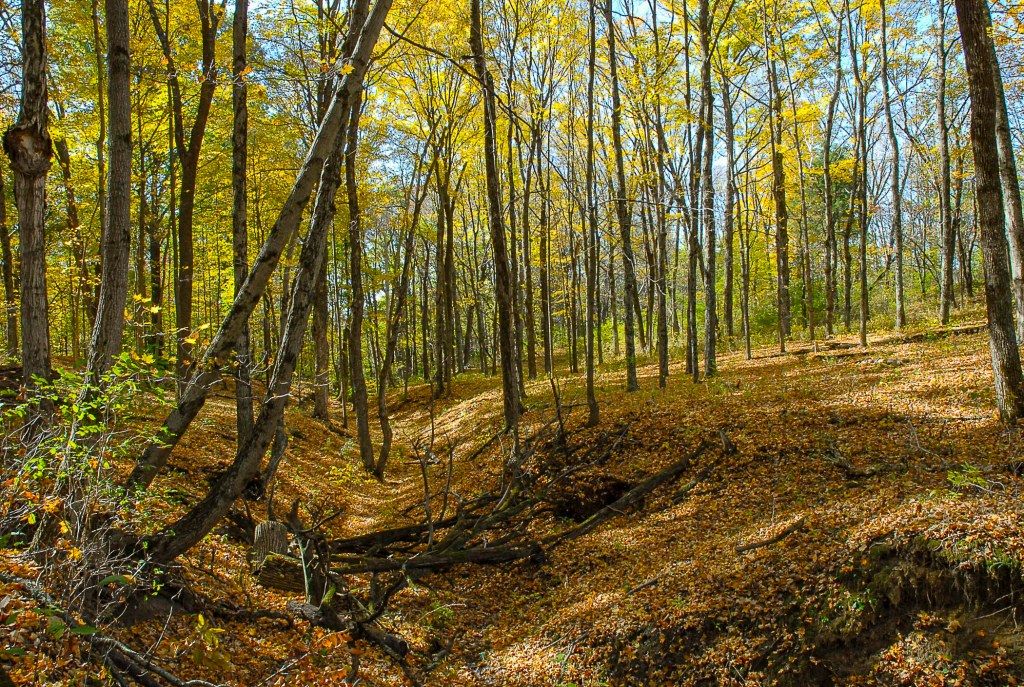
I grew up understanding that an “Indian summer” was a warm period in autumn that arrives after the weather had begun to turn chilly. I never considered the origins of the phrase…until I was researching at a library in Chicago a few years ago. It was a well-appointed, darkened room, and I was gazing in the artificial glow of a microfilm reader hour after hour. I was reading a journal of Josiah Harmar. In 1790, Harmar led a U.S. campaign to destroy Kiihkayonki (which he accomplished before losing on the battlefield to Miamis, Shawnees, and others). Harmar noted the weather each day before narrating consequential events. On October 21, Harmar wrote: “Fine weather—Indian summer.” My parenthetical notes to myself read simply “That seems weird.” I moved on.1
As it turns out, Harmar’s use of “Indian summer” was a relatively early example. The first extant usage seems to be (about) 1778, when J. Hector St John de Crèvecoeur penned: “Then a severe frost succeeds which prepares it to receive the voluminous coat of snow which is soon to follow; though it is often preceded by a short interval of smoke and mildness, called the Indian summer.” 2 Crèvecoeur’s reference to Indian summer wasn’t published until later (in Europe, in French). In the meantime, another soldier, Ebenezer Denny, journaled from northeast Pennsylvania in Haudenosaunee territory on October 13, 1794 “Pleasant weather. The Indian summer here. Frosty nights.” 3 (Myaamiaki may know Denny from his participation in Harmar’s and St. Clair’s campaigns, and particularly from his published map of Kiihkayonki.)
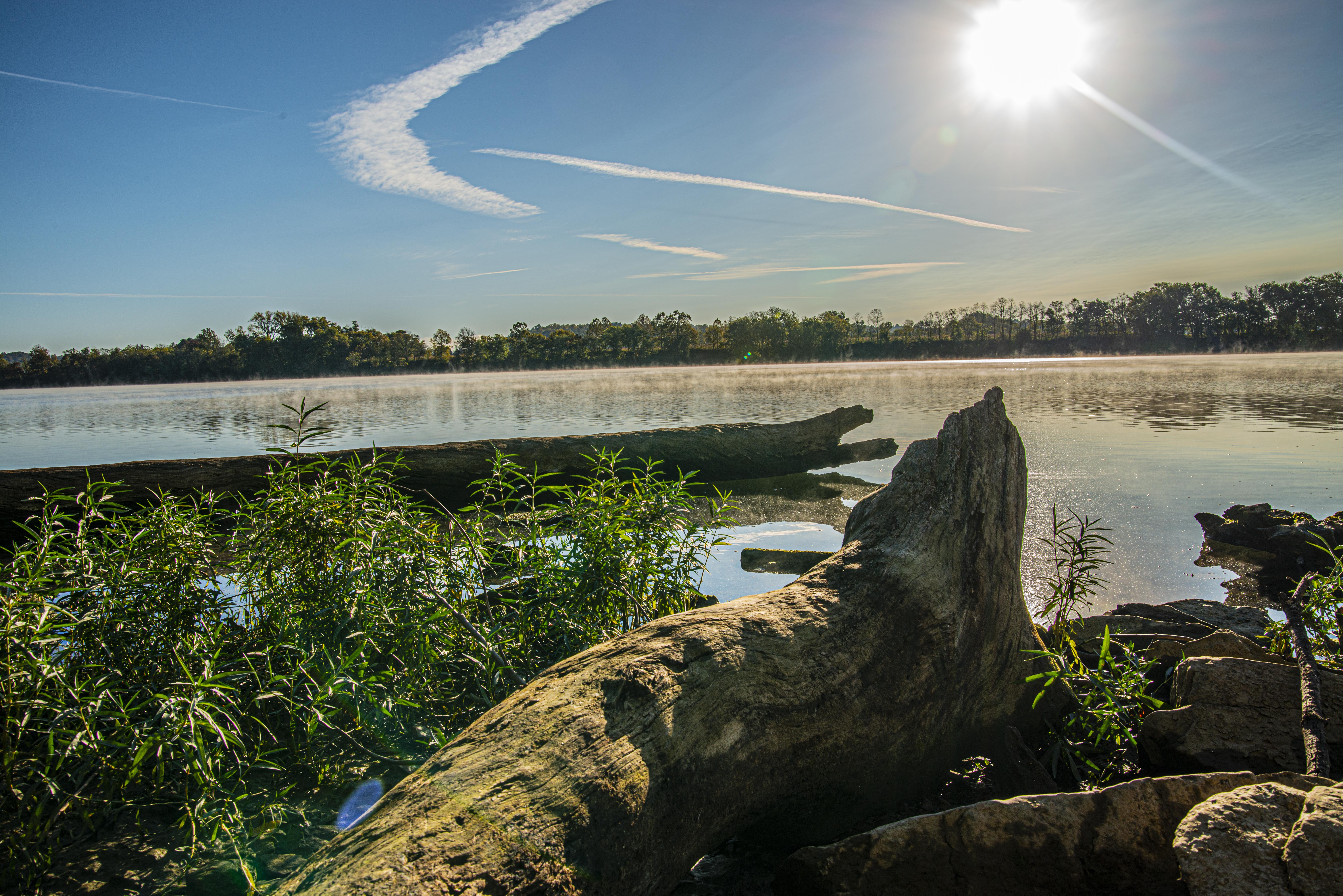
As Adam Sweeting argues, “Indian summer” as a term became commonplace in the United States by about 1820. 4 Europeans helped connect the American-ism to more global weather terminology. For example, the French philosopher Volney (who some readers may know from his extensive interviews with Little Turtle and William Wells) elsewhere described l’éte sauvage, the Indian summer, as the American equivalent of what the French understood as Saint-Martin’s summer. Brits also connected the warm autumnal weather with their own Saint Martin’s summer, linked to Martinmas or St. Martin’s Day.
What is interesting (at least, to me!) is the connection between Indian summer and smoke, particularly in these early years of the term, and particularly among men with experience in Myaamionki.
Settler Americans, generally understanding that the Indian summer occurred, struggled to explain its cause. R.W. Wells, a surveyor in St. Louis in 1819, asserted that Native American burning created the smoky atmosphere and the prairies of the eastern plains, which were “burned toward the close of the Indian summer.” William Faux, an Englishman in Illinois, noted that “the season, called the Indian Summer, which here commences in October, by a dark blue hazy atmosphere, is caused by millions of acres, for thousands of miles round, being in a wide-spreading, flaming, blazing, smoking fire, rising up through wood and prairie, hill and dale.” By at least the 1810s, the link between burning and Indian summer was clear.

“The cause of this smokiness,” the eminent Ohio historian Daniel Drake wrote in 1815, “is supposed to be the conflagration, by the Indians, of the withered grass and herbs of the extensive prairies of the north-west, and hence perhaps the name of the season.”
An American satirist wrote that “every man, woman, and child” smoked so much tobacco after their harvest that the whole place became a haze of smoke. The writer noted that the heavy-smoking Americans “pretend to ascribe it to the Indian custom of burning the long grass of the immense Prairies in the west,” thereby deflecting from their own behaviors. This Indian summer-fire link emerged in high culture, such as a poem published in 1791 (excerpted here):
“What time might spare the flame destroys,
To heaven such fabrics are but toys;
Life is a spark from Vulcan stole,
The Indian summer of the soul”5
Thereafter, Indian summer would become a favorite subject for poets, authors, and artists. As the weather event continued, but the practice of Native American and then settler burning did not, this association between the Indian summer and burning gradually disappeared.
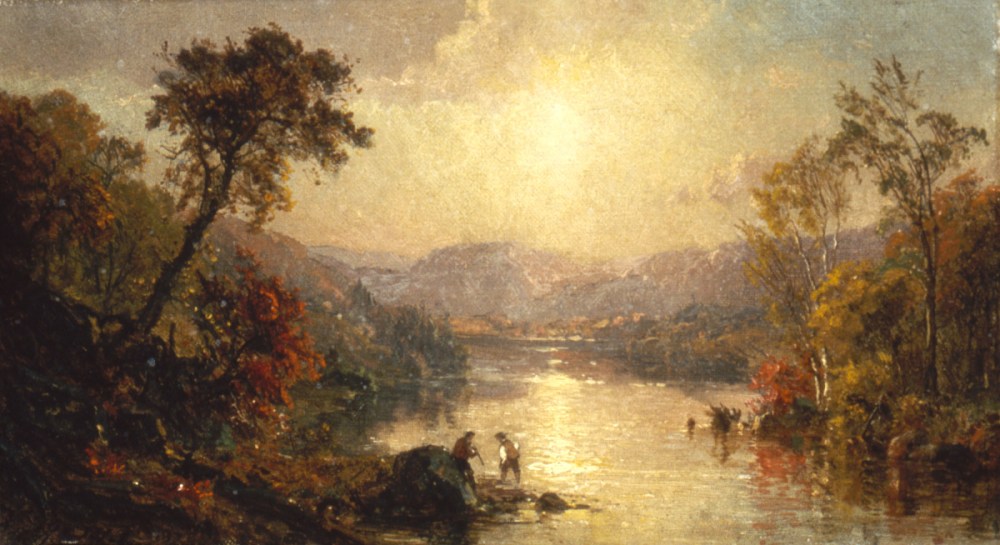
So, here we are in kiiyolia kiilhswa, the Smokey Burning Moon, which marks the second burning moon of the year. Does the phrase “Indian summer” come directly from Native American burning practices? I don’t know, but Euro-Americans of the early nineteenth century certainly connected the two.
- The Harmar journal is now published, and available at https://resources.ohiohistory.org/ohj/browse/displaypages.php?display[]=0020&display[]=74&display[]=108 ↩︎
- J. Hector St. John de Crèvecoeur, Letters from an American Farm and Sketches of Eighteenth-Century America, ed. by Albert E. Stone (New York: Penguin, 1981), 233; Oxford English Dictionary, “Indian summer,” July 2023, https://doi.org/10.1093/OED/1071717932.
↩︎ - Ebenezer Denny, Military journal of Major Ebenezer Denny, an officer in the Revolutionary and Indian Wars (Philadelphia: J.B. Lippincott, 1859), 198 ↩︎
- Adam W. Sweeting, Beneath the Second Sun: A Cultural History of Indian Summer, 5
↩︎ - “The Prudent Philosopher,” Philadelphia National Gazette, Nov. 17 1791. ↩︎
Edited: 8/5/24
 Aacimotaatiiyankwi
Leave a comment