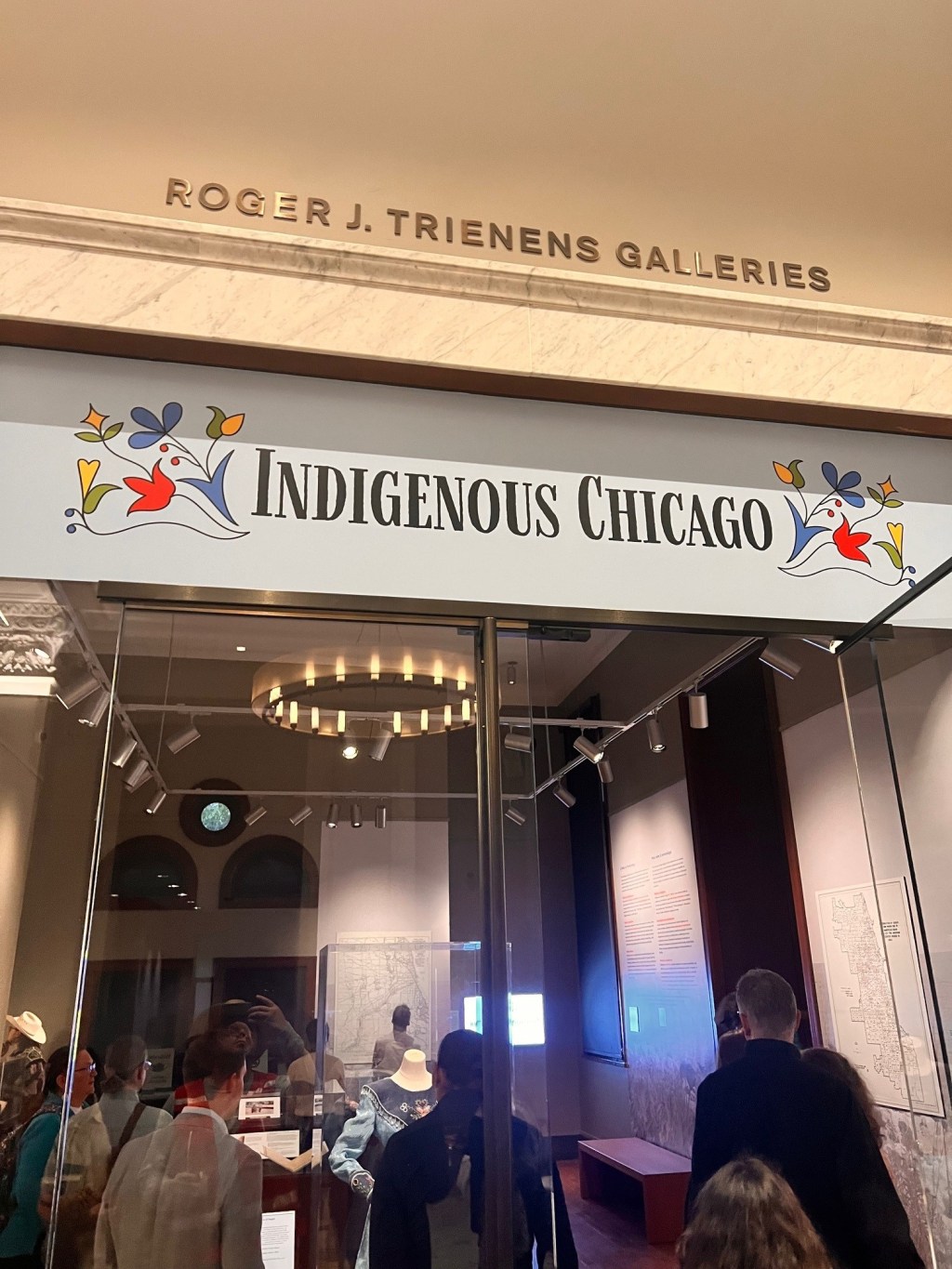
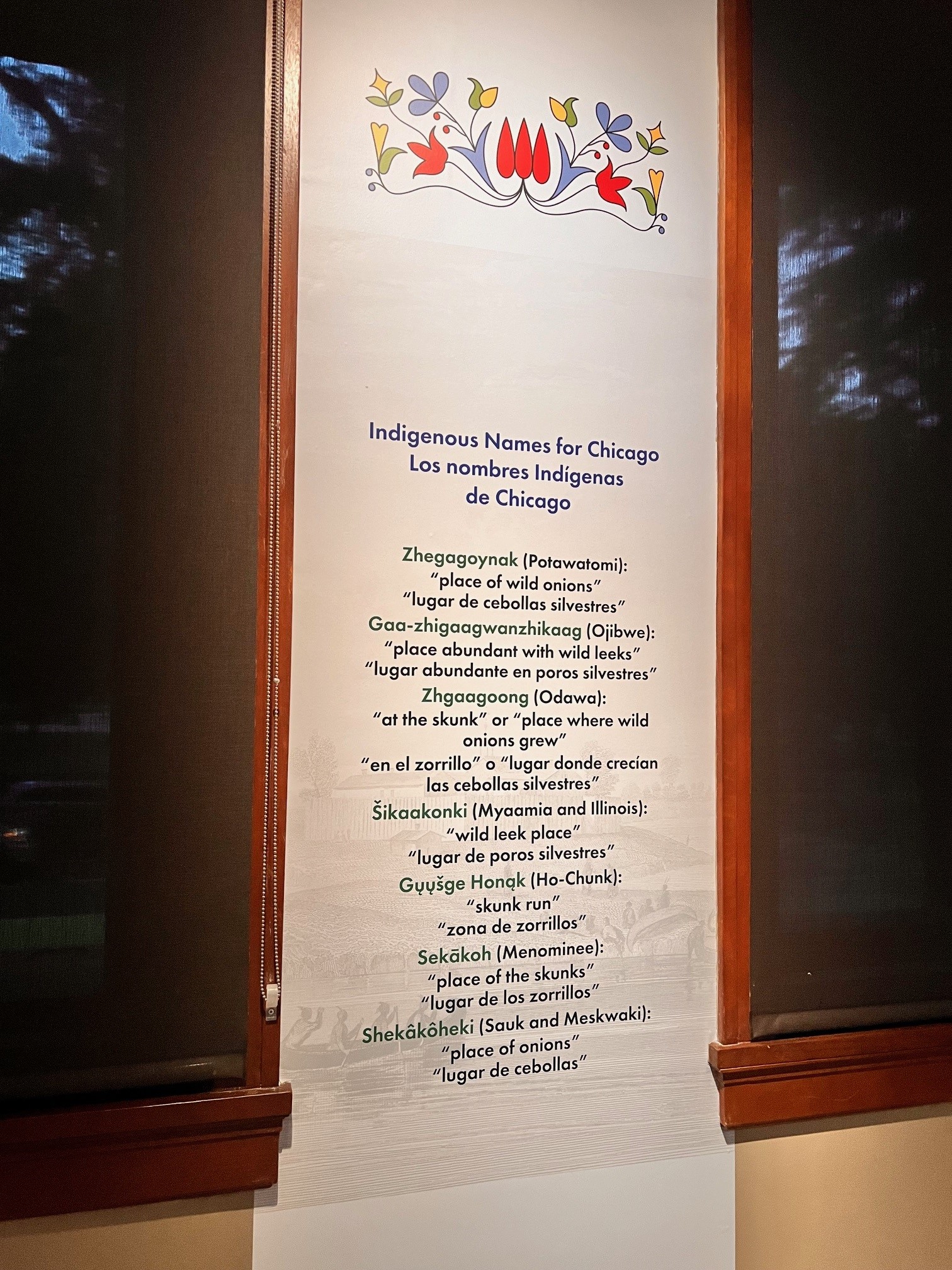
Myaamionki Maayaahkweeciši Kihcikamionkonci, or Miami Place South of Lake Michigan, is a title that I believe helps connect us to a place that is often less talked about when Myaamiaki speak about our traditional homelands. My initial post, which you can read here, gives context to the place names, history, and cultural connections that Šikaakonki ‘Chicago’ and the surrounding areas hold for Myaamiaki. In my previous article, one particular place I wrote about being instrumental to our language revitalization efforts is the Guardian Angel Mission, established in 1696 by Father François Pinet. This place produced a dictionary that became foundational to our language revitalization efforts. The dictionary was created by Pinet, and had added content from other authors by interacting with Waayaahtanwa ‘Wea’ people who lived nearby. Until the early 1800s the Wea were acknowledged as a subgroup of the Myaamia. Following forced removal to Kansas, the Wea merged with the Peoria Tribe. Today there are Wea descendants in both the Miami Tribe of Oklahoma and the Peoria Tribe of Indians of Oklahoma. This dictionary also made its way south and holds linguistic records from interactions within Illinois communities living in the Mississippi River Valley. The Newberry Library in Chicago gained access to receive a loan for this “Pinet Dictionary” for its new Exhibition, “Indigenous Chicago,” which will be on display from September 12th, 2024, to January 4th, 2025. If you would like to read more about the history of the Pinet Dictionary, take a look at this essay by researcher Michael McCafferty. Michael was the researcher who first identified the Pinet Dictionary as containing Miami-Illinois language.
The Viewing at the Newberry
The Newberry Library gets its name from Walter L. Newberry, a businessman and civic leader in Chicago in the 19th century. Upon his death in 1868, a provision in his will left funding for the creation of a public library that would be free for all to use. The library was eventually opened in 1887, and the collection of materials and literature was built from nothing by librarians working for the institution. Now, the Newberry Library has collections extending 27.5 miles of shelving representing many perspectives, historical events, people, and cultures. Proudly, the Newberry holds many documents and materials that educate on the perspectives and history of Native Americans from the region.
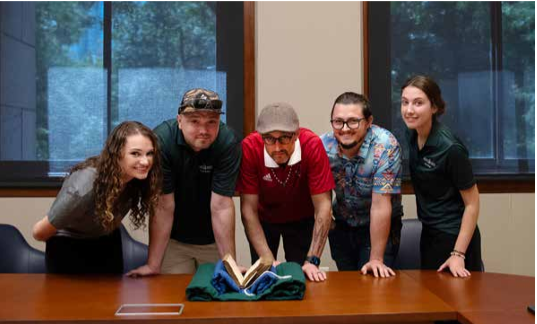
In September of 2024, a Miami Tribe of Oklahoma delegation consisting of George Ironstrack (Myaamia Center Historian and Educator), Logan York (Tribal Historic Preservation Officer), Morgan Lippert (Curator of MHMA Exhibitions), Madalyn Richardson (Cultural Arts and Education Content Specialist), and myself, Nate Poyfair (ARPA Noošonke Project Manager), visited Šikaakonki ‘Chicago’ to see the Newberry Library. The Newberry Library contacted the Miami Tribe about an opportunity to view the Pinet dictionary and attend the grand opening of the Indigenous Chicago Exhibition. During our private viewing, the five of us handled, read, and searched for Myaamiaataweenki ‘Miami Language’ within this large set of linguistic recordings.
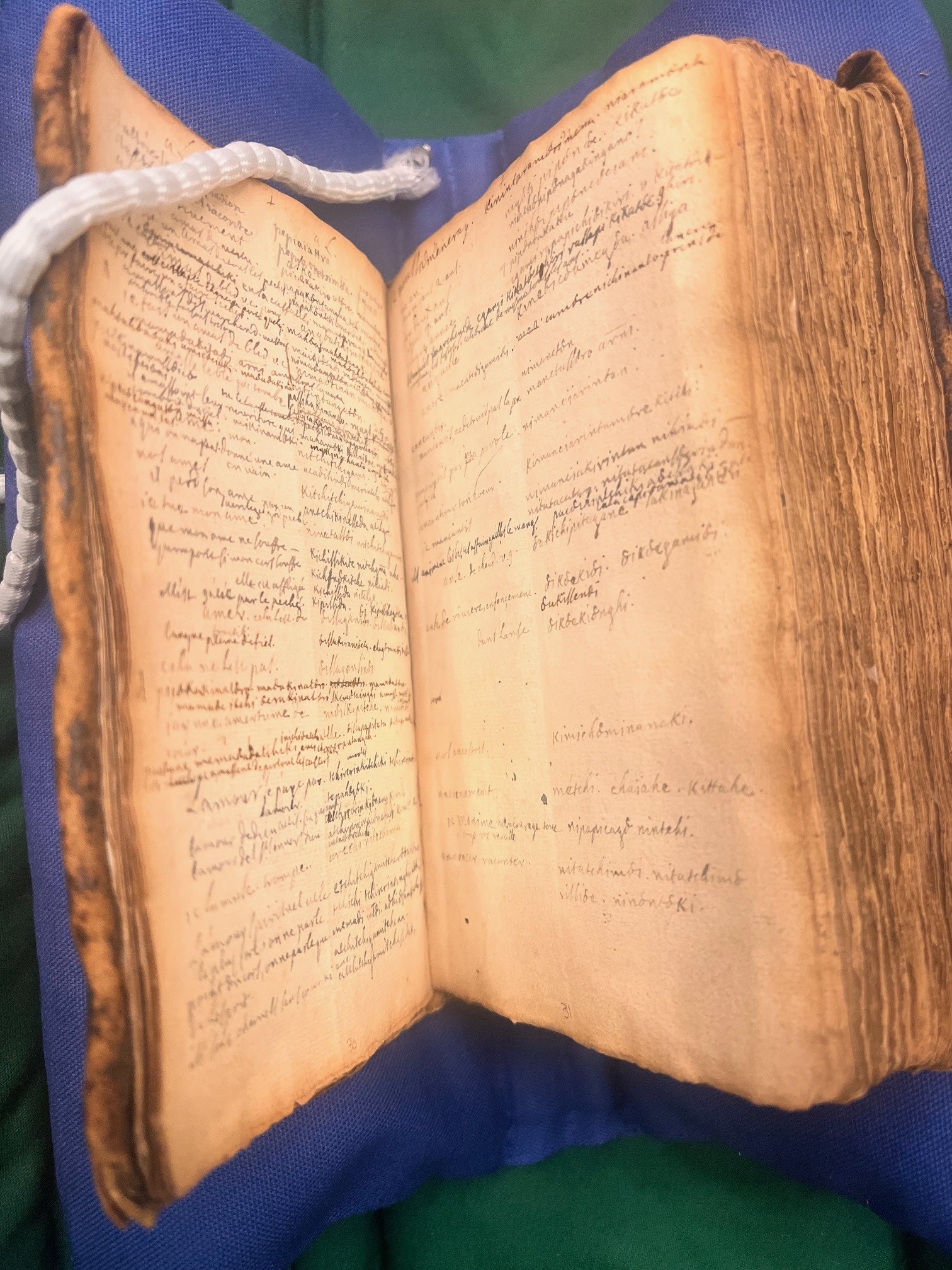
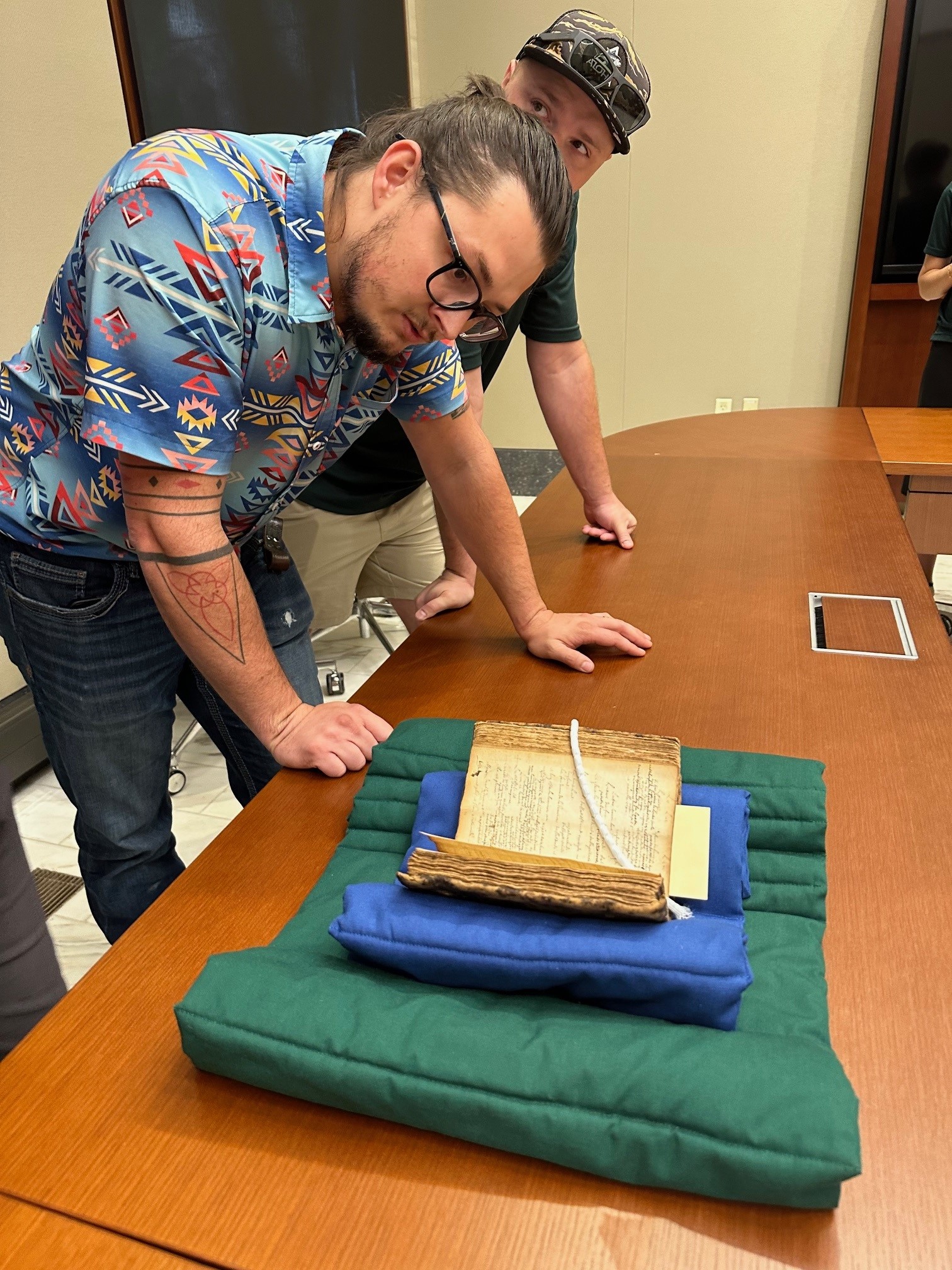
Viewing the Pinet Dictionary was one of the highlights of my time working for the Miami Tribe of Oklahoma. Seeing this book that has survived the time and events of the last 300 years and holds tremendous value to Myaamia-Peewalia-speaking people was a pleasure for all of us. Documents or historical objects like this dictionary have a weight to them in a metaphorical sense. When entering a room and looking at them for the first time, you can feel their aura and the history behind them. I like to imagine all of the people who have held onto this dictionary and try to imagine Pinet speaking with our ancestors and working to understand them better. Our ancestors saw this dictionary and may have held it and looked at it 325 years ago, just like we did in September. This dictionary connects us to these ancestors, and I feel the weight of this connection when walking in the room. We all felt fortunate to see and handle the dictionary, and I hope that more tribal members can do so in the future.
Reflections
Our collective time in Chicago only lasted three days. However, we were able to visit the Pinet Dictionary, the opening of the Indigenous Chicago Exhibition, and also walk around the city of Chicago and think about the historical connections we have to the city and area. The area along the shores of Lake Michigan has been the home and historical homeland of many different groups of Indigenous people. More than a dozen tribes are listed within the Indigenous Chicago Exhibit. This is a testament to the idea of shared spaces and also helps visitors understand the complicated history and challenging nature of labeling particular places as belonging to one group of people or another. The beauty of Šikaakonki is strengthened when we all recognize our shared history and ongoing connections to the area.
As we had some time between a private tour of the Newberry Library and the exhibit’s opening event, George, Logan, and I decided to walk around downtown Chicago, especially along the Chicago River. Near where the river meets the lake, there was once a mural recognizing the Waahoonahaki ‘Potawatomi People,’ and above this site there is a place where markers for the edges of Fort Dearborn show its previous location. We stopped by the Center for Native Futures and went to view an exhibit at the Field Museum called “Native Truths: Our Voices, Our Stories.” The Field Museum exhibit has a new section dedicated to “the Creator’s Game,” or peekitahaminki as it is known in our language. This new section includes a pakitahaakani ‘lacrosse stick’ made by Myaamia artisan Doug Peconge. During this time, we continued to reflect on our (Myaamia) connections to Šikaakonki. Throughout our homelands, historic traces of our tribal past are prevalent all around us, and this is evident in Chicago. As hundreds of tribal citizens call Chicago and the surrounding areas home, we are maintaining our connection to this place.
Mihši neewe to the Newberry Library staff, especially Rose Miron, Analú María López, and Haku Blaisdell, for their consideration and time with the inclusion of Myaamiaki in the Indigenous Chicago Exhibit and for providing our nation with the private viewing of the Pinet dictionary. If you have time, I highly recommend taking the time to go and view the dictionary and the entire Indigenous Chicago exhibit. The exhibit also has wonderful online components which can be found here. Mihši neewe as well to Debra Yepa-Pappan and Chris Pappan for welcoming us to the Center for Native Futures. The Center is also worth a visit if you live in Šikaakonki ‘Chicago’ or if you’re just there for a visit. For an extended article on the day of our viewing, the Newberry Library and its contents, please see the tribal newspaper article written by Madalyn Richardson here.
 Aacimotaatiiyankwi
Leave a comment