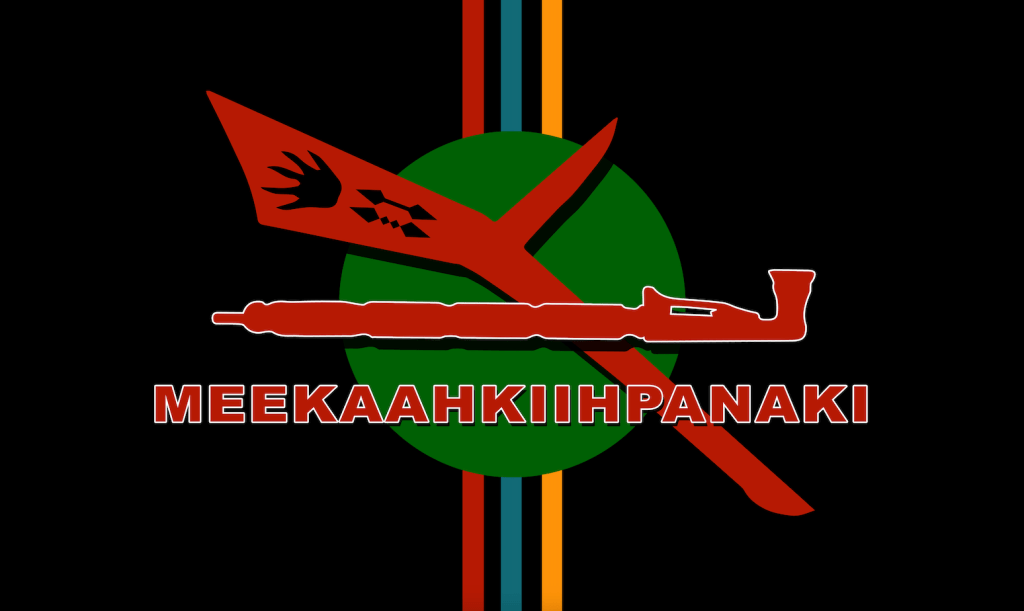
In 2020, the Miami Tribe of Oklahoma officially unveiled our Meekaahkiihpanaki Aniimaakanemawe ‘Veterans Flag.’ Julie Olds, MTO Cultural Resource Officer, designed this niimaakani ‘flag’ to reflect Myaamia cultural thinking about warfare and the people who become known as warriors in our community through their sacrifice. In this post, we’re going to take some time to explain the cultural meanings of the imagery and colors that are on display in the flag.
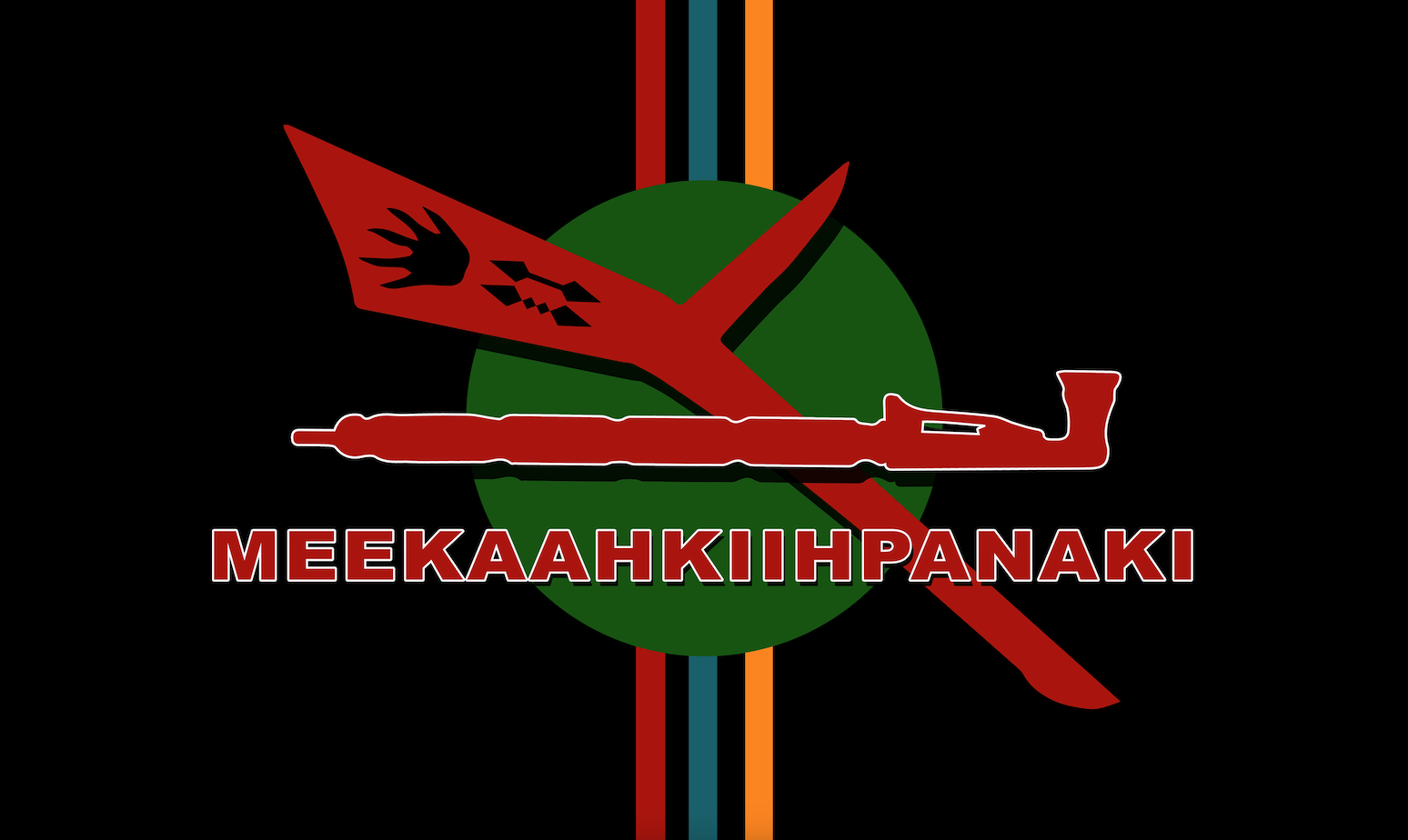
The word that sits below the pipe on the flag, meekaahkiihpanaki, means ‘those who used to be warriors.’ This word emphasizes that for these individuals, their military service is concluded. This differentiates them from a maamiikaahkia or antopalia, a ‘warrior’ who is actively serving in an organized military.
Above meekaahkiihpanaki is a neehpikilita ahpwaakana ‘red pipe’. Historically, pipes of this type were used to communicate about both war and peace. When Myaamia people covered an ahpwaakana in alamoni ‘red ocher’ (a red color produced by grinding hematite stone) it was used to bring people together in support of war. Those who smoked this red pipe indicated their desire to engage in warfare.
Behind the ahpwaakana resting at an angle sits a pakamaakani ‘war club.’ Historically, this was the personalized weapon of any Myaamia man who was actively involved in warfare. It is colored red in this design to remind people of the alamoni often applied to clubs for the same reasons described above. The diamond patterns at the top of the gunstock war club follow the pattern on the Myaamia community flag, and are a reminder that our warriors fought and continue to fight to protect our community. The eehsipana ‘raccoon’ paw print that sits above the diamond pattern recognizes that at one point in Myaamia history the Raccoon Clan had the responsibility of organizing war at the village level.

Behind the crossed ahpwaakana and pakamaakani sits a green circle, which symbolizes peaceful alliance. The circle symbolically reminds us that most communities prefer peace to war. War is sometimes viewed as necessary, but peace is usually the outcome that most communities seek over time.
Behind the green circle rests three strips sitting on a black background. Each of these colors has important cultural meaning for Myaamiaki. Meehkateeweeki ‘it is black’ is directionally associated with the north and symbolizes depth of time, the accumulated wisdom of elders, death, and the darkness of war. Oonsaaweeki ‘it is yellow’ is directionally associated with the east, the rising sun, birth/re-birth, and the earliest years of youth. Iihkipakinki ‘it is blue/green’ is directionally associated with the south, summer, warmth, and older youth who are beginning the transition to adulthood. Neehpikanki ‘it is red’ is directionally associated with the west, the setting sun, blood, sacrifice, warfare, and adulthood. Only adults in Myaamia communities were allowed to paint themselves with the color red.
Taken as a whole, our Meekaahkiihpanaki Aniimaakanemawe ‘Veterans Flag’ brings past symbols of warfare and brings them into the present. The flag recognizes the sacrifices of those who fought on behalf of our community across time. When the Myaamia community uses our Veterans Flag, we continue the important practice of holding up meekaahkiihpanaki ‘veterans’ and recognizing their service, as well as the impact that their service has on them.


 Aacimotaatiiyankwi
Leave a comment