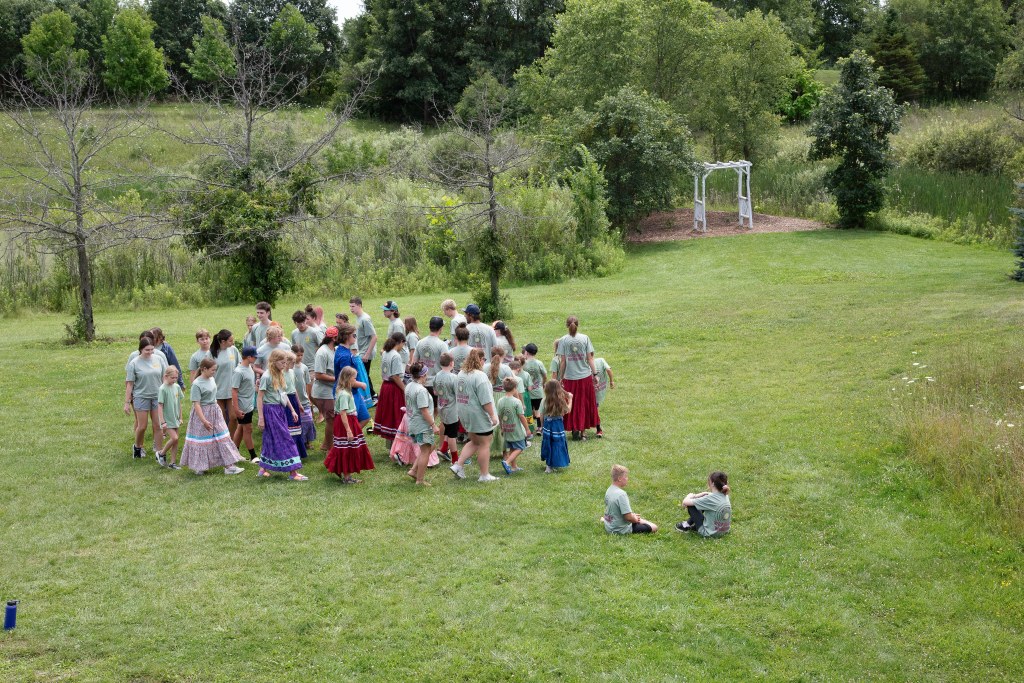
Weecinaakiiyankwi weecikaayankwi ‘we sing together, we dance together.’ Throughout June and July, Miami Tribe of Oklahoma staff welcomed Myaamiaki ‘Myaamia people’ to the Eemamwiciki 2024 Summer Programs to explore Myaamia song and dance.
Each year, the Miami Tribe hosts Summer Programming for tribal members ages 6 and older in both Kiihkayonki ‘Fort Wayne, Indiana’ and Noošonke Siipionki ‘Miami, Oklahoma.’ The 5-day experience is designed to teach participants about Myaamia language and culture while having fun and bonding with community members.
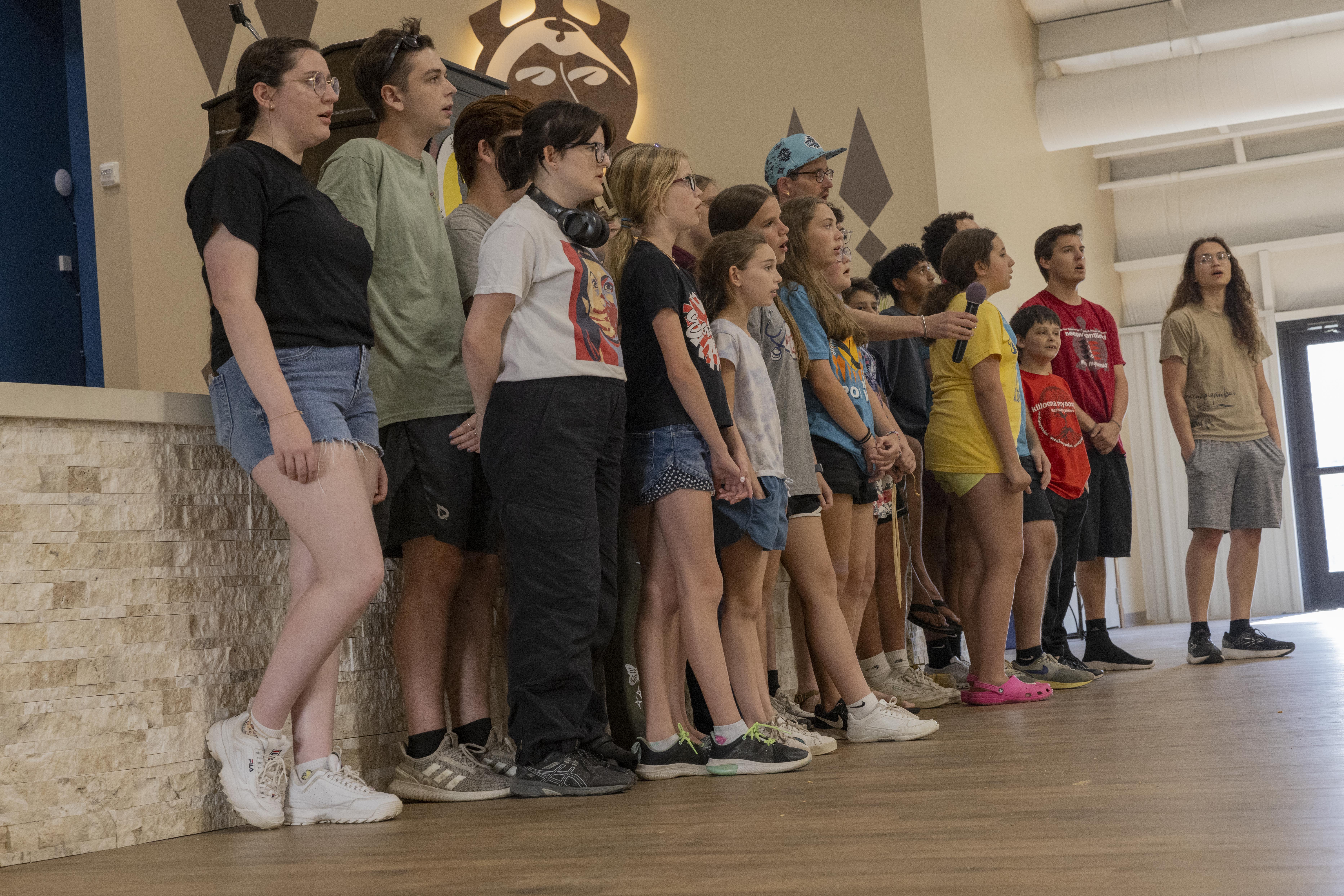
In June 2024, 46 participants were welcomed to the Saakaciweeta, Eewansaapita, Maayaahkweeta, and Neehsapita programs in Oklahoma. In July, 47 people participated in Saakaciweeta, Eewansaapita, and Neehsapita in Indiana.
Young adults in the Myaamia community serve as counselors for Saakaciweeta and Eewansaapita, many of which are alumni of the youth programs or attend Miami University through the Myaamia Heritage Program. Some of these counselors live locally in Oklahoma or Indiana, while others travel from various states to participate.
Curriculum for the programs is the same in both locations and each program follows the same theme throughout the week. Saakaciweeta participants (ages 6-9) learned to sing the community song, “Kiiloona Myaamiaki”, created their own šiihšiikwana ‘gourd rattles’, and practiced Stomp Dance with Eewansaapita throughout the week.
In addition to exploring song and dance, they also strengthened their understanding of Myaamiaataweenki ‘the Myaamia language,’ by revisiting familiar games like mahkisina meehkintiinki ‘moccasin game’, peekitahaminki ‘lacrosse’, and animal bingo. There were 32 participants in the program this year, 17 in Oklahoma and 15 in Indiana.
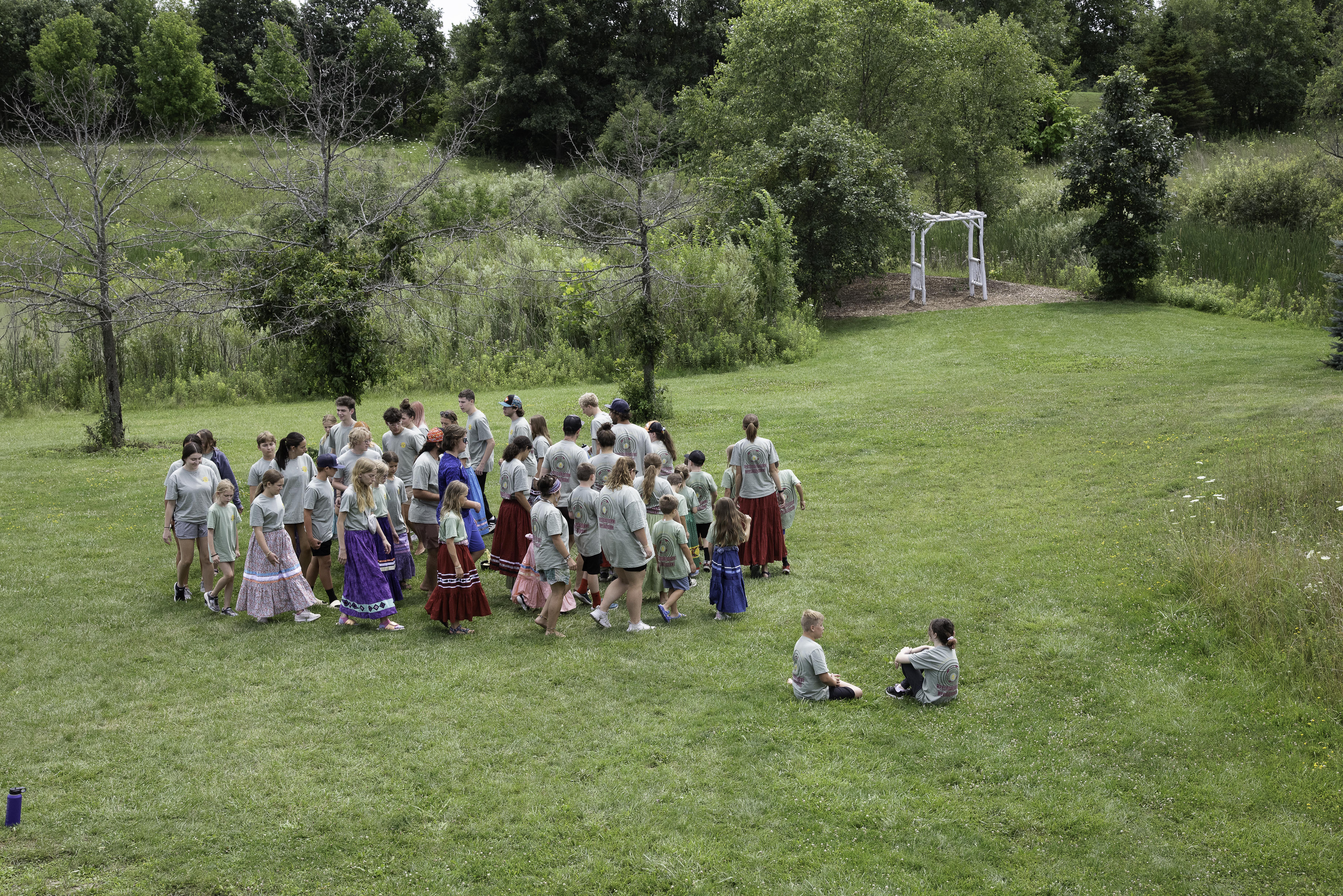
Like Saakaciweeta, Eewansaapita participants (ages 10-16) learned to sing “Kiiloona Myaamiaki.” By the end of the week, they were ready to record their unique rendition of the song as well as a version that will mix their voices with older recordings of the song, dating back to 2012. Their recording will also serve as the soundtrack of a music video they created by recording video footage throughout the week.
The group also participated in multiple stomp dances, learned a basic pow wow dance step, and made a šiihšiikwani ‘gourd rattle.’ The week included many games of peekitahaminki ‘lacrosse’ and mahkisina meehkintiinki ‘moccasin game,’ time exploring connections to Myaamionki ‘Myaamia lands,’ and lots of good eating. There were 39 participants total, 18 in Oklahoma and 21 in Indiana.
In Oklahoma, the Miami Tribe hosted the Seneca-Cayuga Nation for their annual lacrosse game. The two nations played on combined teams for a fun, yet challenging game. Afterward, everyone was invited to the Miami Tribe’s Council House to socialize and enjoy a meal together. Following the meal, the two communities joined together through stomp dancing and dancing a few social dances.
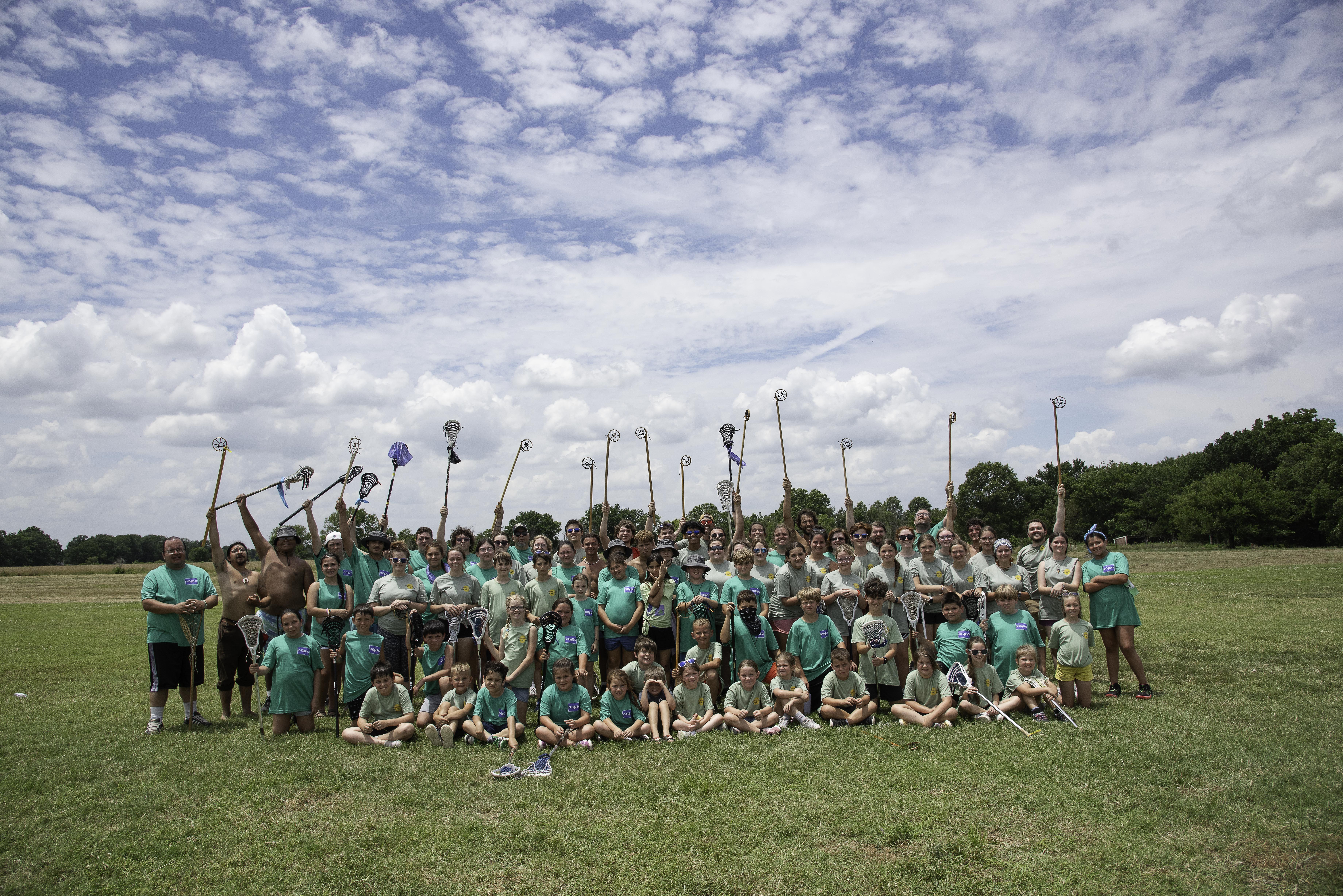
There were two Maayaahkweeta participants (ages 17-18) in Oklahoma, who spent the week creating new mahkisina meehkintiinki ‘moccasin game’ songs by building off songs they already knew, coming up with new lyrics, and using šiihšiikwana ‘gourd rattles’ to come up with a beat. Alongside this, they spent time each day being immersed in Myaamiaataweenki ‘the Myaamia language,’ helping teach songs and dances to younger participants, and playing peekitahaminki ‘lacrosse.’
The adult program, Neehsapita, had the largest number of participants yet, showing a growing community interest in the program. There were 20 participants, 9 in Indiana and 11 in Oklahoma. Participants in both locations had the opportunity to make šiihšiikwana ‘gourd rattles’, and ribbon skirts, and learn to sing moccasin game songs throughout the week.

The Neehsapita participants in Oklahoma made leather hide covers for the rattles and joined the youth programs for the lacrosse game with the Seneca-Cayuga. In Indiana, participants got to visit the History Center where they experienced a special viewing of pieces not on display to the public.
In each location, the programs ended with a celebration, where the Myaamia community was invited to view the youth participants’ art projects, listen to them sing “Kiiloona Myaamiaki,” and share a meal.

While each of these programs was happening in person, an “at-your-own-pace” version was hosted on Šaapohkaayoni: A Myaamia Portal. Online participants can explore song and dance through videos, audio, and images. They also have the opportunity to choose between three art projects: šiihšikwani ‘gourd rattle,’ ribbon skirt, or mahkisina ‘moccasins.’ While participants have the option to submit their work by September 16th to earn a certificate of completion, they will be able to access these materials indefinitely, so their learning doesn’t have a deadline.
In 2025, the Summer Program theme will be Meehtohseeniwinki Ašiihkionki ‘Living on the Land’ where participants will explore how Myaamiaki view and interact with the environment, now and throughout time.
Applications for the programs will become available in spring 2025 on Šaapohkaayoni (myaamia portal.com) and the Miami Tribe of Oklahoma’s website (miamination.com). Questions? Contact Joshua Sutterfield, Cultural Education Director, via email: sutterfield@miamination.com or phone: (918) 541-1300.
 Aacimotaatiiyankwi
Leave a comment