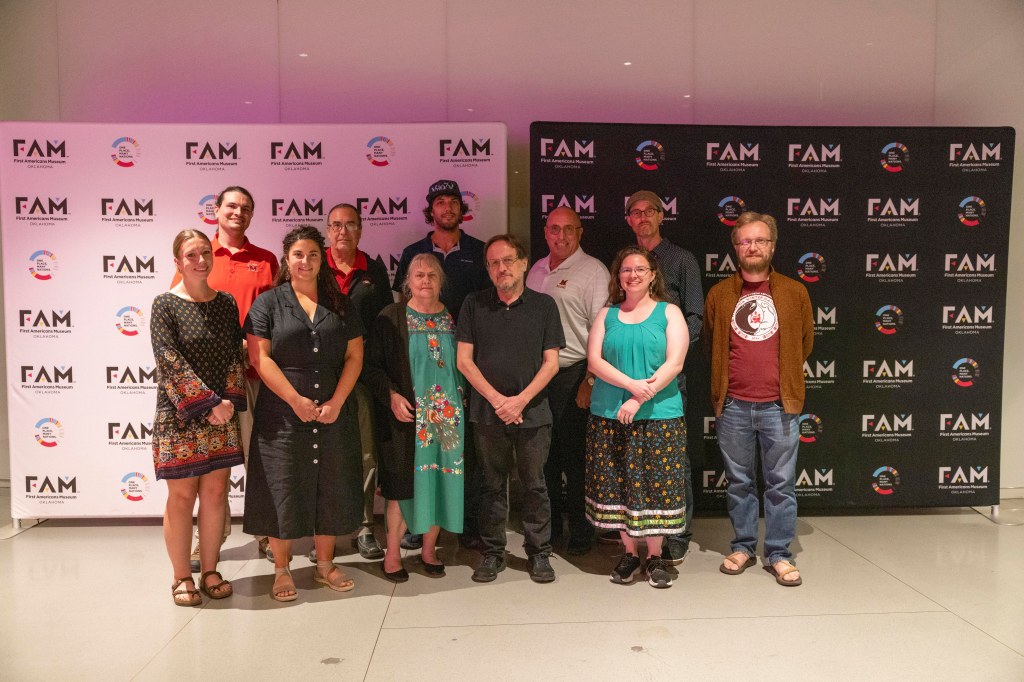
This year, the 56th Algonquian Conference was more than just an opportunity for the Myaamia Center to share its ongoing language research —it was a chance for many from the Myaamia Center to reconnect with colleagues and fellow researchers who share our passion for researching and using Indigenous languages.
“Algonquian” refers to a family of Indigenous North American languages, spoken in a number of regions, including the Great Lakes, the East Coast, the Central Plains, and the Subarctic. The Algonquian Conference brings together tribal members, scholars, and students to share research related to Indigenous communities speaking these languages. Because Algonquian languages were spoken across such a large geographical area, conference participants came from both what is today the United States and Canada.
Gathering at the First Americans Museum, in Oklahoma City, OK, the Myaamia Center staff joined a diverse group, with expertise ranging from specific linguistic knowledge to education, healthcare, and more, all united by a common purpose to share knowledge, celebrate Algonquian languages, and push forward work that protects Indigenous languages and stories.
For the Myaamia community, this conference was extra special, as we came together to honor Dr. David Costa, director of Language Research at the Myaamia Center, for his dedication to Myaamiaataweenki ‘the Myaamia language.’
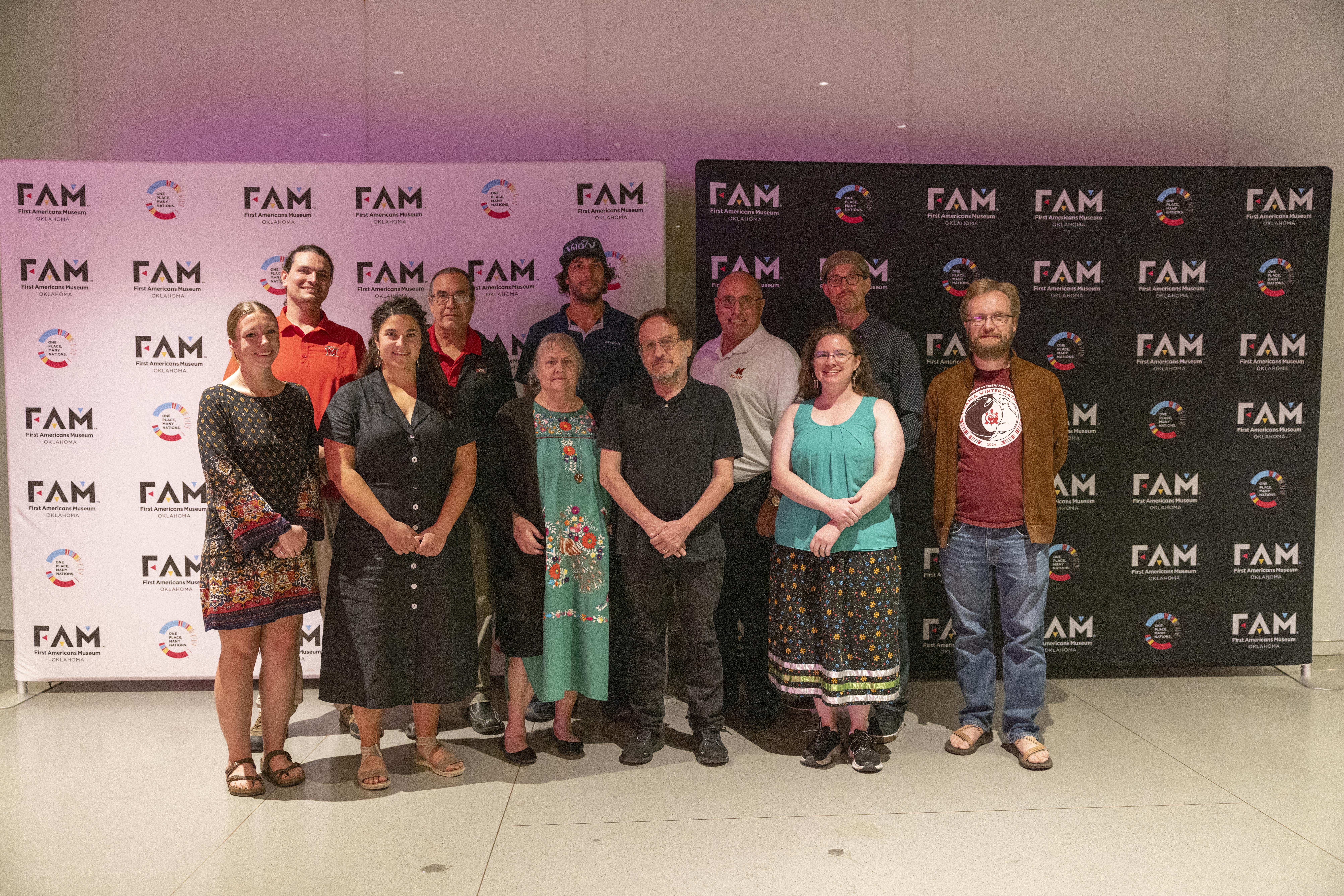
Oklahoma is home to 12 Algonquian-speaking tribal nations, including the Miami Tribe of Oklahoma, so conference organizers asked each tribe to nominate an individual who has impacted their language research and/or revitalization efforts.
David has been integral to the Myaamia language revitalization effort for over 30 years. Whether he’s providing linguistic analysis for education programs or answering questions from community members about his research, David has shown a true commitment to Myaamiaataweenki, and this recognition is well deserved.
Beyond honoring David, the conference gave us a chance to share our latest projects and research with broader academic and tribal communities.
The Myaamia Center had a major presence at the conference with four presentations by our staff. This included a keynote presentation, Technology for Revitalization: New Approaches to Archives from National Breath of Life by Daryl Baldwin, Myaamia Center executive director, and Jerome Viles, National Breath of Life (BoL) archives development trainer. The two presented on the development of the Indigenous Languages Digital Archive (ILDA) and its current role in National BoL programming.
Kristina Fox, Myaamia education coordinator, and Dr. Hunter Thompson Lockwood, language project coordinator, presented Bringing myaamia kiilhswaakana ‘Lunar Calendars’ into the Digital Age. The pair described how language informs content in the Myaamia lunar calendar and how the Myaamia Center has transferred that content online in recent years.
From the Myaamia Center’s Office of Assessment and Evaluation (OAE), Dr. Haley Shea presented on the Creation of Myaamia nahi mehtohseeniwinki ‘living well’ Model. In this session, Haley discussed how the OAE conceptualized the idea of “health” or “wellness” from a Myaamia perspective and developed a tool to measure health within the Myaamia community.
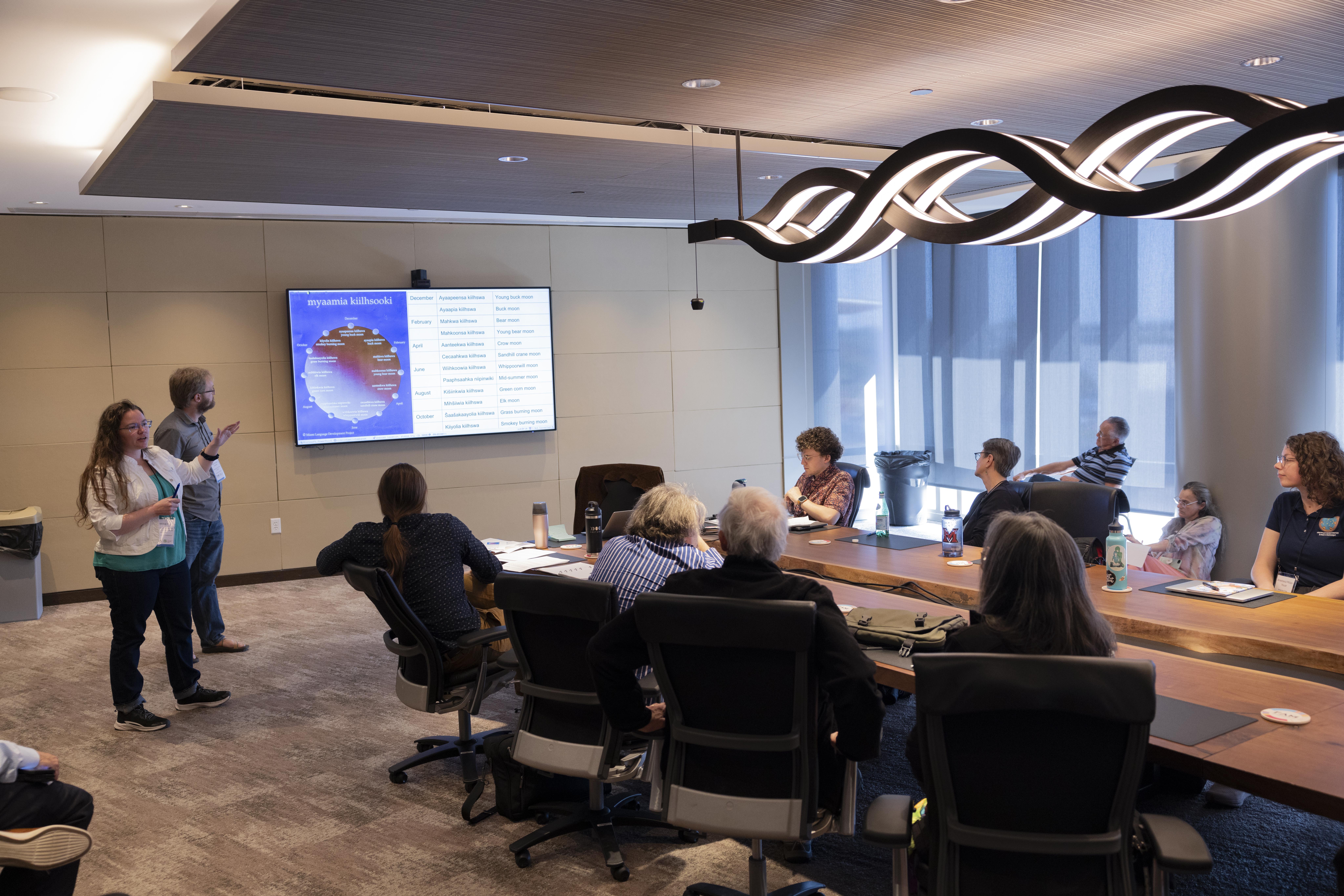
Participating in this conference not only gives Myaamia Center staff a chance to share our knowledge but also to learn from others engaged in this work. Topics discussed at the conference included technology for revitalization efforts, teaching language within tribal communities, how language informs health and cultural identity, and of course more specific language analysis of the lexicon, syntax, and morphology of various Algonquian languages.
Personally, my favorite session was from John-Paul Chalykoff, Michipicoten First Nation, who uses puppetry and music to teach Anishinaabemowin. Check out this number song and see if you recognize any similarities between Anishinaabemowin and Myaamiaataweenki!
As we reflect on our time at the 56th Algonquian Conference, it’s clear that this gathering was much more than an academic exchange. For those of us from the Myaamia Center, it was a time to reflect on the past, celebrate achievements, and draw inspiration for the future. Dr. David Costa’s recognition highlighted the dedication and passion that drive our work, while the connections we made and the knowledge we shared reaffirmed our commitment to revitalizing Myaamiaataweenki.
 Aacimotaatiiyankwi
Leave a comment