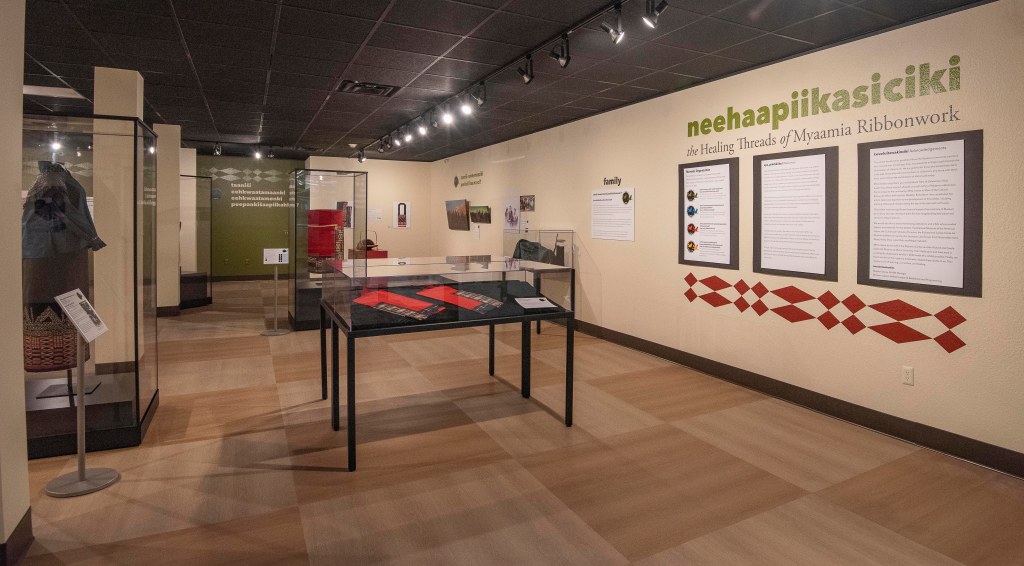
After 18 months of being closed due to renovations, the Myaamia Heritage Museum & Archive (MHMA) opened its doors on Thursday, January 23 of the Miami Tribe of Oklahoma’s Winter Gathering to share with the community its newest exhibit neehaapiikasiciki: The Healing Threads of Myaamia Ribbonwork. A project almost two years in the making, neehaapiikasiciki explores the history and production of ribbonwork, the processes that led to its dormancy within the Myaamia community, and the decades-long effort to reclaim and revitalize the art practice.
As MHMA Curator of Exhibitions and Programming, I had the privilege to work alongside MHMA Manager Meghan Dorey to bring neehaapiikasiciki to life. It’s our hope that throughout its 18-month run, neehaapiikasiciki will be a source of inspiration and healing for the Myaamia community, one that will continue the revitalization and reclamation of this beautiful art form.
Background
The COVID-19 pandemic put a stop to many things, including Myaamia Ribbonwork, an exhibit curated by staff from the Myaamia Center, and the Richard and Carole Cocks Art Museum at Miami University. It opened in late January 2020 and ran for just over a month before students were sent home for the remainder of the school year. As a result, very few Myaamia community members were able to see and reconnect with the historical ribbonwork pieces that were loaned for the exhibit. In response, Myaamia Center staff created this video walkthrough of the exhibit.
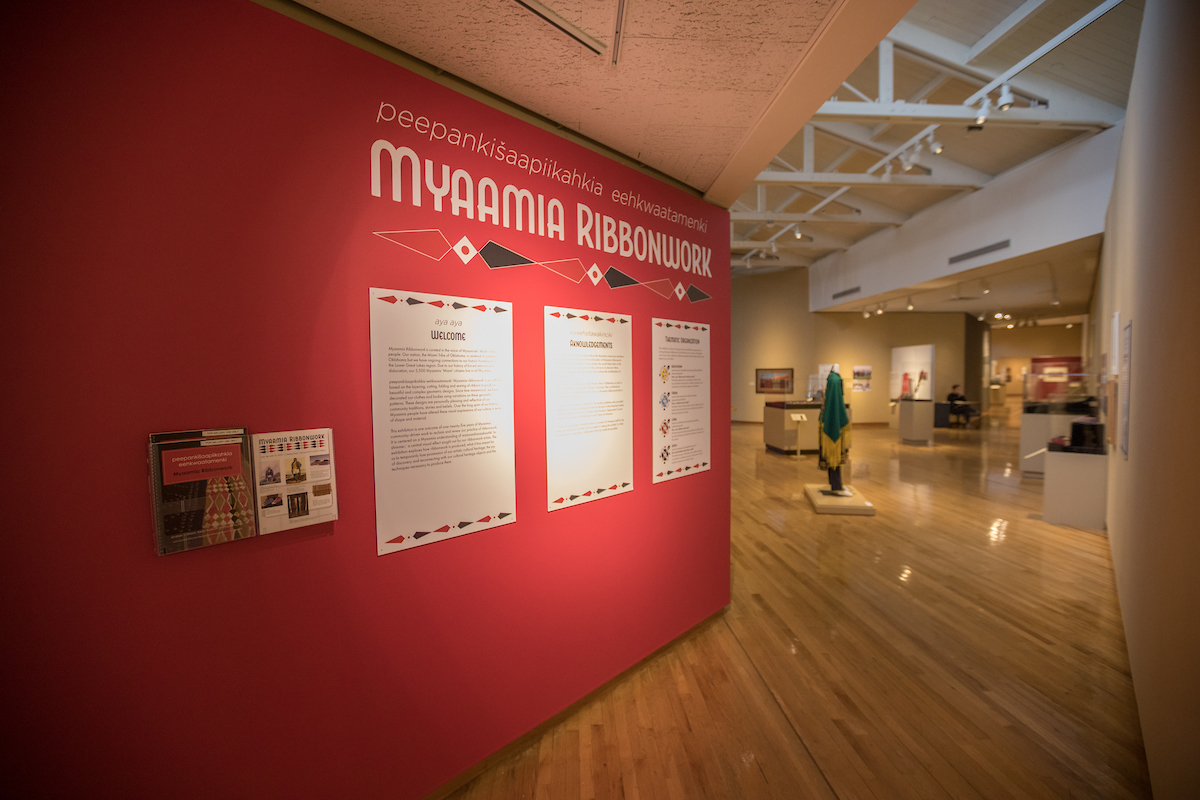
As the Tribe recovered from the pandemic, MHMA began to plan the museum’s next steps. A unique opportunity came in the fall of 2022 when the Tribe received a tip from Michael Galban (Washoe/Mono Lake Paiute), Director of the Seneca Art & Culture Center at Ganondagan State Historic Site. He informed us that several 19th-century Myaamia ribbonwork and silverwork pieces were to soon be auctioned off in Los Angeles.
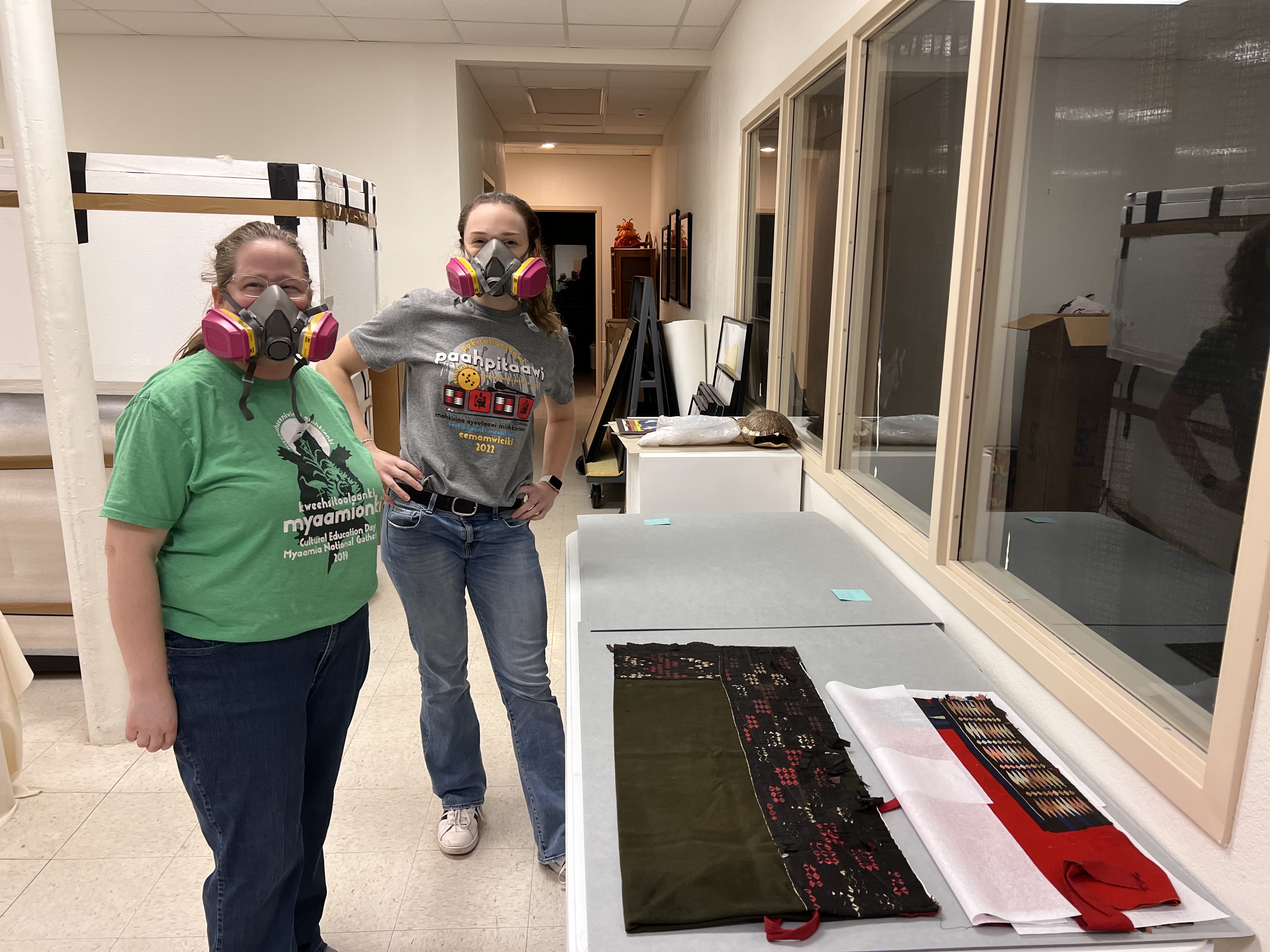
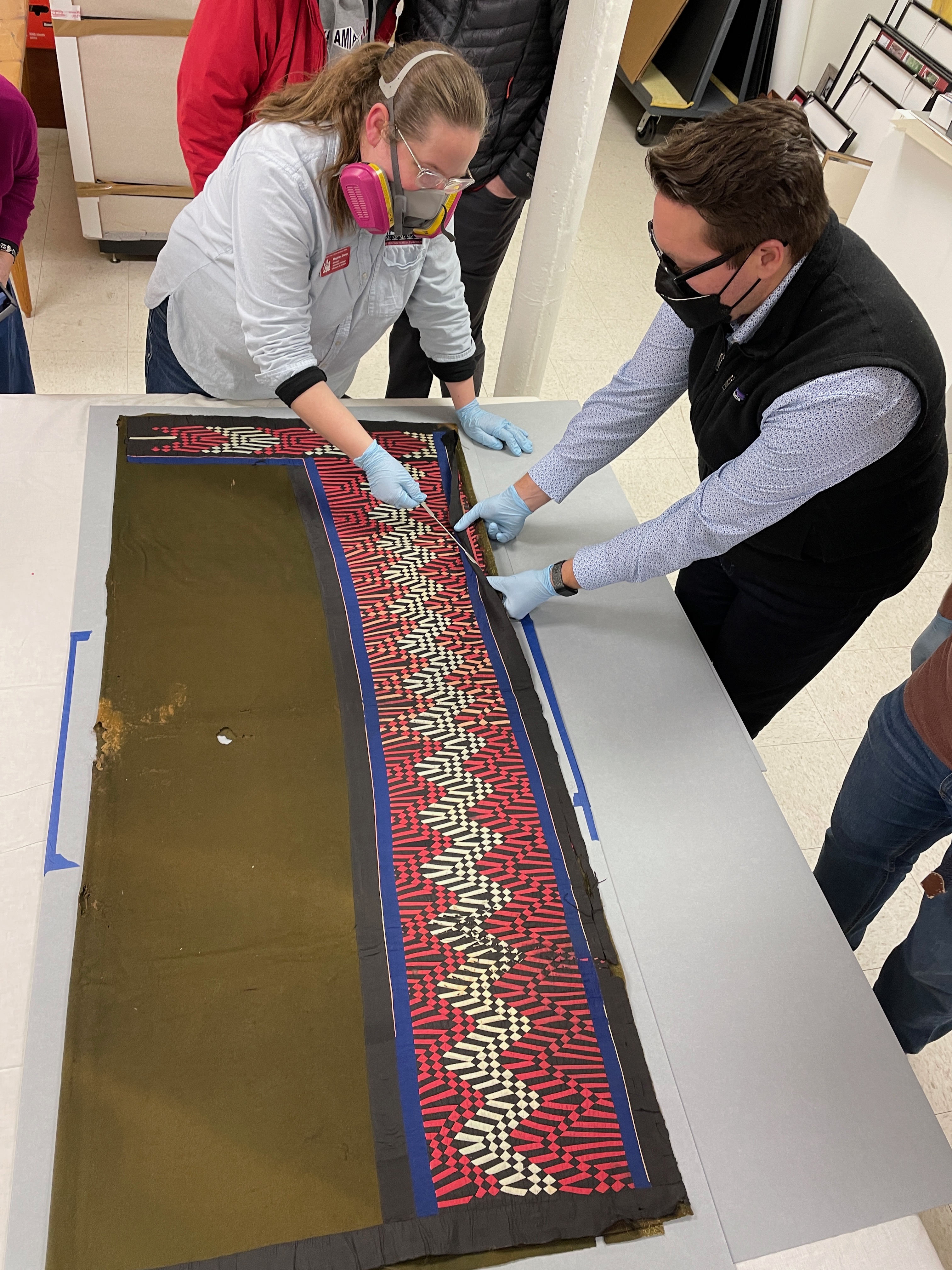
The pieces’ existence was unknown to the Tribe, having been kept in storage at the home of art collector Roy H. Robinson. The auction’s website revealed that the ribbonwork and silverwork were originally collected from Myaamia families in Indiana almost a century ago by Milford Chandler. The Tribe knew this was a once-in-a-lifetime opportunity to acquire historical Myaamia ribbonwork, and fortunately was successful in purchasing both the ribbonwork and silverwork pieces.
A second chance
Meghan and I knew we wanted our next exhibit to include the newly-acquired ribbonwork, but we soon began to think bigger. Knowing how much time, hard work, and resources were put into curating the 2020 ribbonwork exhibit at Miami University, we decided to apply for a grant from the Institute of Museum and Library Services (IMLS), a federal funding agency. Our goal was to build on the work of the previous exhibit to bring the same or similar pieces to Miami, Oklahoma to finally be enjoyed by the Myaamia community.
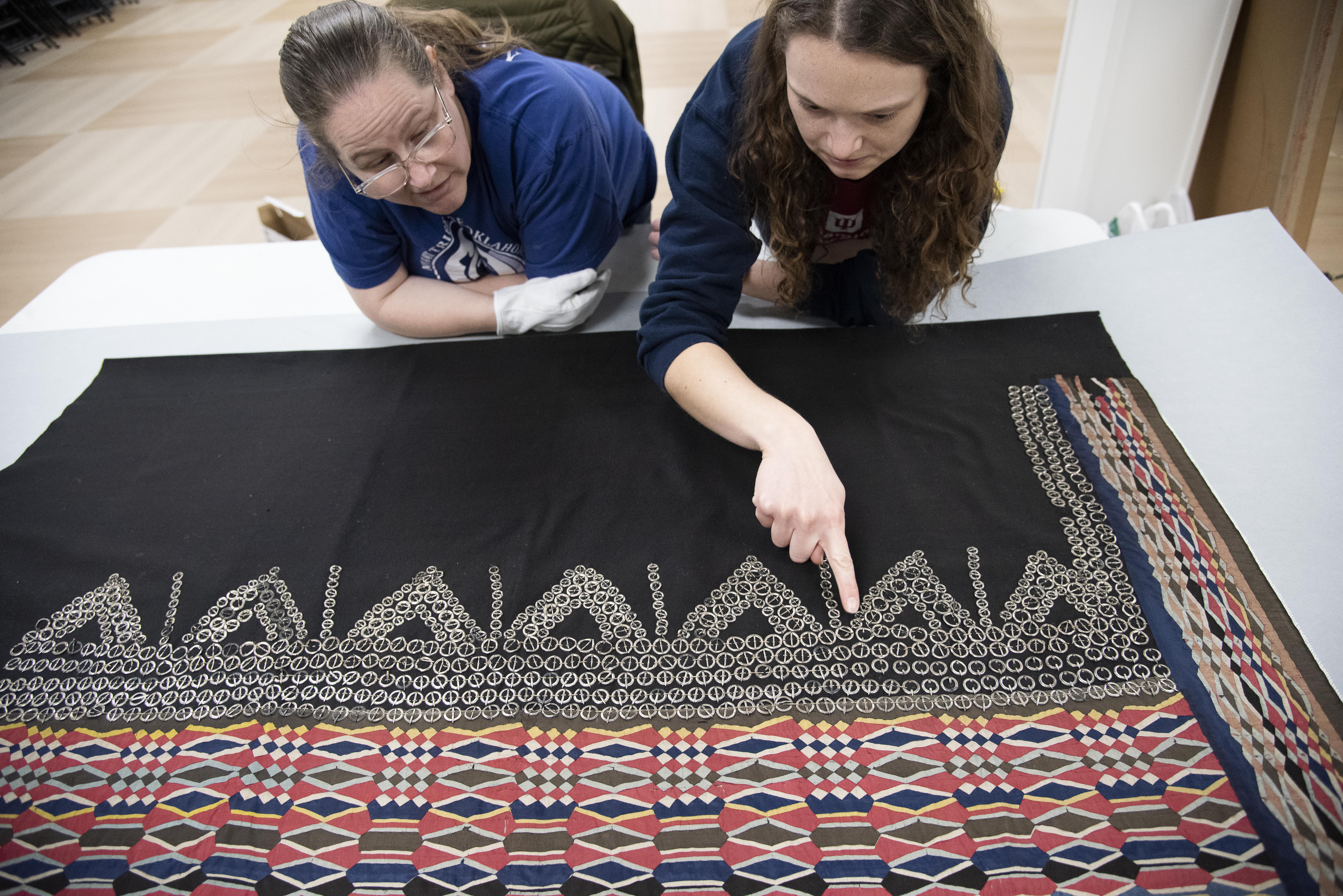
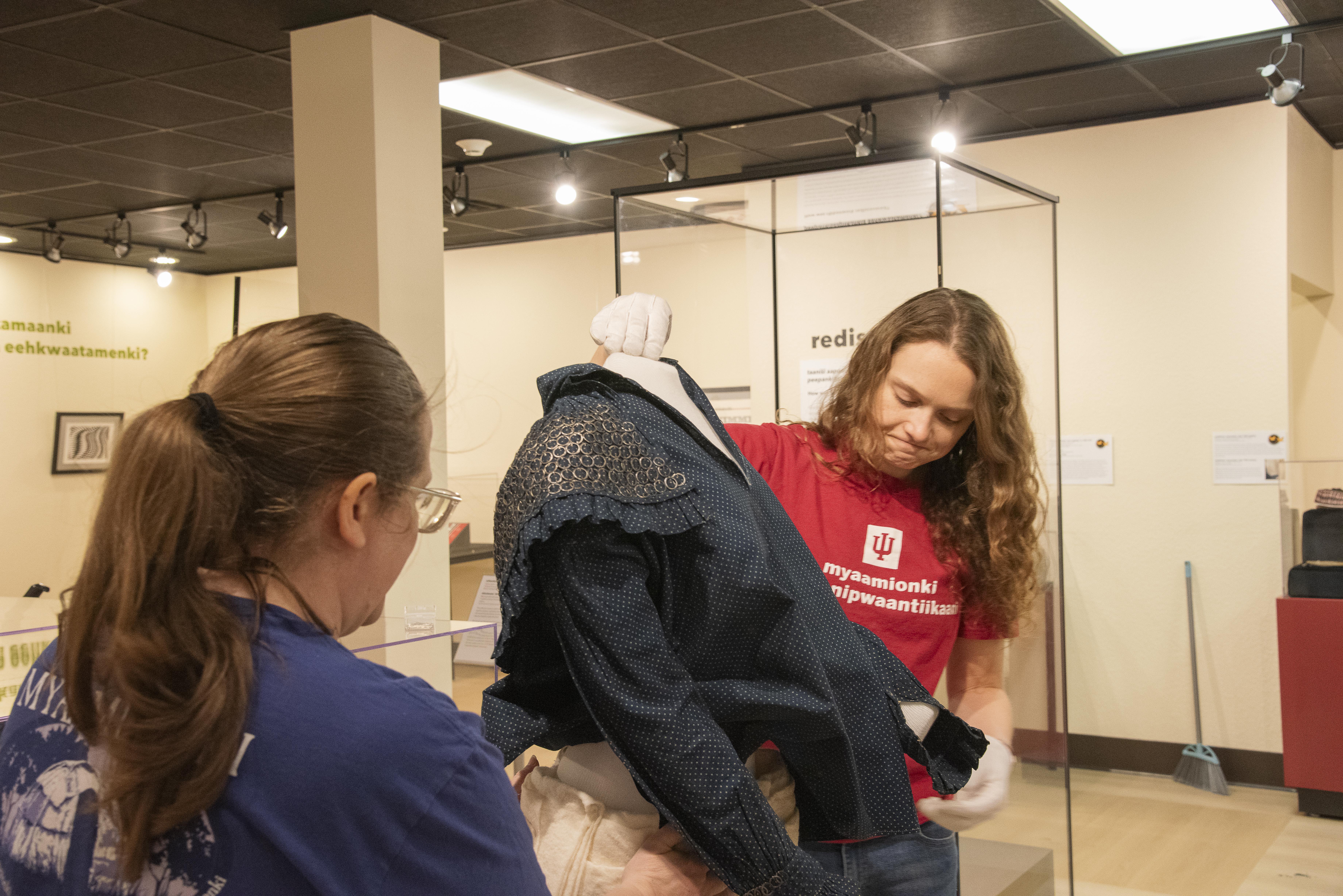
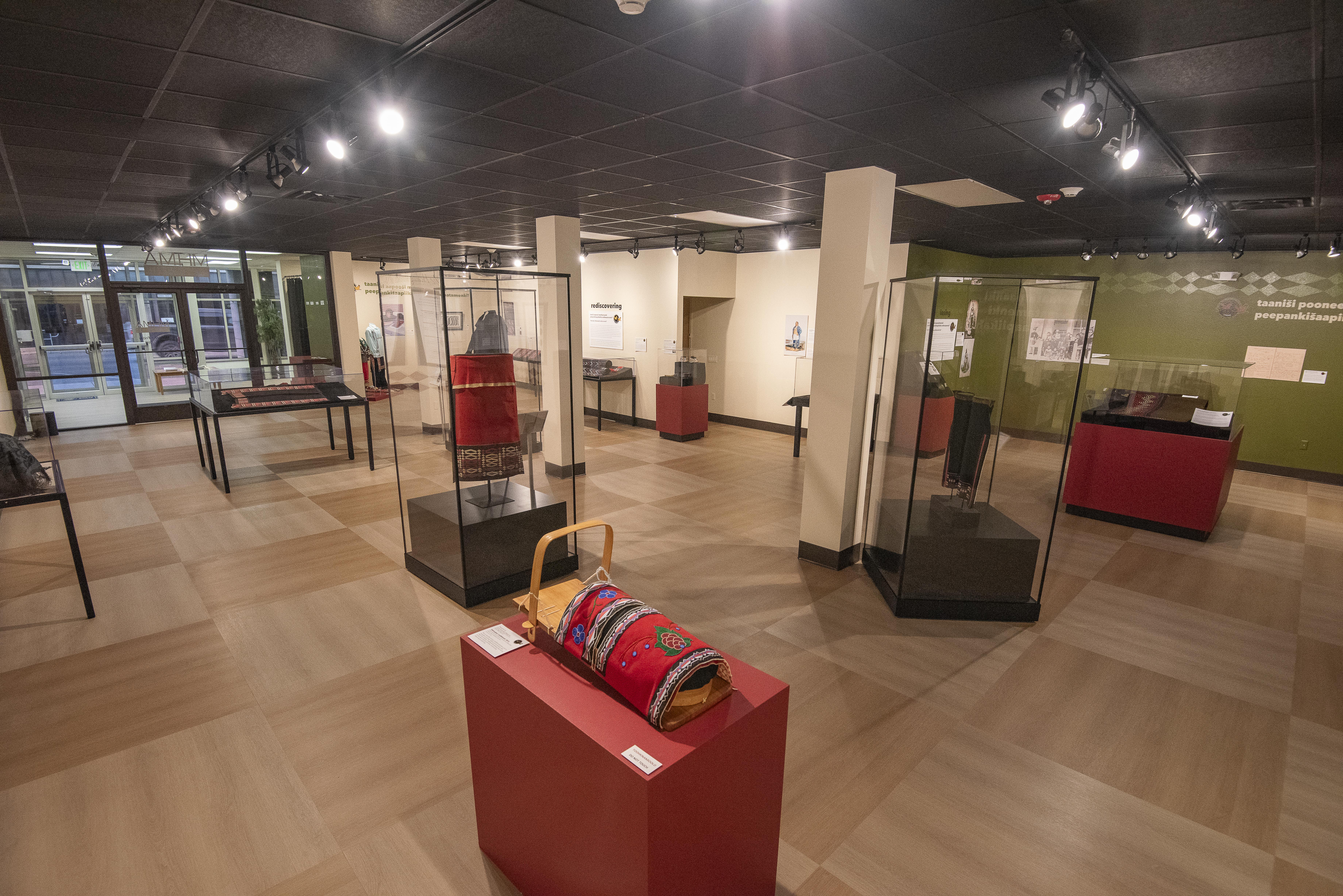
In 2023, the IMLS awarded the Miami Tribe $180,107 to be spent over the next three years to bring the ribbonwork exhibit to MHMA. Using this funding, we renovated our gallery—this included significantly improving light levels, adding security measures, and purchasing new professional museum-grade cases. Now, we could not only safely display the ribbonwork pieces the Tribe purchased from auction, but we could also request object loans from other museums. MHMA was successful in securing loans of ribbonwork from both the National Museum of the American Indian and the Cranbrook Institute of Science, both of which had also loaned objects for the 2020 Miami University exhibit.
Visiting the exhibit
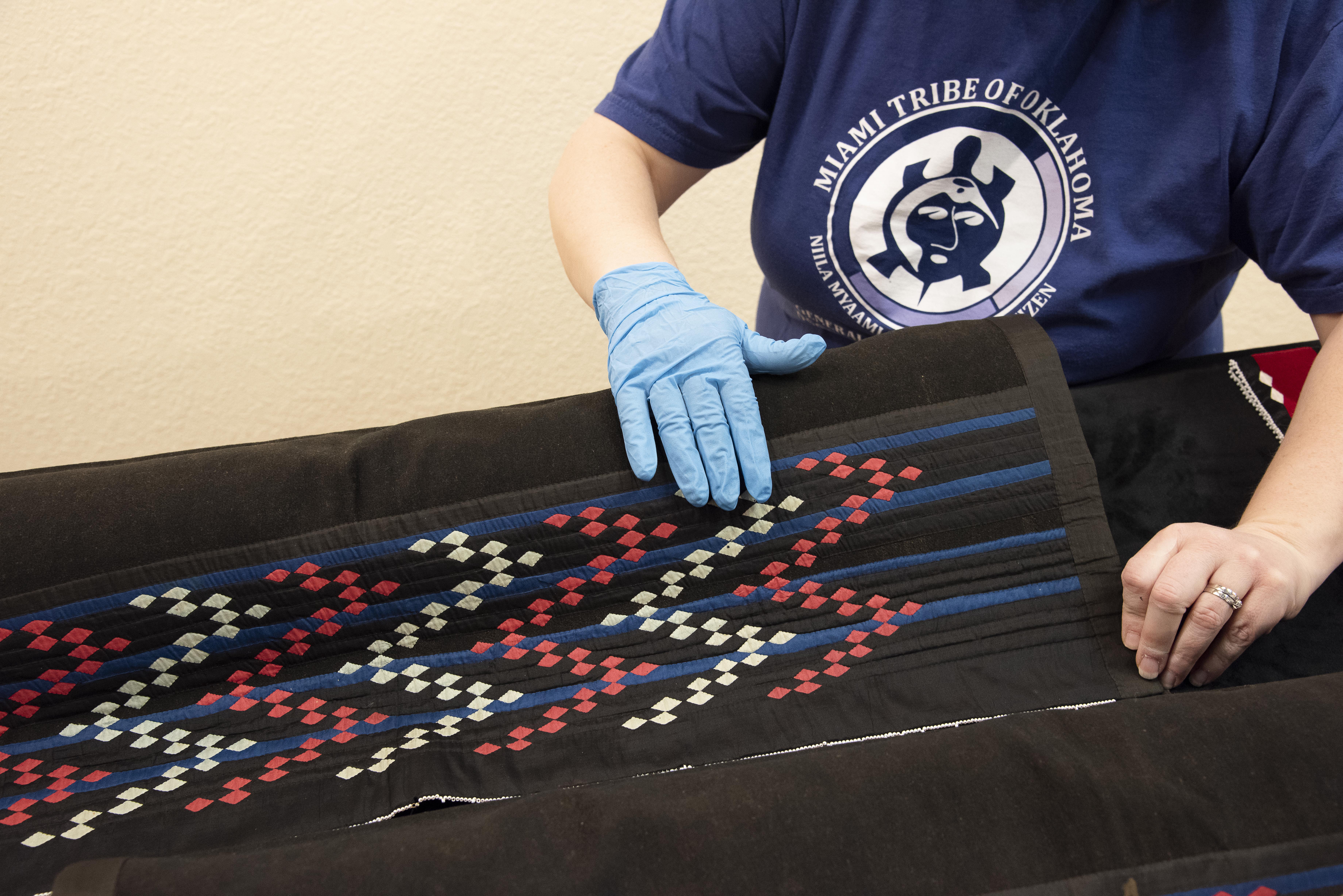
Like the 2020 ribbonwork exhibit at Miami University, neehaapiikasiciki is organized by four themes that provide visitors with different perspectives for viewing Myaamia ribbonwork. The first is family, which focuses on the labor and wealth necessary for Myaamia families in the 19th century to dress their loved ones in ribbonwork. The next theme is making, which looks at how ribbonwork was made in the past and the various methods used today. The third theme is losing, which examines how ribbonwork was taken out of the Myaamia community by collectors, leading the art form to go dormant. The final theme is rediscovering, which explores how the knowledge of ribbonwork was reclaimed and led to a broader revitalization of Myaamia design and aesthetics.

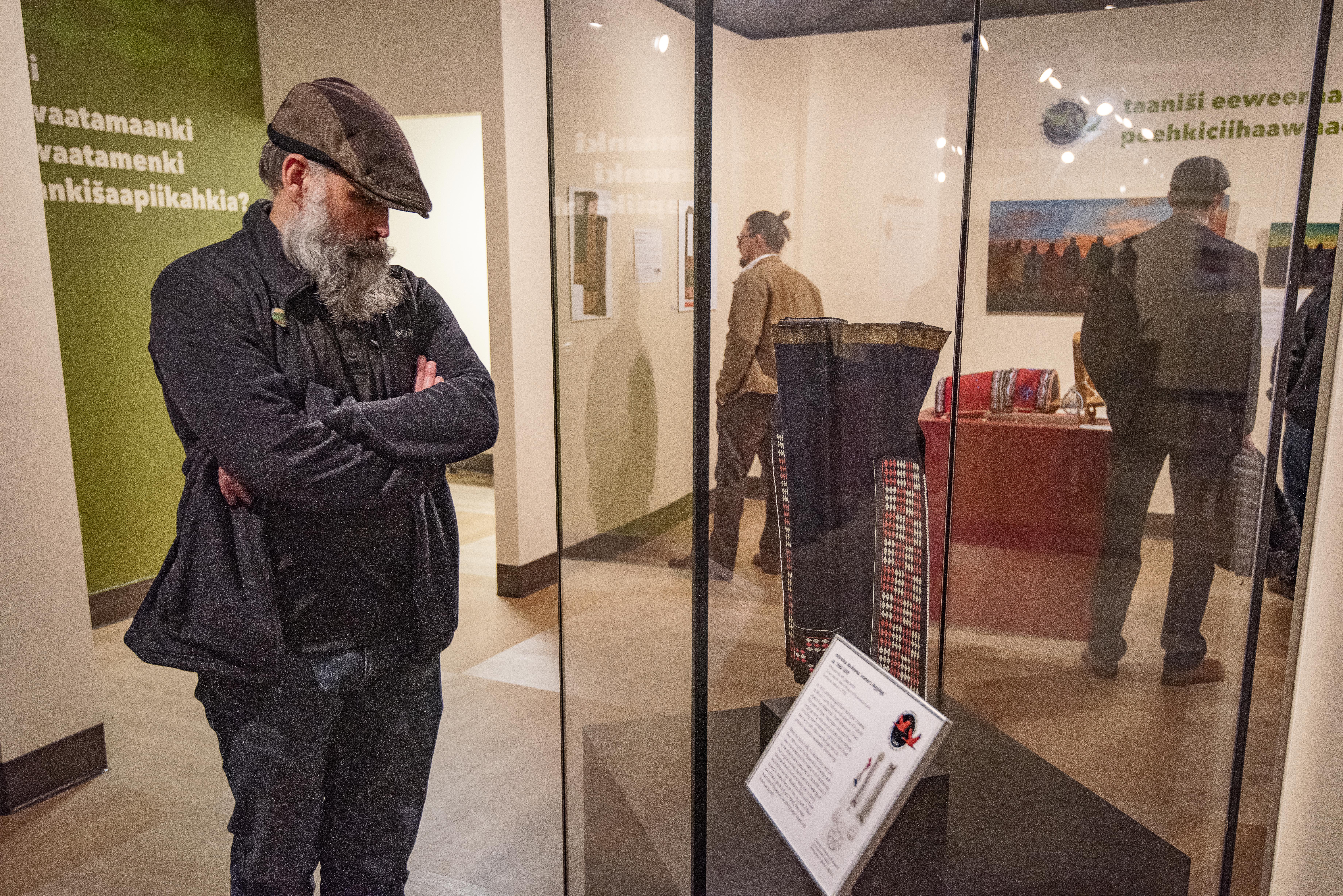
Throughout these four themed areas of the exhibit, visitors will see a mix of both historic and contemporary pieces. MHMA is excited to feature works by Myaamia artists Scott Shoemaker, Kara Strass, Julie Olds, Katrina Mitten, and Megan Sekulich.
Reflections and looking forward
With neehaapiikasiciki now being open to the public for a few weeks, I’ve had some time to think about the significance of this exhibition, one that I am truly grateful to have been a part of. This exhibit is the first time that historic Myaamia ribbonwork has been in Miami, Oklahoma, for tribal citizens to enjoy since the pieces were collected and removed from the community over 100 years ago. neehaapiikasiciki also marks a major milestone for MHMA, as it is our first exhibit featuring Myaamia objects on loan from another museum. With the improved lighting and security in MHMA’s renovated gallery, it is our hope that we can pursue loans of Myaamia objects from other institutions for future exhibits for the community to enjoy.
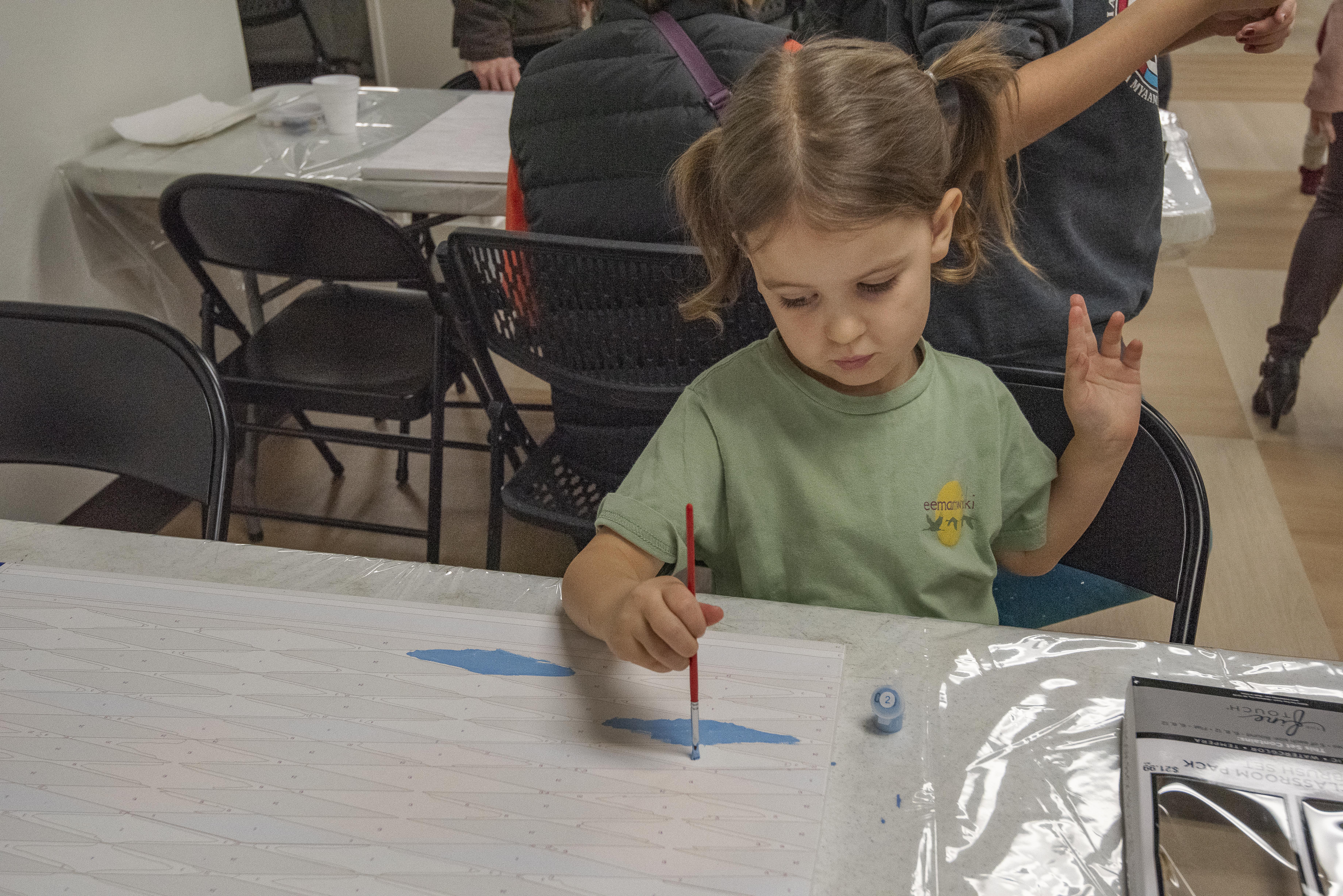
neehaapiikasiciki will be open until July 2026. For those who had a chance to see the exhibit at Winter Gathering, there will be two additional objects included later this spring. The first is a pair of mid-19th-century ribbonwork leggings, collected from the family of Camillus Bundy by Milford Chandler in the 1920s; these leggings were one of the objects that was purchased by the Tribe at auction. The second piece is a bandolier bag inspired by the return of these leggings and was a collaboration between Myaamia artists Scott Shoemaker, Kara Strass, Jared Nally, Logan York, George Ironstrack, Katrina Mitten, and Megan Sekulich. These two objects are currently on display at the First Americans Museum in Oklahoma City in their exhibit Mended: The Language of Myaamia Ribbonwork, which runs until March 16. While MHMA is open during weekdays from 9 am-3 pm, we will have extended hours at this year’s National Gathering Week for tribal citizens and their families to enjoy neehaapiikasiciki. During this time, MHMA will also be putting on its biennial Eugene Brown Memorial Art Show. Please check MHMA’s Facebook page and miamination.com/mhma for updates about the art show, as well as upcoming programming and workshops related to the exhibit.
 Aacimotaatiiyankwi
Leave a comment