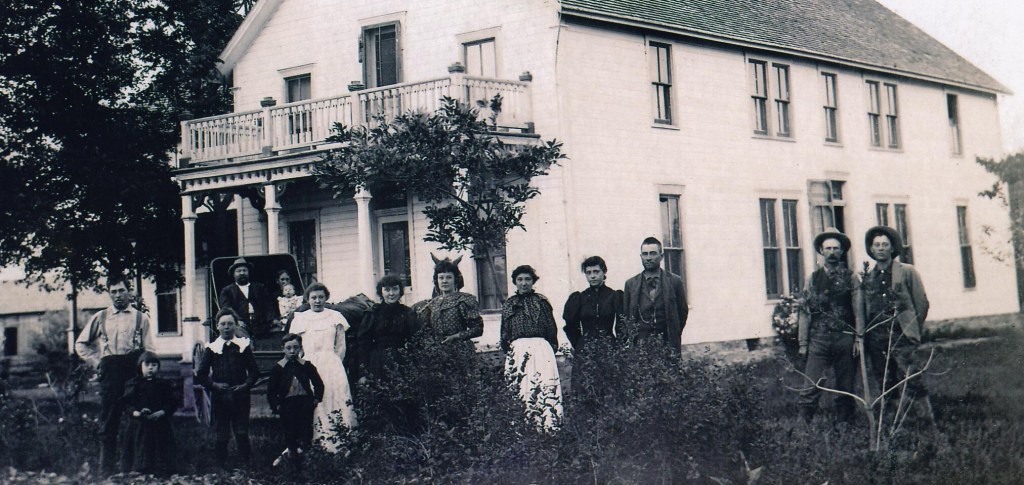
Also known as Jane Pigeon Wilkerson Drake, Miami Citizen
Written by: Patrick Drake
I was asked to write about my great, great-grandmother. I can only write about what I have read and researched about her.
We do not know if Jane was born in Indiana, Ohio, or Kansas. She was an allottee in Kansas and Indian Territory (Oklahoma).
The Unknown Years (Miami County, KS)
Government records show her name as Jane Pigeon and Jane Wilkerson. The Wilkerson name to this day is unknown; where did it come from? How did she receive this English surname?
To date, my family does not know where this name came from. My father wrote the National Archives in Washington DC in the 1960s and only got back a United States competence report on Jane Drake and her son Thomas Sumner Drake (my great grandfather). These documents were turned in to the Miami Tribe of Oklahoma Archives Department.
I think it is probable that she was raised in a Catholic orphanage in Paola, Kansas. A family in Miami County with the surname “Wilkerson” raised her until she became old enough to support herself. She may have done their domestic duties, such as cleaning, cooking, and babysitting.
Despite important questions, we do know facts about the life of Jane Drake.
The Early Years (Miami County, KS)
There is very little archival information about her until she married my great, great-grandfather Milton Kelly Drake. Although I want to write about Jane, it is almost impossible to investigate her life without including her husband. They were married thirty-eight years and had a large family of twelve children.
Milton’s parents, William and Leah Drake, were farmers who moved to New Lancaster, Kansas Territory. Their land was north and almost adjacent to the Thomas F. Richardville allotment. From the Drake farm, the distance is about five and a half miles by horse ride to Jane Pigeon’s allotment. We don’t know how they met, but I can think of some possibilities. The largest town in that vicinity is LaCygne, Kansas about ten miles to the south of Milton’s parents’ farm. One version is Milton riding his horse and noticing Jane on the way to town. Another version that Chief Thomas F. Richardville may have introduced them.
At the beginning of the U.S. Civil War, Milton enlisted on August 7, 1861, in the U.S. Army at Trading Post, Kansas (in Linn County) and mustered out on August 18, 1864, at Ft. Leavenworth, Kansas. He was in the Tenth Regiment Kansas Volunteers – Infantry Company E. He was a Teamster–Wagon Master. Pvt. Drake supplied the troops by moving military goods and equipment from one campaign to another by horses, mules, and wagons.
Post-Civil War
Thomas F. Richardville (future Miami Nation chief, then an interpreter, clerk, and Baptist minister) married Jane Pigeon and Milton Kelly Drake on the Miami Reserve in 1866.
After the Civil War, the state of Kansas expected higher rates of settlement. The state could not generate taxes or revenue on Native American allotments. And, Miami people suffered squatters and high rates of violence from Americans. After twenty-plus years in Kansas, the Western Miami’s were on their second removal to the South in Indian Territory (I.T.).
When Jane was in Kansas, she had the option to receive United States citizenship and to remain in Kansas. She stayed with her tribe and went through another removal not knowing what the outcomes might be. The migration to Indian Territory was a risk. She must have thought: Is this move going to offer a brighter future? Are we going to have to move again, after getting established, again?
Jane (probably) experienced her second removal, with her husband having survived four years of war. The mother of a young family, the Drake’s moved south to a new reservation.
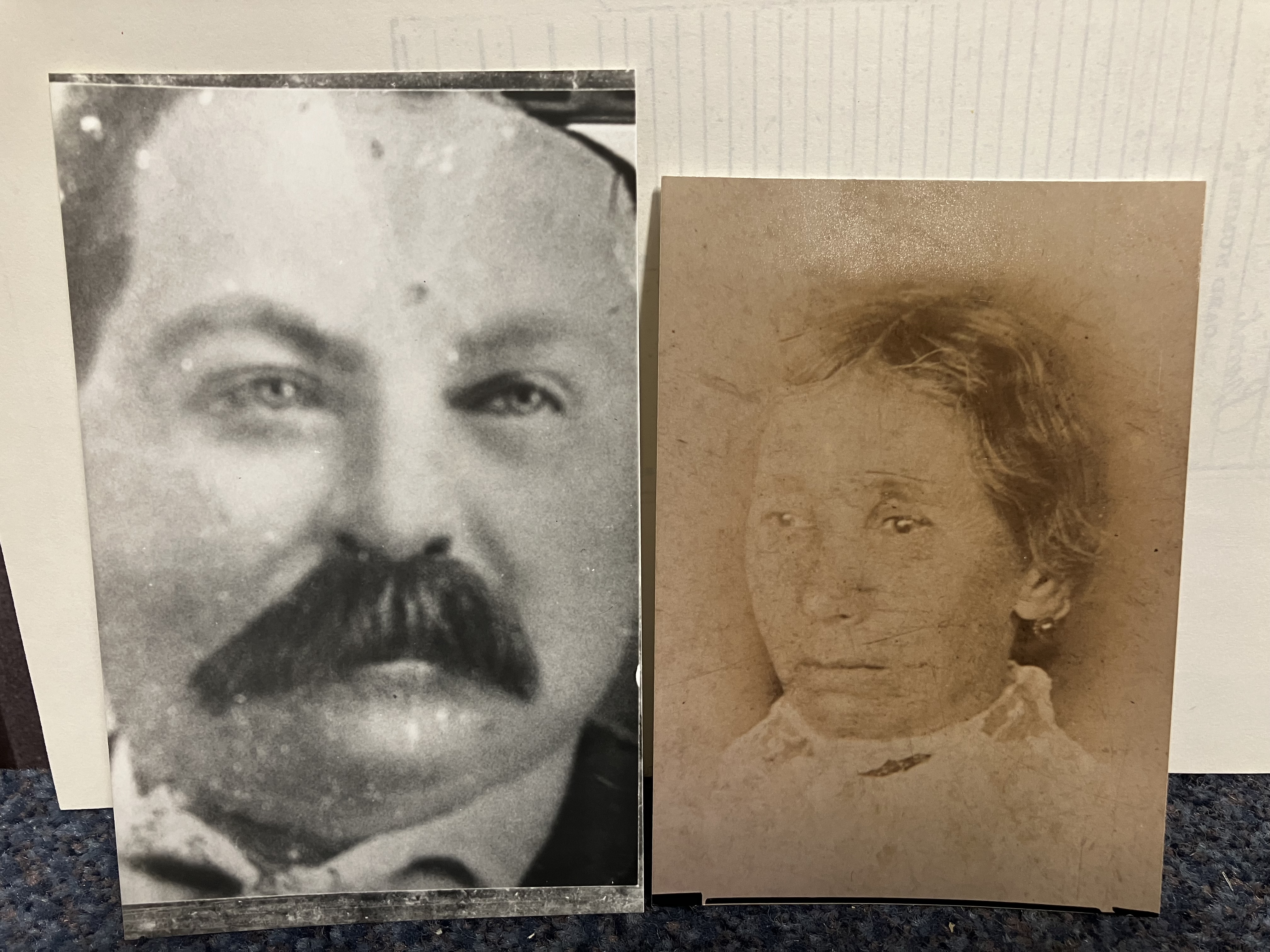
Chetopa, Kansas
The reserves in Indian Territory did not have any services, dry good stores, lumberyards, or hardware stores. Post offices did not exist in I.T. There were no services or supplies at this time.
So, Milton and Jane moved to Chetopa, Kansas, and built a house in the meantime to prepare for their final move to the Miami Reserve. Milton was a Civil War veteran and received a pension from the United States Government (and, a U.S. Post office was needed to receive mail, including his pension).
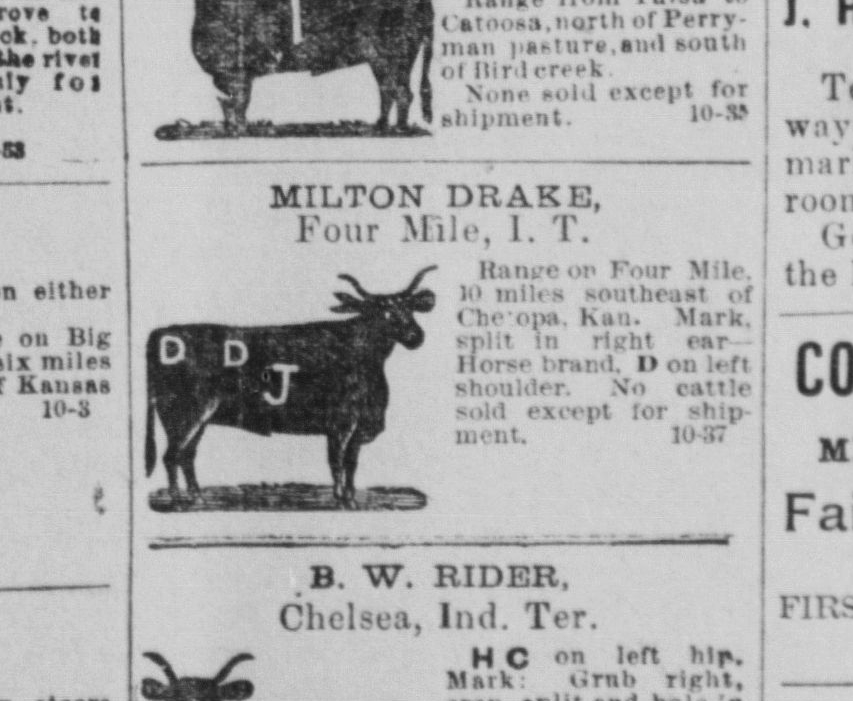
Milton started a sawmill business around the Neosho River bottoms, west of where the Drake House stands today. He and Jane also owned Milt Drake & Company. “We always have horses, mules, wagons and harness for sale cash or on time.”
These businesses would help the family build the house, barns, outbuildings, and purchase horses, cattle, hogs, seeds, and supplies.
Miami Allotments: The Drake House
Jane and Milton had twelve children. The older children had Myaamia and English names. Eleven children & Jane received allotments in I.T. Patrick Drake was the youngest son and did not receive an allotment.

Jane and Milton were some of the largest cattle ranchers and farmers in northeast Oklahoma.
Total acreage for Jane and her eleven children (12 x 200 acres) = 2400 acres. The Drake family owned about 3.5 square miles of prairie.
There was the “Drake School” in the neighborhood. I suspect that Jane & Milt did not want to see the family broken apart like she has seen in past dealings with the government. This was probably her stance with the government that her children could not be shipped off to Haskell or Wyandotte boarding schools. Somehow she was successful in keeping the family intact.
She was the matriarch of the family, she had her hands full raising twelve children and supporting her husband’s business ventures.
Jane passed away on July 29, 1918. She was never a citizen of the United States. The Indian Citizenship Act of 1924 made all Native American citizens of the United States.
 Aacimotaatiiyankwi
Leave a comment