
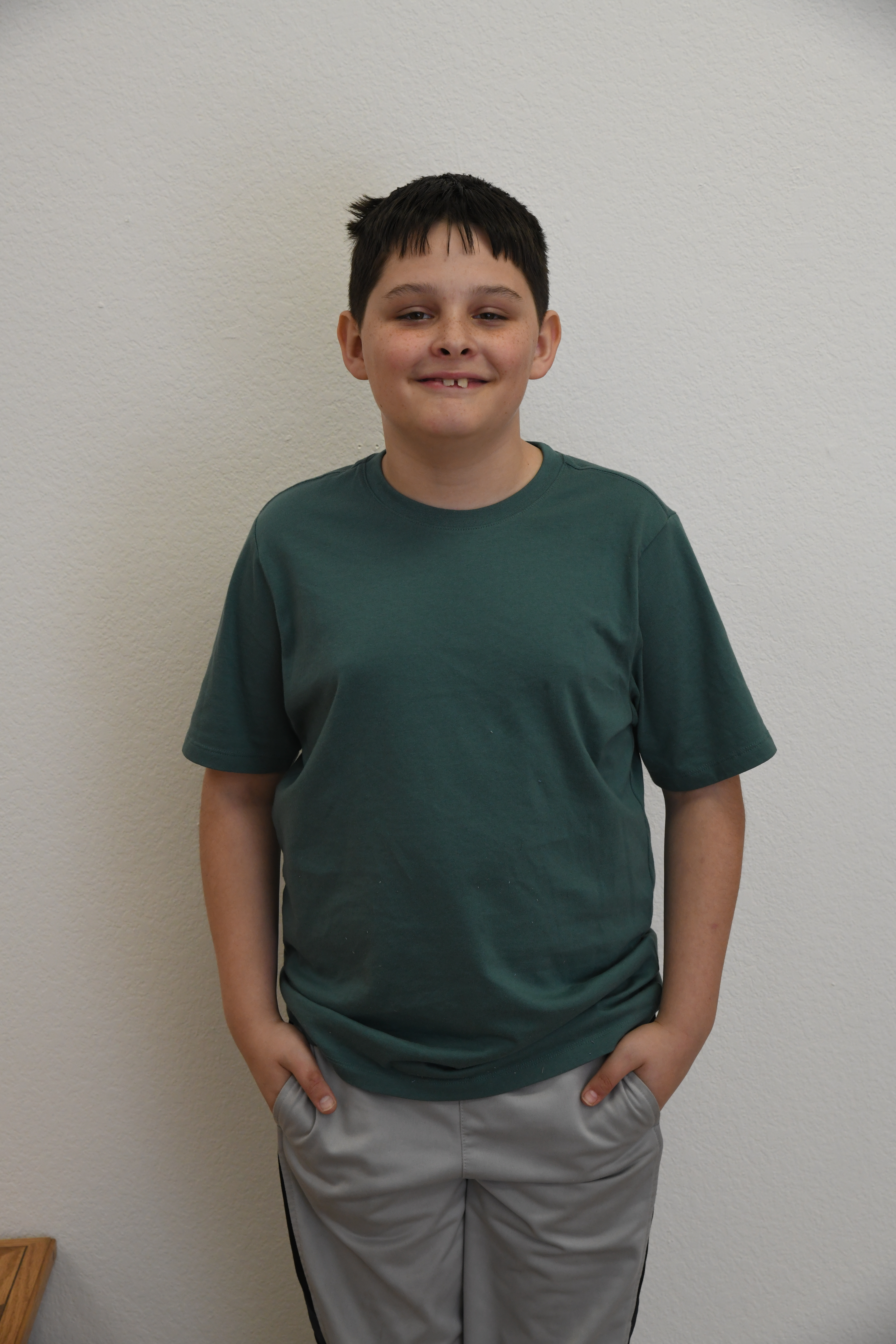
Meet Mihtekia ‘Josiah Dorey’, a young Myaamia artist from Miami, Oklahoma. He has received several awards in his budding artistry, with a piece currently placed in the “City on a River” exhibit at Indiana University, which is scheduled to open at the end of May. He is the son of Matt and Meghan Dorey, grandson of Melisa Palmer, and great-grandson of Peggy Olds McCord, who was also an artist. In this post, he shares his experiences creating art and how his Myaamia identity influences what he creates.
What type of art do you like to make? What’s your favorite medium?
There are many mediums and types of art Josiah enjoys making. It was hard to pick a favorite, but he listed several types he has tried and enjoyed: “I really like painting, sketching, but just black and white with a pencil… Beading, sewing, photography… I’ve done some paper weaving and paint pouring.”
He has been interested in various arts, from traditional to more experimental methods and mediums, sometimes combining the two.
“I really like landscapes, painting landscapes,” he says. “And probably my favorite, I’m pretty sure it’s my first drum… once I started to learn how to make it, I really, really liked it. And [then] I painted on it, and I actually really, really, really liked it!”
Using a kit, he has made two drums of different sizes with animal hides, one deer and one buffalo. He explained, however, that the process for both was very similar.
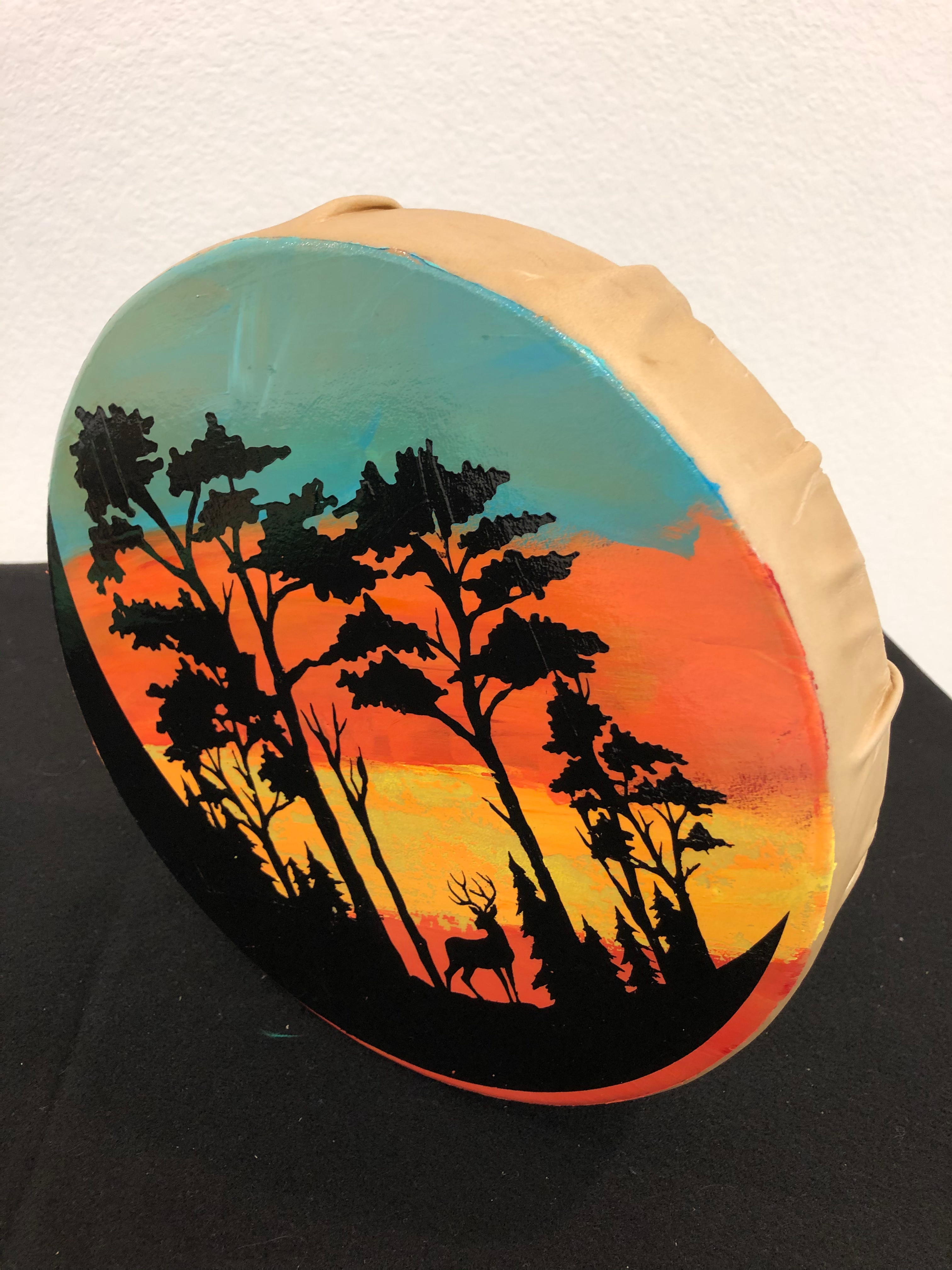
“I know you have to soak it first, overnight, so it stretches more because it has to be very stretched out and tight, especially the strings that hold it underneath. It has to be very tight before it makes noise, the drum sound.”
He also made a beater for his first, smaller hand drum. “It’s just leather and literally part of a branch from out back. You just take some leather and fold it up over the end and tie it up with something.”
How have you learned to make art?
“For the drums, I used a kit… it comes with everything you need to make it how you want.”
He explained, too, how he likes to experiment and try new methods and mediums to create art.
“I’ve learned a lot from her,” he said, motioning to his mom, Meghan, “And kind of just on my own. And my regular painting was mostly from school and art club.”
What’s your favorite piece you’ve ever made?
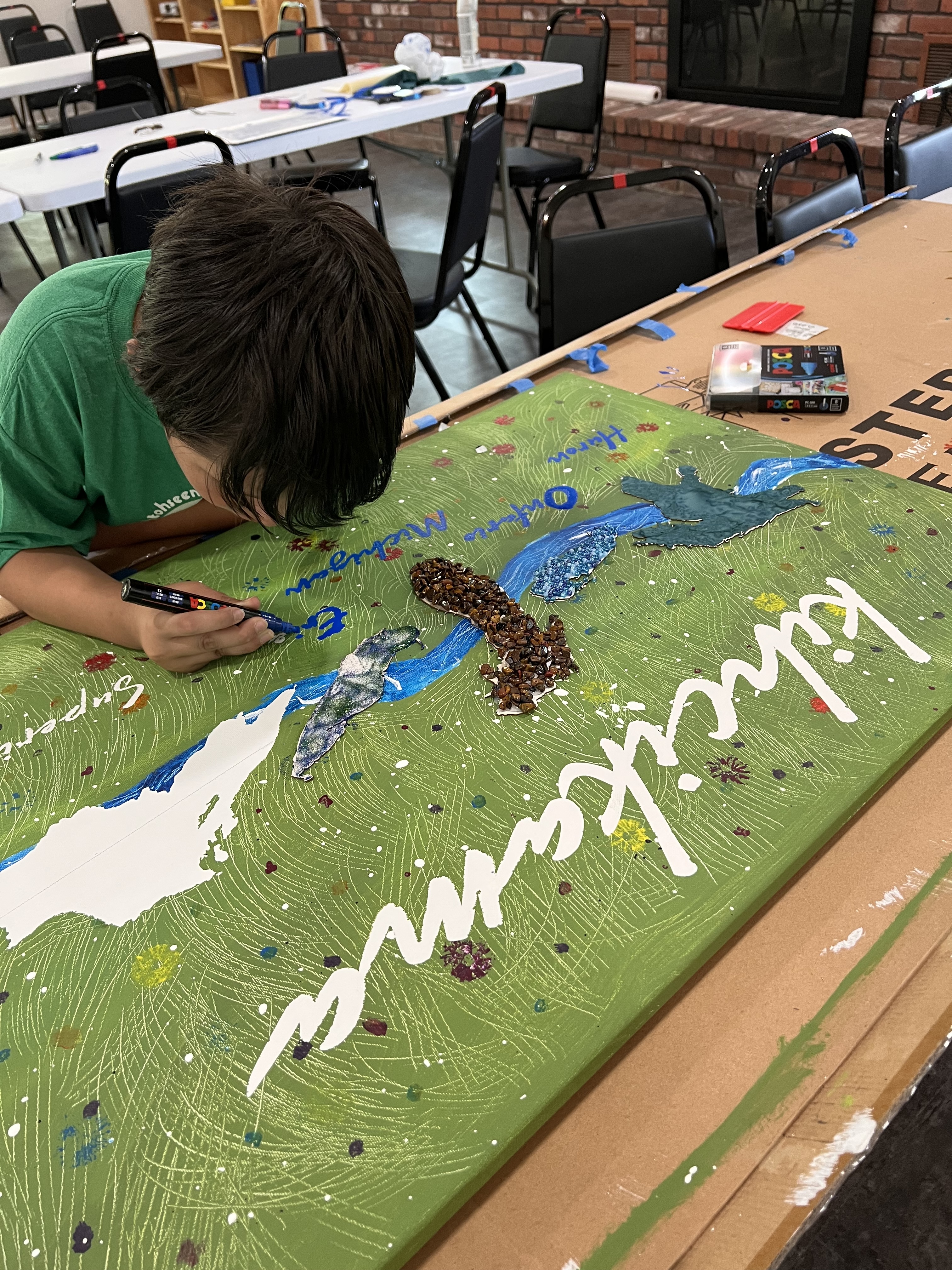
“Probably either my Great Lakes [Kihcikama] mixed media painting or my first drum.”
In 2021, the Philbrook Museum in Tulsa, OK, held The Big Show exhibit featuring over 3,000 pieces of student and youth artwork from all over the state. Several youth’s works from the 2020 bi-annual Eugene V. Brown Memorial Art Show held by the Myaamia Heritage Museum and Archive were sent to The Big Show. One was Josiah’s first drum, the only drum in the exhibit.

How would you describe your art?
Most of his work involves painting, but he describes it as experimental because he often creates works of mixed media.
“For the Great Lakes painting [Kihcikama], I learned how to make a flower out of a straw from a video. You make it by cutting a part of it and then spreading it out and just sticking it into the paint. You stamp it down with paint on it and it looks kind of just like a flower.”
In that same painting, he said, “I made the grass from a fork. We used a lot of different techniques that I wanted to try. It turned out really well, and it’s a really big painting.”
He also described his artwork as colorful. “I used a brush for the green and then used a darker green for the grass with the fork. And then different colors like purple, yellow, or red for the flowers.”
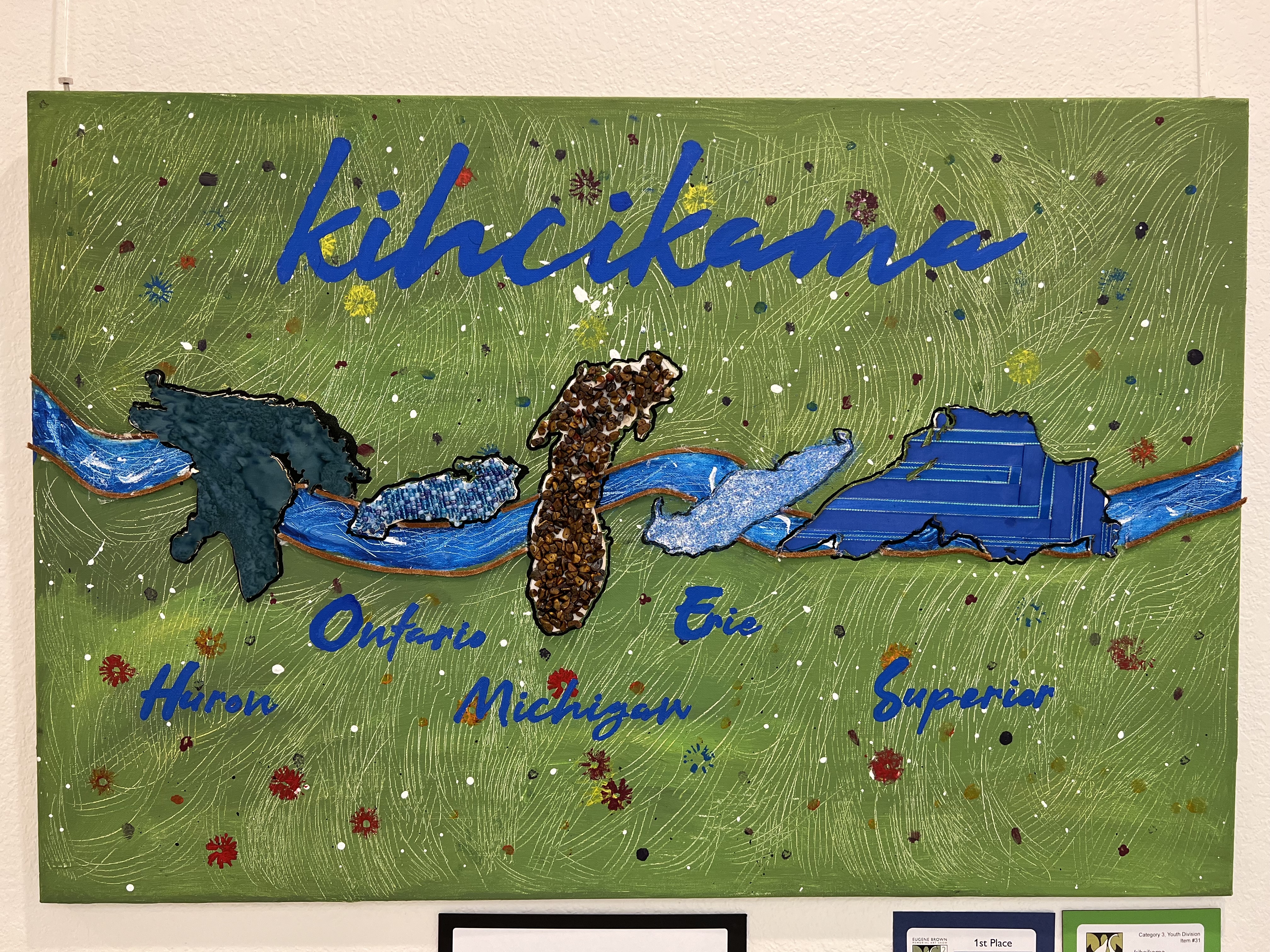
“One [of the lakes] was fabric, and we used the laser to cut fabric. One of them was beads with a mat board as the base for the beads. One was river rock, one was ribbon, and one was glitter,” Meghan reminded him.
For the text on the painting, he used vinyl to create a “mask” on the canvas. This was done by sticking the vinyl on the blank canvas, painting over it in green, then taking it off, leaving the blank canvas underneath for tracing, and filling it in using a paint pen. “That’s why you can read it! It’s better than my handwriting.”
What do you like about creating art?
He said he enjoys the process of creating and designing, and “I do it because I really like doing it.”
Making art is his biggest hobby and a way to pass the time. “I don’t just like it, but sometimes when I don’t have anything to do, it just brings me joy. I don’t know why.”
He explained further, “I’ve always liked painting and a lot of color blending, using a lot of color and mixing colors together. I really like that. One thing was paint pouring with a cup. We filled a cup and poured in layers of paint, and then put the painting on the cup, and then we flipped it over and picked up the cup. It looked kind of like it was all being mixed on the painting. That is one thing that I really like to do, especially in the summer.”
He also explained that it is not just for himself or a hobby; he enjoys bringing joy to others. “I feel like when I do it, I feel joy when others look at it, not just me.”
Two years ago, you were awarded “Best in Show” for your piece, Kihcikama, at the Eugene V. Brown Memorial Art Show. Do you remember how it felt to win? What was that like?
“I didn’t feel like bragging about it; I just think I did a really good job on it,” he said.
He took his time to make it and finish it even though it was a big project. The feeling of accomplishment came from investing that time and energy into creating a good painting that was rewarding, in and of itself, for him.
“It took a few days to make, because, especially finding a big canvas, because I thought, ‘Hey, maybe I should do a bigger job this time because most of mine are like small paintings.’ And I did spend a few days working on it.”
Why did you decide to make that piece?
The theme for that year’s Eemamwiciki Summer Programs inspired his art. “We learned a lot about rivers, which is why we decided to make the river drum. And then I decided, maybe we should do the Great Lakes.”
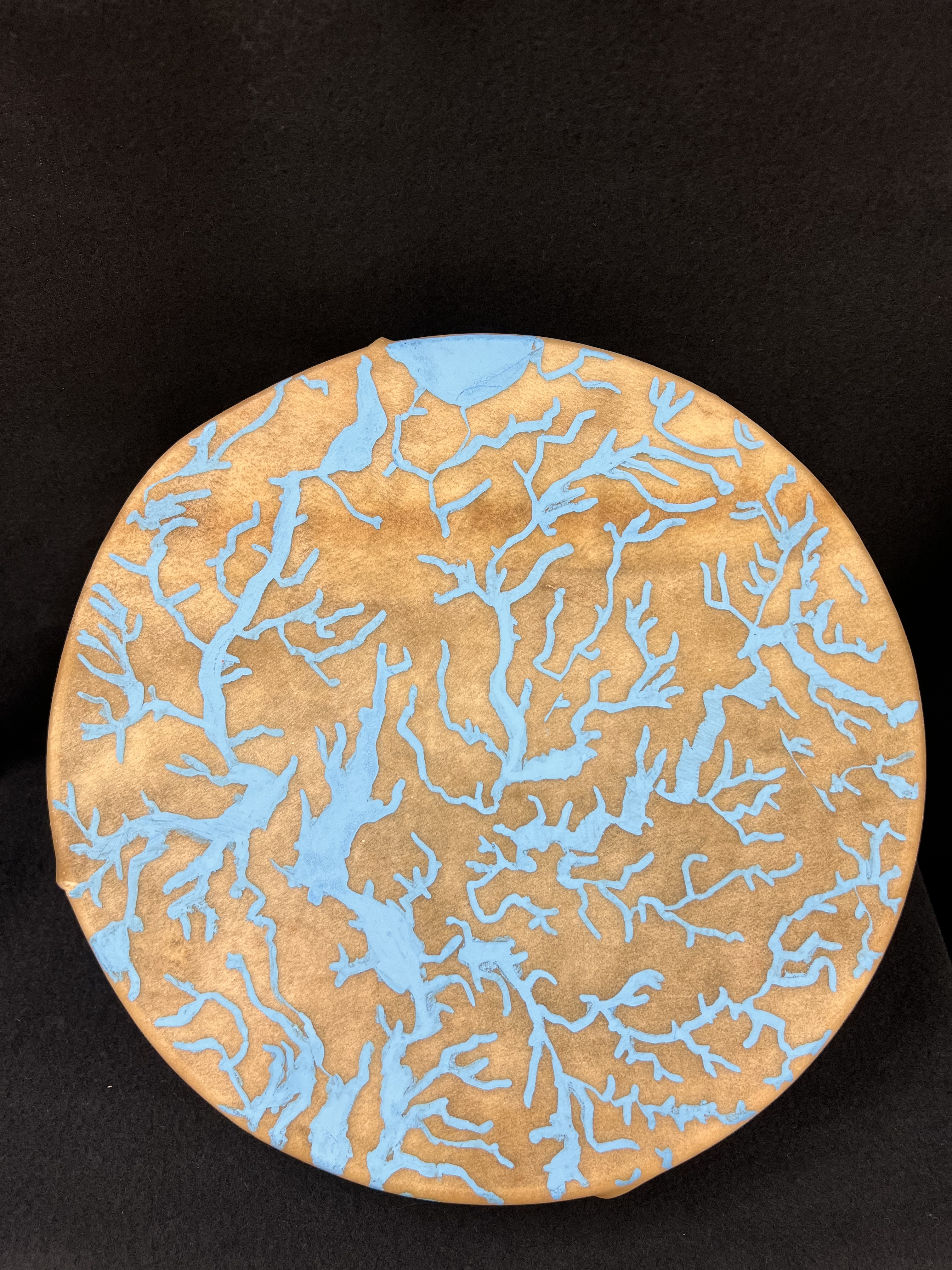
“We were talking about living on the land and we talked about how the Miami lived in the Great Lakes area. It’s good to live near water, especially fresh water. It’s a good place to get water and not running out and not have to travel back and forth to get it.”
But it wasn’t just because he learned about the rivers and Great Lakes, but the connection he made from learning in school that the acronym for the Great Lakes is HOMES. Since this area is also part of the original homelands of the Myaamia people, he said, “It was HOMES and home!”
He also won the “Cultural Award” for Kihcikama for these thematic connections.
“It was also big, big like the Great Lakes. It’s a great big lake. I’ve been to some of the states that touch the lakes, but not to the lakes. And I’ve learned a lot from studying about them, though.”
What’s the difference between Myaamia art and other types of art you make?
“I think it’s mostly in the designs,” he said.
In his Myaamia art, he uses designs that incorporate Myaamia shapes and colors to honor that history and culture.
“We use a lot of red, black, and white, and I’m pretty sure that’s a lot of it. I don’t use a lot of those colors in mine. I use a lot of greens because those are like one of my top five favorite colors.”
“There’s not a lot of info for the ones I just make, but the ones I make for the Myaamia art show, there’s not a lot of difference in the painting, but we usually talk about what theme it is that year, and learn about different aspects of the theme and what we learn at camp.”
Meghan said, “The art you do at camp is very different than the art you do.”
“Yeah,” Josiah replied, “There’s like more things you’re learning, like certain [Myaamia] words, and that’s the purpose of making it.”
He continued, “What it means and what it is about is different…Like most of my regular paintings are about adventure because I really like adventure or maybe like taking a hike in the mountains or going to a cabin or home near a lake or something. Like you’re creating nature for my own things, and then about culture and what we did and what it means for my Myaamia art.”
He often learns more about the history, language, and culture in Myaamia art projects than he does in other art because they mean different things.
What do you want other Myaamia people to know about your art?
Josiah said it has to do with “why” he does it – the meaning behind it and the time he spends on a project, both learning and making it. It’s not just about art but also history and culture because he likes to learn and share.
“I know during camp, I really, really like learning about what our ancestors did. I really like the history of it. It is a way for me to take what I’ve learned and share it.”
 Aacimotaatiiyankwi
Leave a comment