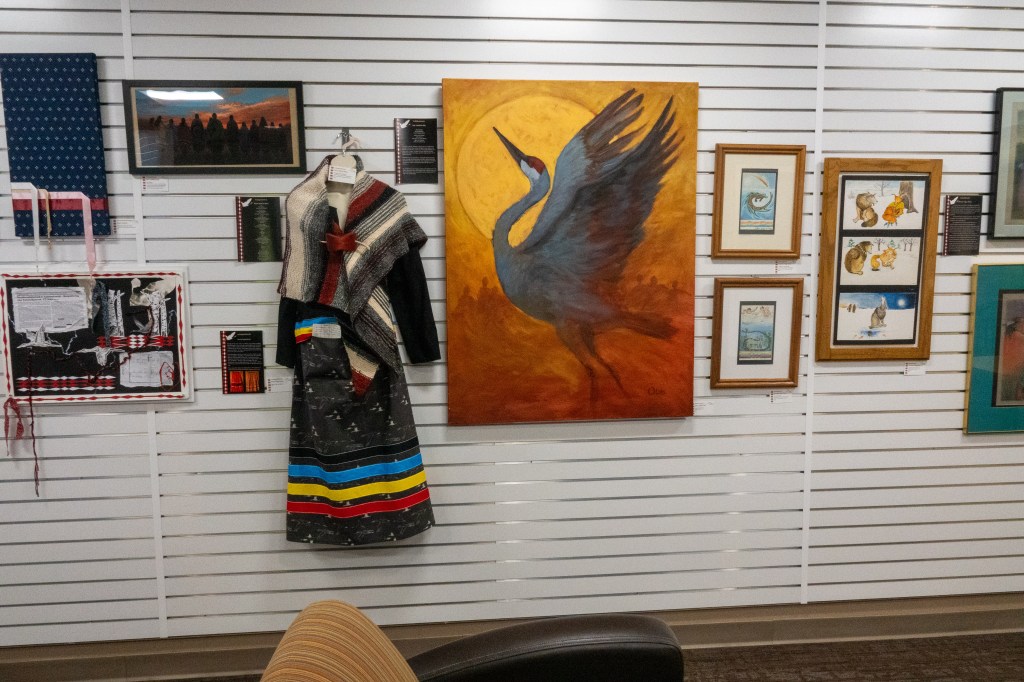
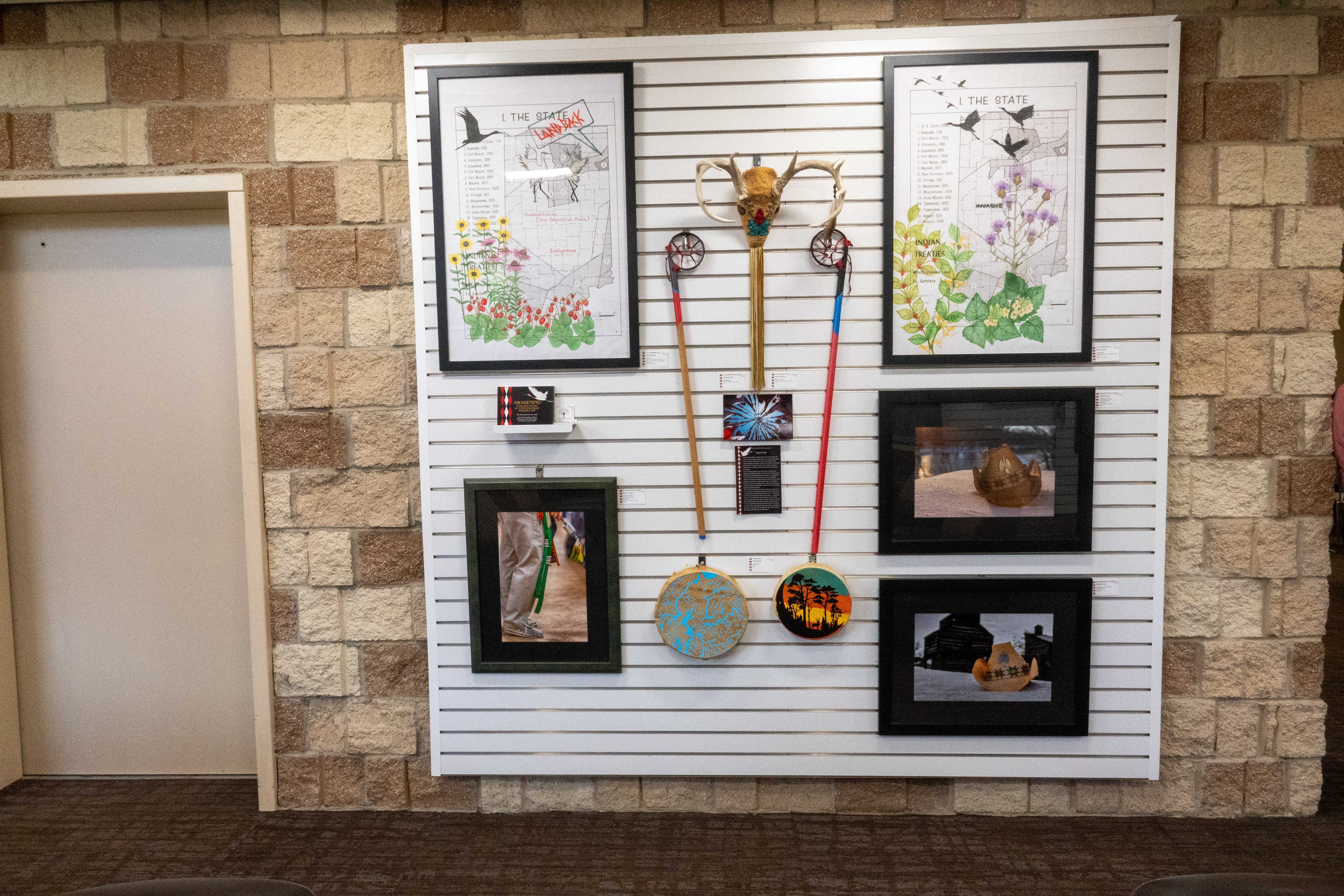
“AWAKENING: A Sacred Story of Contemporary Myaamia Art” was on display at the Crete Public Library’s second-floor art gallery in Crete, IL, May 10th through June 21st, 2025
Written by: the curator, Waapankihkwa, Kathy Carter Young
Introduction:
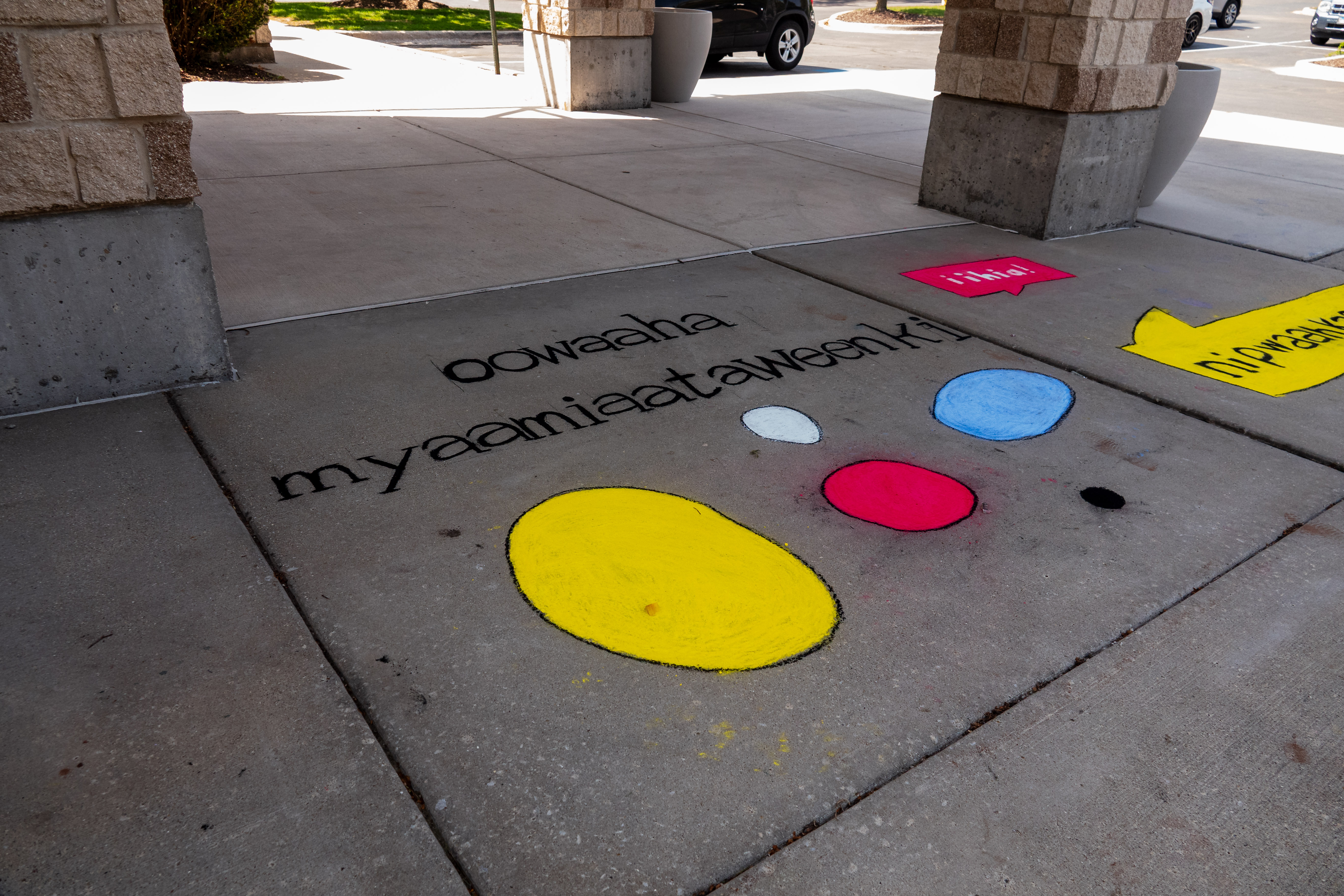
Before colonialist occupation, Myaamionki (Miami Homelands) extended across Northeast Illinois, Southern Wisconsin, Central Indiana, Southern Michigan, and Western Ohio – including what is now Crete, Illinois. In the 19th century, the U.S. government forcibly removed the Myaamiaki (Miami People) from their homelands and moved them Southwest, to Kansas, and ultimately to Oklahoma. Divorced of their language, separated from their families, and removed from their important cultural sites, much of the energy of the Tribe fell dormant.
180 years later, after decades of rebuilding their Tribe, reclaiming their language, and reconnecting with their heritage, Myaamia artists from across the country reunited to lift up their voices for the Awakening. Through the dedication and passion of contemporary artists and historians, their once-lost art and language combined with their creative skills to showcase together in the lands they once called home.
“Awakening” featured the work of over twenty Myaamia artists, many of whom have reconnected to their heritage and stories through the impact of the Myaamia Heritage classes offered through the Myaamia Center at Miami University. Their beadwork, ribbonwork, painting, sewing, and basketry reflect that reconnection.
meetimankwiki kimehsoominaanaki ‘we follow our ancestors’ trail’
An Interview with the curator:
Written by: Morgan Lippert
1. The title of the exhibit is Awakening: A Sacred Story of Myaamia Contemporary Art. What was your own awakening like?
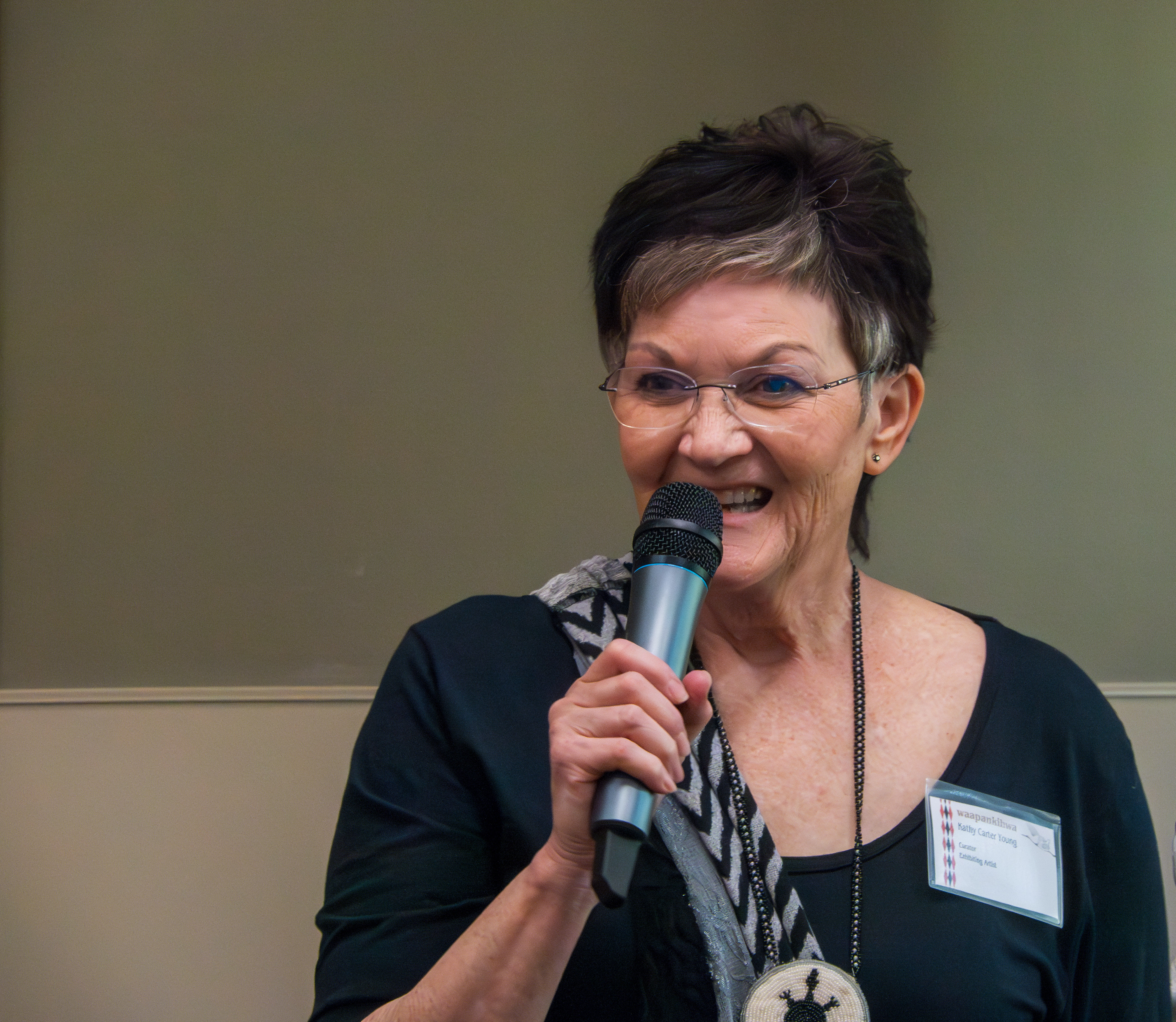
My awakening occurred simultaneously with my son Ian’s awakening. We owe a huge debt of gratitude to the Myaamia Center, Miami University, and the Heritage Program. I had a little knowledge growing up about my Dad’s family living in Peru, Indiana, and that we were members of the Miami Tribe.
I heard my parents talking to my Aunt about pedigree charts and establishing that my Grandfather was the orphaned son of Christine Mongosa, Waapankihkwa, my Great-Grandmother. The connection was necessary for us to receive “Indian Money.” I assumed the government owed it for the tribal land they’d purchased a long time ago.
We would muse over dinner all the ways we were going to spend the riches we’d receive. Dad was going to buy a Huey helicopter and make our vacant lot a landing pad. My brother and I scrapped that idea for a built-in swimming pool. When the checks came, there wasn’t enough for a helicopter or built-in swimming pool, but that check did help to bury my grandfather, the orphaned son of Waapankihkwa. There would be other checks. That was my connection to the Miamis… until I saw a reference in the tribal newsletter that Miami students were able to apply for a scholarship to Miami of Ohio.
Our son, Ian, applied, was accepted, and started attending Miami and the Heritage classes. Our world expanded quickly. Our family story took on a depth we could not have imagined. It was like being separated from a whole segment of our family at birth and being reunited years later. We had no idea about the removal. We had no idea we had family in Kansas, Oklahoma, and really all over the globe. I cried when I first heard our language spoken by Ciinkwia ‘Jarrid Baldwin’, telling the Coming Out Place story. I have often said…the Heritage Program tells our children a hard story but gives them the emotional support they’ll need to hear it, process the grief, and transform that grief into what I feel has become the Great Awakening.
2. This art show is described as sacred. What about this art show is sacred to you?
The artists’ stories are sacred. The art is a physical manifestation of their journey of discovering and identifying with their cultural heritage. The art is tremendous, but when framed along with the story, it takes on sacred meaning. The story is a glimpse into that artist’s soul through their very words. I truly believe it honors the struggle of our ancestors. The threads that were laid down are being picked up by the next generation. The stories live on and are moving forward.
3. How has this exhibit affected you as a Myaamia person?
Names now have faces with locations attached! I have been given loving support and assistance from my Myaamia family that made “Awakening” a reality. (Dani Tippmann, Nate Poyfair, and Doug Peconge, I owe you big time!) I have connected with “cousins” who have similar awakening stories; some knew more than I did, but we all gained insight as our students came home from Miami with more information to share. I noticed we seem to share this crazy sense of humor; I identified a Myaamia family trait! I am not alone!
4. Myaamia people live in a diaspora, spread across the United States. What does it mean to you that Myaamia artists from across the nation came to submit their work for this?
Tina Fox and Madison Angelo are two eeweemilakakoki ‘of my relatives’ whose encouragement made Awakening a reality. Tina, by suggesting I participate in the Scripps Avid program that connected me with Madison. Madison thought the idea of a Myaamia art exhibit in Crete was worth pursuing. The curating process increased my connection and commitment to the growth and well-being of my Myaamia community.
As a pastor’s wife, I have been accused of having and using the “spiritual gift” of persuasion. I worked with a beginning list of about 8 myaamia artists. In my letter of introduction, I wanted to establish some credibility with my Tribal community – that I could be trusted with their work and their stories. Once that relationship was established, and artists agreed to participate, they recommended other Myaamia artists.
Anna Collins, who is studying at Harvard, but was in Europe when we connected, asked her Dad to send her art collage from California. It was amazing! Richard and I made 3 trips to Indiana. Nate Poyfair brought artwork from Miami, Oklahoma. It was incredibly humbling. The time was right. Myaamia artists caught the vision.
5. What has the response been by non-Myaamia visitors?
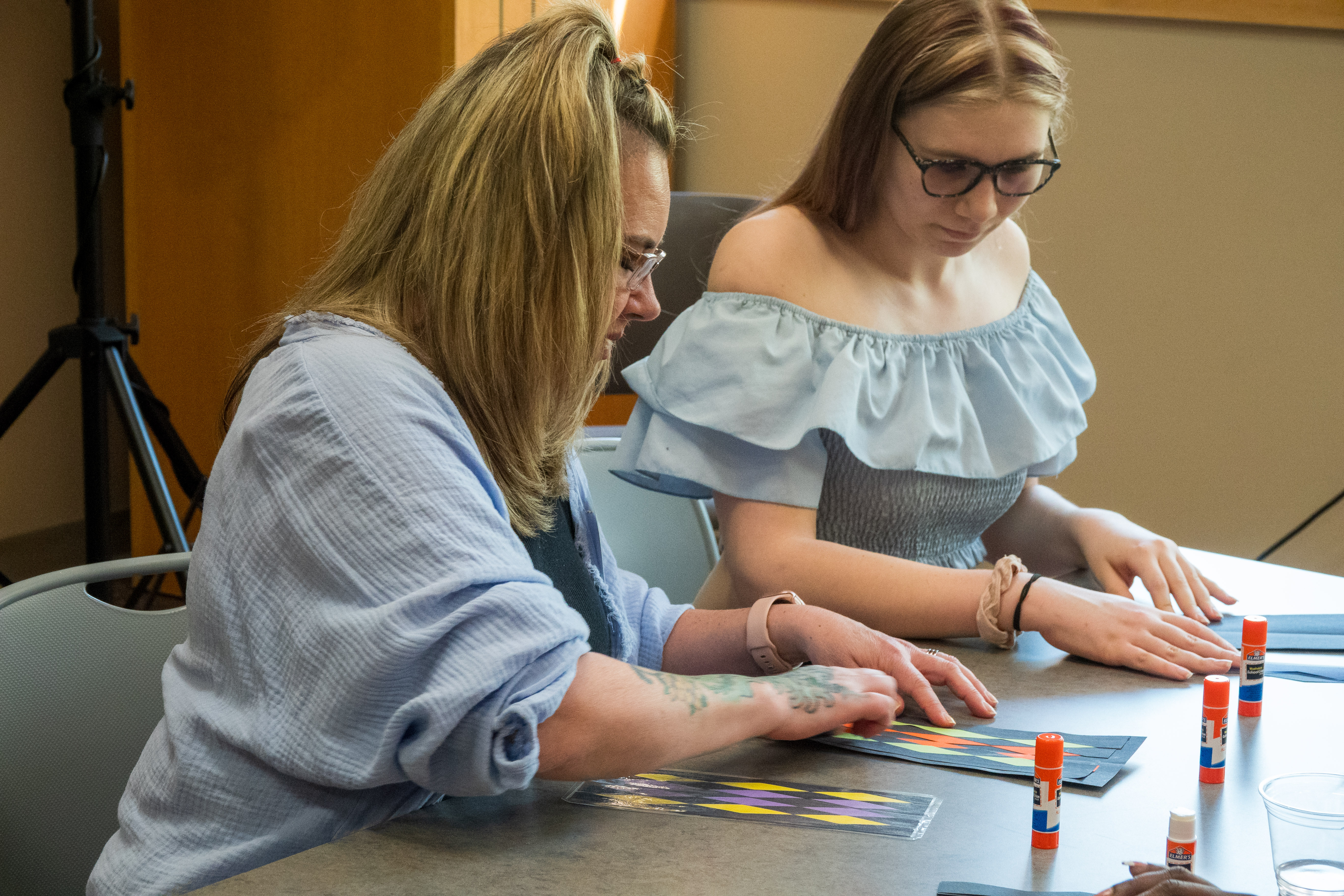
Photo by Doug Peconge, Myaamia Heritage Foundation.
A retired docent from the Chicago Art Institute sat in stunned silence with tears in his eyes when I showed him the dirt from 7 Pillars in the pocket of the ribbonwork skirt on display. He said he had no idea when I told him about the Myaamia removal in 1846 and mentioned how important it is to discuss these topics.
A Gallery director from a neighboring community said how truly sacred it felt seeing the artwork and reading the stories.
A homeschool class made ribbonwork bookmarks and laughed at Cathy Mowry’s depiction of Fox tricking Wolf.
Crete’s Mayor and his wife were deeply impacted by the Awakening exhibit.
The Crete Public Library Director has nothing but praise for the exhibit, and the other librarians have said it feels like it’s museum quality. Humbling for sure.
6. What has the response been by your Myaamia relatives (both artists and visitors)?
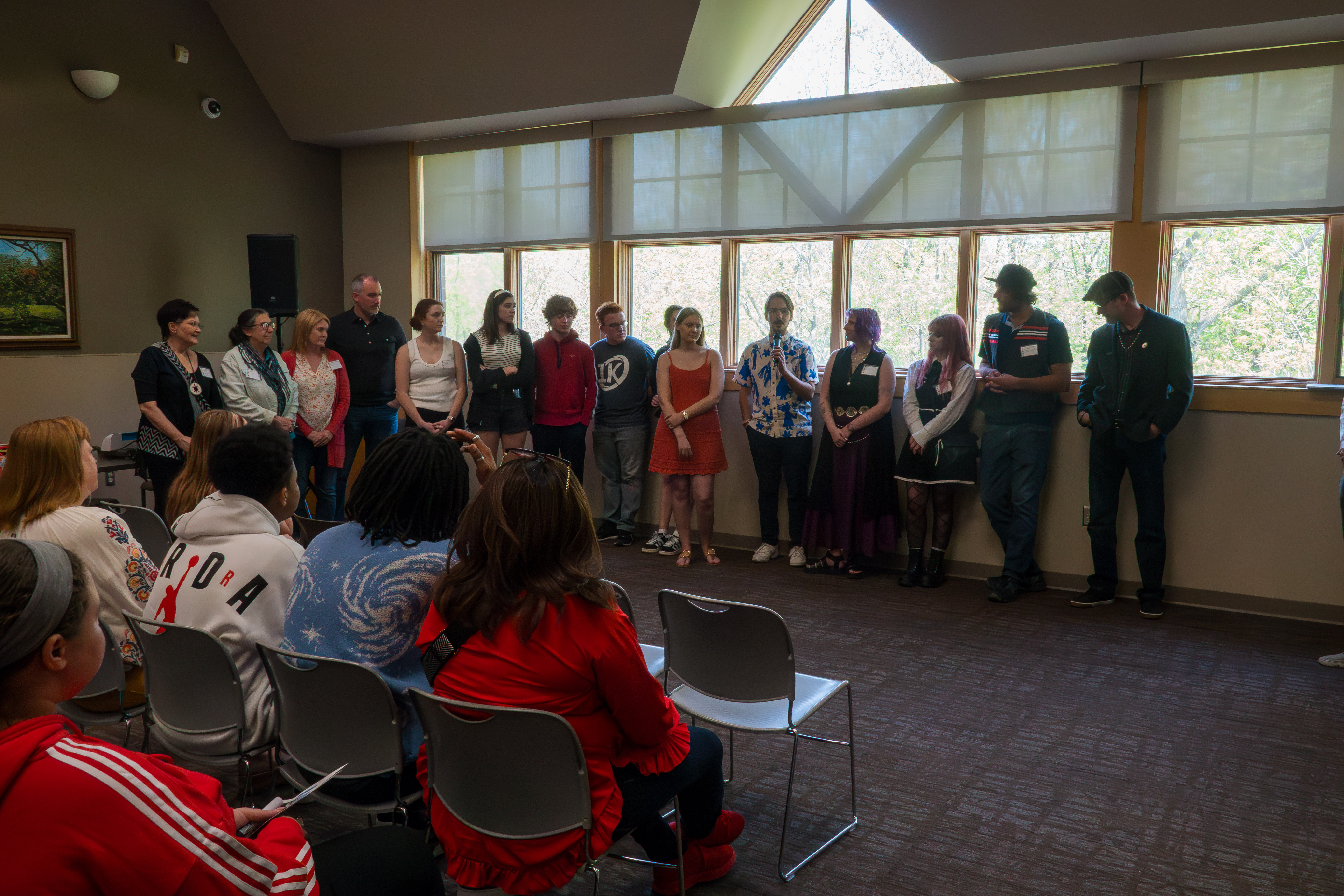
Eight Myaamia artists attended the opening on May 10th.
My daughter was very impacted when all the Myaamiaki present introduced themselves in the Myaamia language. Megan Sekulich was impressed with the 35-foot chalk mural of her depiction of the Coming Out Story.
Everyone seemed to like the fry bread, corn soup & blueberry cornmeal muffins my Italian friend made for the opening. That’s a funny story. She protested about not being worthy because of her Italian heritage. I told her to consider herself adopted for the day. The recipes came in the package with our Myaamia calendar. Greta Sirois’s story has been particularly moving to all who read it.
7. Why is it important to have Myaamia representation in places like the Chicagoland area that are far away from the government seat in Oklahoma?
This area is our native home. We are a resilient people and have realized home is where community is. But this is where removal took place. We have ancient graves here. In fact, a Myaamia gravesite was discovered just a few miles from my daughter’s home in Mokena, IL. We have sacred sites here. Our stories come from this area. Our ancestors were forced to travel to a new place with this dirt in their pockets. This is our history, and it needs to be told in this area. The area around šikaakonki ‘Chicago’. It needs to be heard here. It needs to be told where the hurt happened. It needs to be told so healing can continue to take place.
8. What do you see in the future of Myaamia art?
I think the creative thread will continue to be picked up and moved forward. We are learning from the old ways and adding our own personalities and stories into every thread and brush stroke. Art is being created by methods that our ancestors could never have imagined. Like a story that can have many tellers…it’s not diminished but expanded upon.
Credits:
Feature photo by Doug Peconge, Myaamia Heritage Foundation
Portions of this blog post were originally published under the title “Interview with Kathy Carter Young, Curator of Awakening: A Sacred Story of Contemporary Myaamia Art” in the Aatotankiki Myaamiaki newspaper, 2025. https://miamination.com/wp-content/uploads/2025/09/Vol-19-No-1-Summer-2025-WEB.pdf
 Aacimotaatiiyankwi
Leave a comment