Written by: Dr. Hunter Thompson Lockwood
Let’s “face” the facts about how to talk about corn in the Myaamiaataweenki ‘the Miami language’.
One Corn?
In English, you can’t really say “a corn”. Instead, we talk about “ears” of corn — but we don’t literally think about corn as having actual, human ears. It’s just an accident of language as it naturally changes over time!
Historically in English, these were two different words (one meaning ‘a spike of grain’, since ‘corn’ meant any kind of grain in English back then!), pronounced differently; over time, the two words ended up converging until they were exactly the same.
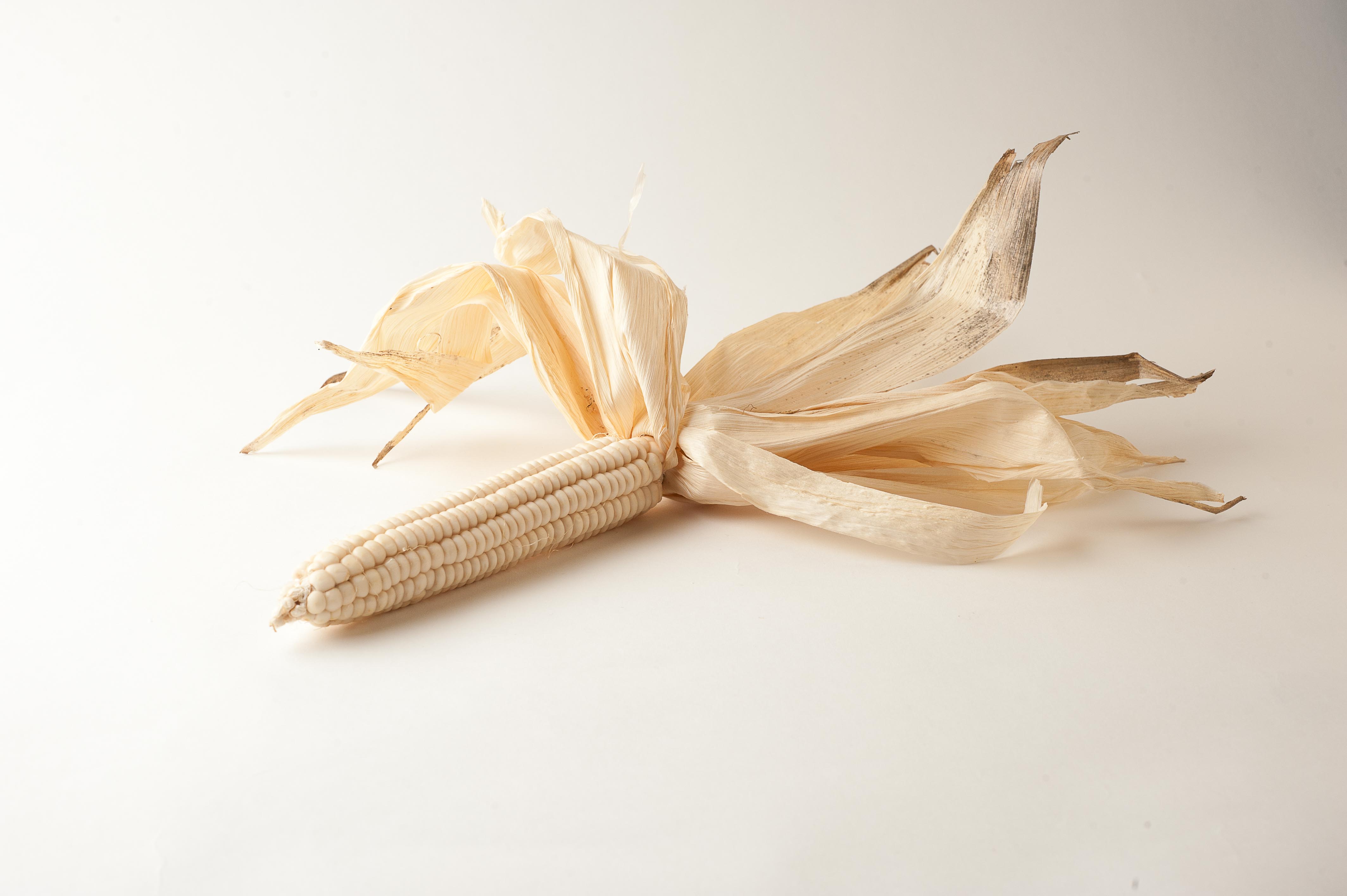
In Myaamiaataweenki, the best way to say ‘an ear of corn’ is to use the word anaahkapi. Longtime students of the language might recognize that as also the word for a tree branch! As for the corn itself…here’s where things get really interesting.
There are two main ways of talking about corn in Myaamiaataweenki.
ayoolhka miincipi neetaweelintamaani ‘I want more corn’
You may recongnize the first way to talk about corn, as Dr. Cameron Shriver used it in his blog post a few weeks ago, or maybe you’ve seen it in the Myaamia dictionary — miincipi is the generic, ordinary word for “corn.”
But you might not know a few things about it. For starters, it’s unique – no other Algonquian languages use a word related to miincipi to talk about corn! Another is that the grammar of the language lets you use miincip-, the stem of the word miincipi, in a lot of different ways – actually, you could learn a lot about how the Myaamia language works just by studying all the corn words you can find!
For example, if you add -ikaan ‘building, house’, you get miincipikaani, ‘corn crib’ – a special type of granary for storing corn! If you add -ahk ‘land’, you get miincipahki ‘corn field’!
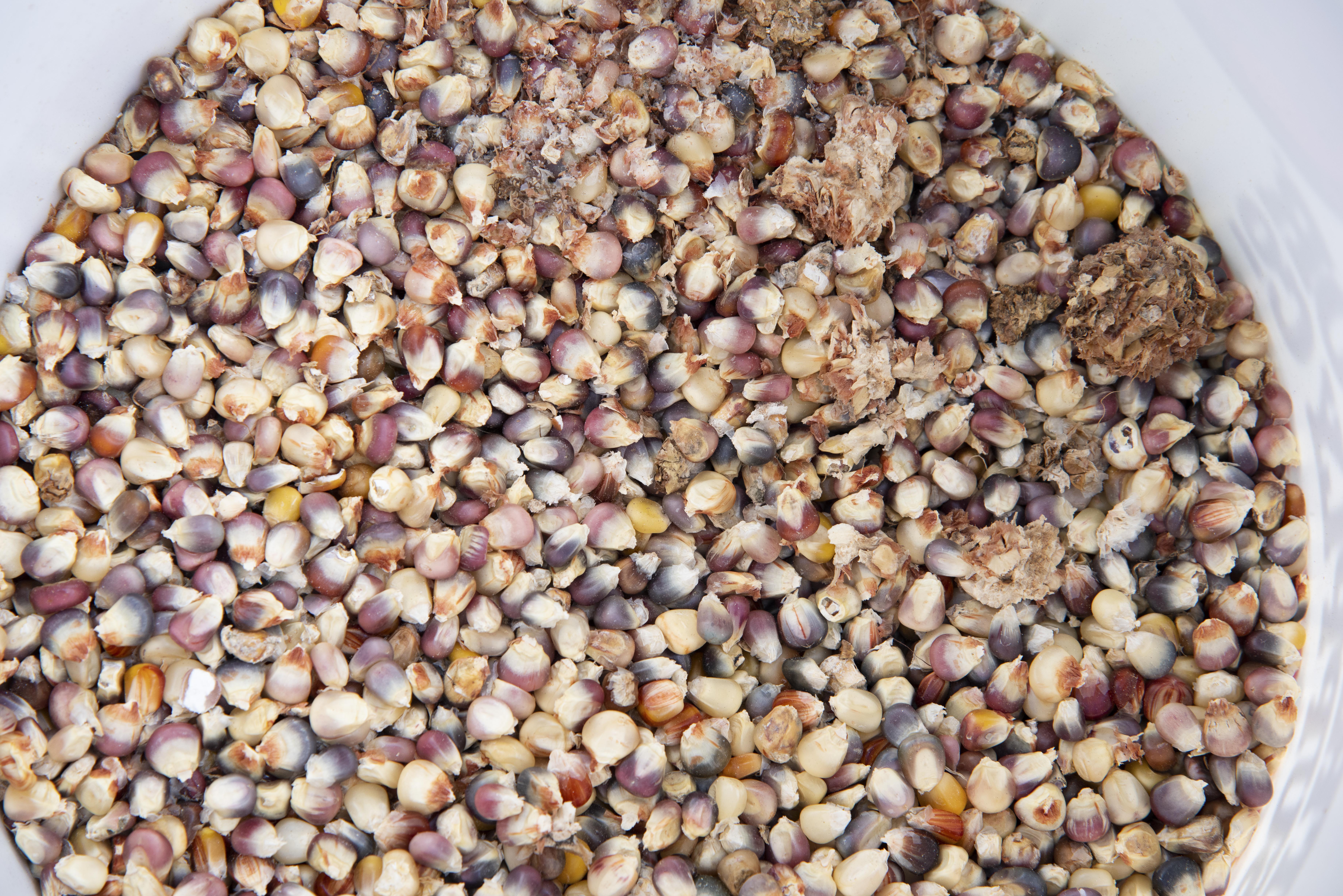
But that just scratches the surface. You can add verb endings to miincip- and turn it into different kinds of verbs! If you add the verb ending -ehkii ‘gather it, make it’, you get words like miincipehkiitaawi ‘let’s pick corn!’ You can turn it into a possessive verb, and get eemiincipemiaani ‘I have corn’. You can tell someone naacimiincipaalo! ‘go get corn!, and so much more.
peehkiinkweeki! ‘nice corn!’
I mentioned that miincipi is a generic word for “corn.” So what happens if you want to talk about yellow corn, white corn, red corn, soft corn, ripe corn, or any number of other, more specific types of corn?
As we’ve talked about before, Myaamia words are so long because they are made of smaller pieces. And you might remember that there are four main types of verbs in Myaamiaataweenki.
First, consider the verb stem peehkiinkwee-. The first part, peehk- means ‘good, well’ or ‘pretty’. The second part, -iinkwee, means ‘corn’, when it’s a Descriptive It. If it’s a No Object verb, it means ‘face’!
If we attach the Descriptive It endings onto that stem, we get words referring to corn: peehkiinkweeki, ‘it is a nice ear of corn’. But, if we attach the No Object endings to it, we get words referring to faces: peehkiinkweeci ‘he or she has a pretty face’!
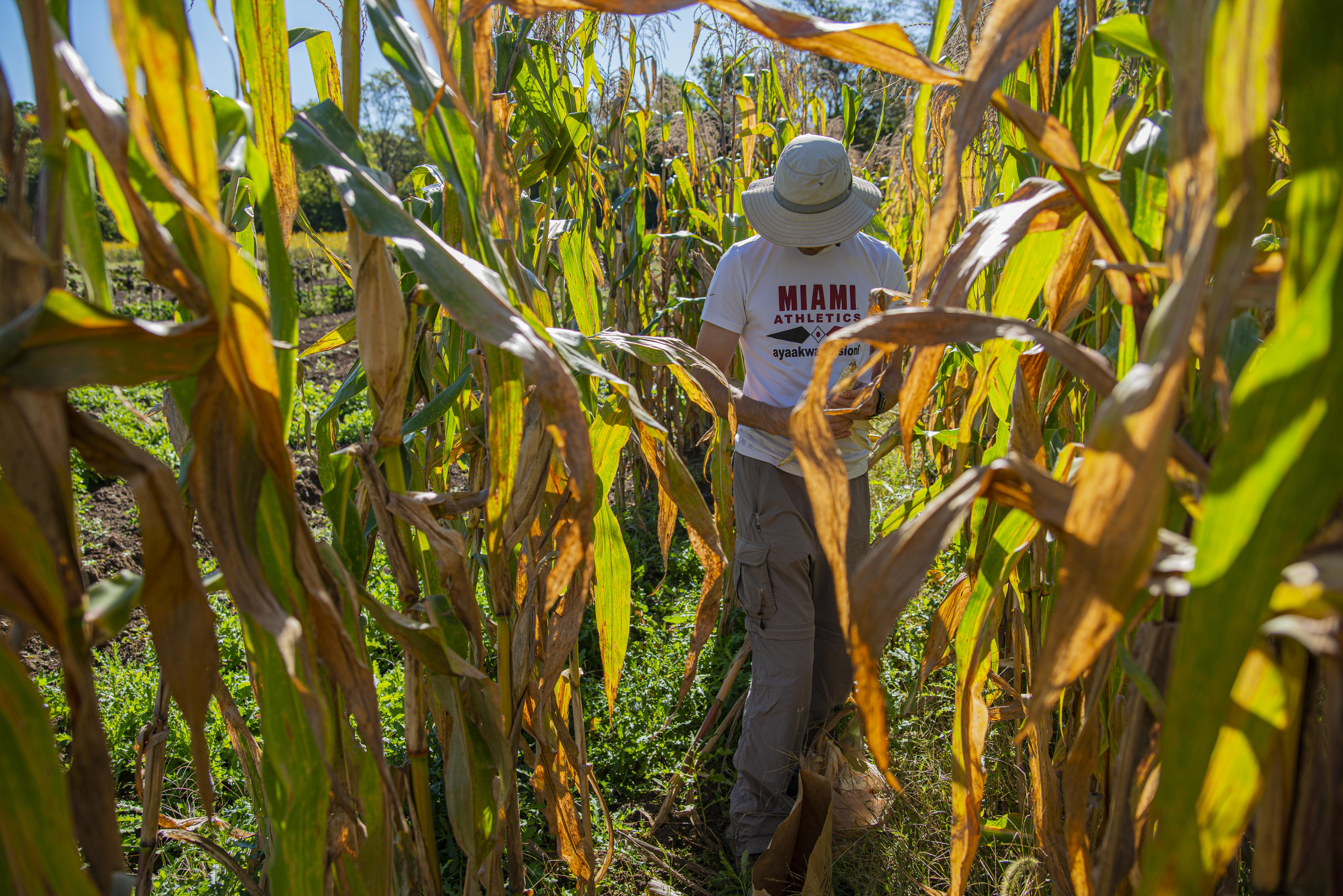
It turns out there are a bunch (perhaps a bushel?) of corn words made this way. Full disclosure: Some of them are Descriptive It verbs, like the one we just saw, but others are Common Nouns ending in -min, which we typically translate as ‘berry’…but sometimes it means ‘corn’!!
Here are just a few examples:
- neehpikiinkweeki ‘it is red corn’ or niihpikiinkweemini ‘red corn’ (niihpik- ‘red, blood’)
- oonsaayaankweeki ‘it is yellow corn’ or oonsaayaankweemini ‘yellow corn’ (oonsaaw- ‘yellow’)
- soonkiinkweeki ‘it is firm corn’ (soonk- ‘hard, firm’)
- waahkamiinkweeki ‘corn with clear grains’ (waahkam- ‘clear’)
- eetaakiinkweeki ‘it is wet corn, moist corn’ (ataak- ‘wet, moist’)
- noohkiinkwee- ‘it is soft corn, unripe corn’ or noohkiinkweemin- ‘soft corn’ (noohk- ‘soft, tender’)
That’s just a taste. There are so many more corn-related words and phrases in the documentation we’ve collected over the years!
Wrapping Up
As Dr. Shriver wrote in the last post, miincipi has played an important role in Myaamia life over the generations, so it shouldn’t be surprising that the language has so many grammatical tools for talking about it in exquisite detail.
Are there any corn-related words or phrases that you hoped to learn that I didn’t include here? Leave us a comment below or on our social media — if you come to me, I can tell you all about it!
 Aacimotaatiiyankwi
Leave a comment