Written by: Hunter Thompson Lockwood
Myaamiaki ‘Myaamia people’ have always been stargazers. So how do we talk about stars, planets, constellations, and other celestial objects in Myaamiaataweenki ‘the Miami language’?
The Moon and the Sun
We’ve talked a lot about the Myaamia Kiilhswaakani ‘lunar calendar’ on the blog over the years. That word kiilhswaakani is built off of the word kiilhswa, which you may have noticed means both ‘sun’ AND ‘moon’.
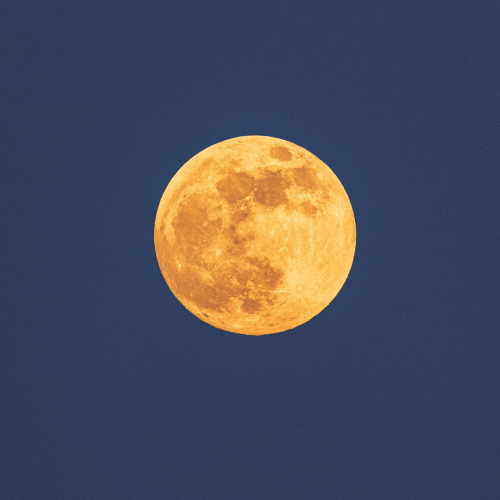
Since we’re focused on astronomy, let’s set aside the meanings of ‘month’ and ‘clock’. It’s usually pretty obvious from context whether someone is talking about the sun or the moon when they say kiilhswa. But we can be more specific!
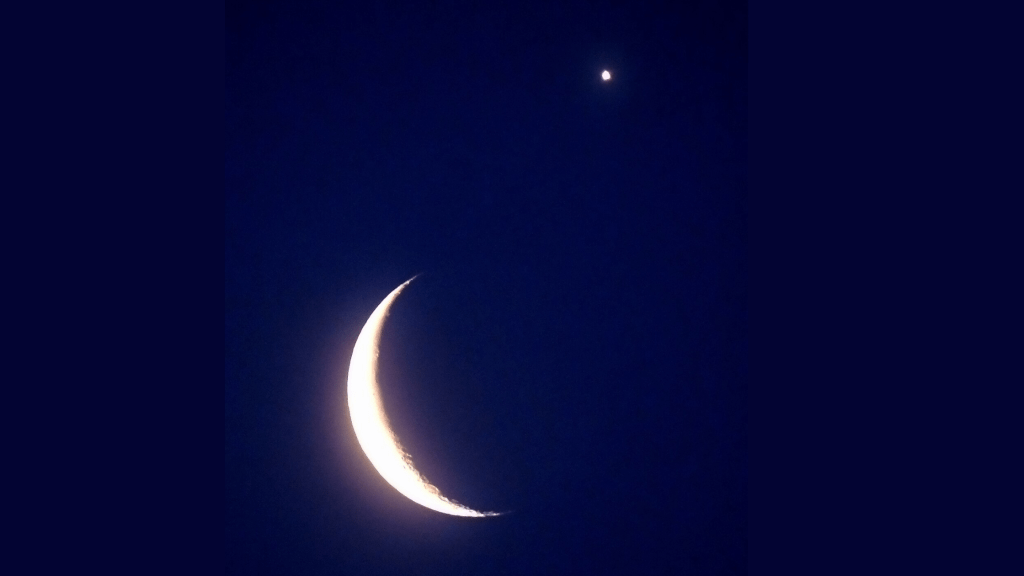
We can use waahsee-kiilhswa for ‘the sun’ – compare that with the verb waahseeki ‘it is daylight’ 🌞 – and we have two slightly different words for ‘the moon’ 🌚. In no particular order, there’s pihkontee-kiilhswa, which has a corresponding verb peehkonteeki ‘it is dark, night’ and tipehki kiilhswa. And, you guessed it, there’s a verb teepihkiiki ‘it is night’ that’s related to that second word for ‘moon’!
But what about the rest of our neighborhood?
Planets
Over the last few decades, we have reviewed many thousands of pages of historical sources describing the language. So far, across all of those pages, we’ve only found the name of one planet: Venus, our brightest neighbor (and usually the closest, depending on the time of year).
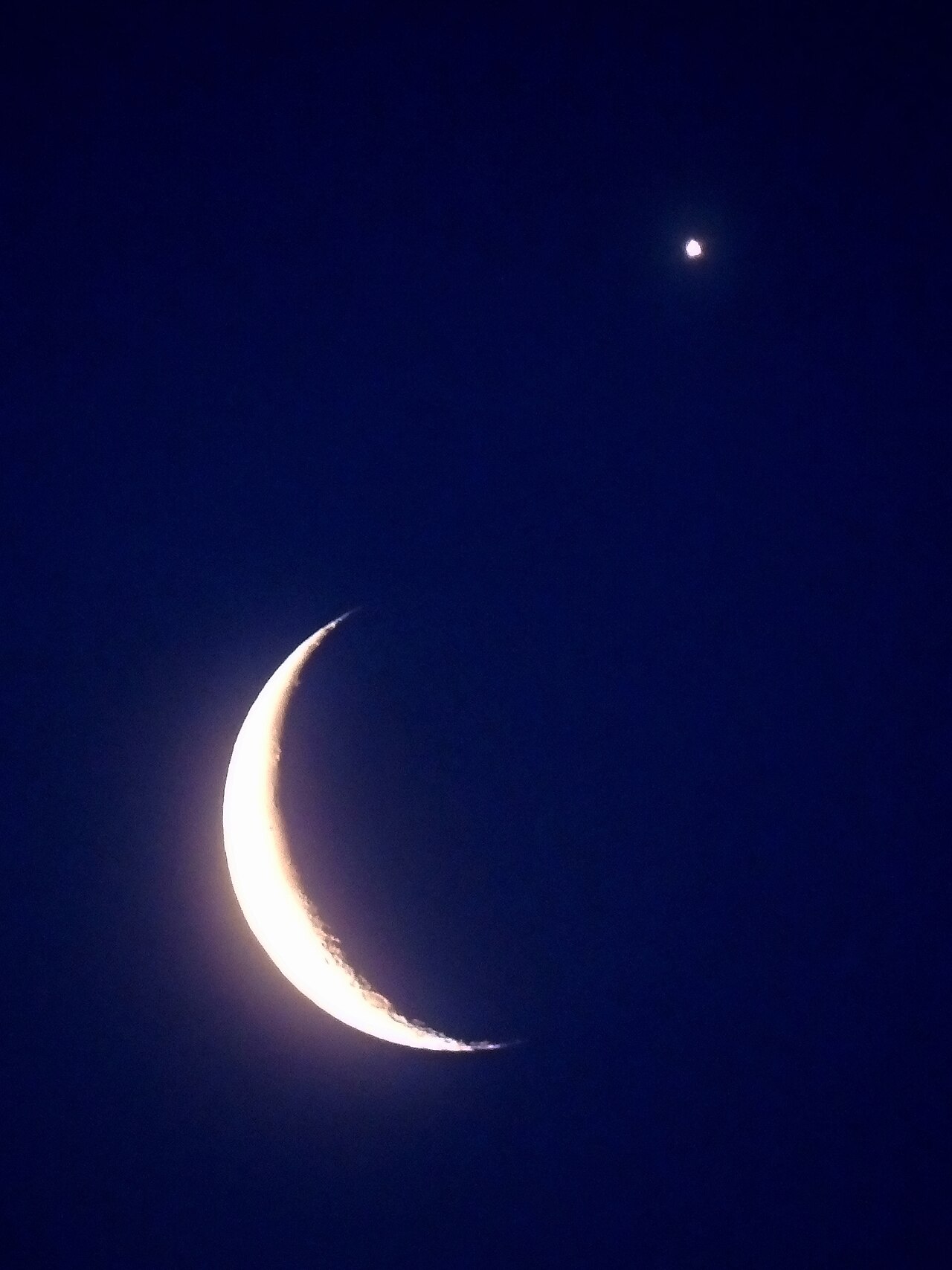
By Wikiolo – Own work, CC BY-SA 3.0, https://commons.wikimedia.org/w/index.php?curid=31353116
Some sources use the word mihcalaankwa for Venus. That word literally means ‘big star’, but nowadays we also use it as the generic word for any planet. But Venus is special (and noticeable) enough that it gets a few different names! That turns out to be pretty common across the world’s languages. You may have heard Venus referred to in English as both the morning star and the evening star. The same thing happened Myaamiaataweenki – šayiipaawe mihcalaankwa is ‘morning star’ and eelakwiki mihcalaankwa is ‘evening star’.
However, over the years, we have also come up with names for the other planets. So if you search the dictionary, you’ll also find neehpikalaankwa ‘Mars’ (‘red star’) and kiihkaapiikhšinka mihcalaankwa ‘Saturn’ (kiihkaapiikhšinka describes Saturn’s rings)!
Constellations
There are so many other interesting bits of astronomical vocabulary in Myaamiaataweenki, but I’ll end here with two constellations of alaankwaki ‘stars’.
The North Star isn’t the brightest star in the sky, but it’s important because of the way it lines up with the north pole, making it appear to stand still while the other stars around it rotate constantly throughout the year. The word for this is aciika alaankwa ‘the fisher star’ – fisher the mammal, not the occupation. It gets that name because the constellation that we know in English as the Great Bear is called aciika ‘fisher’ in Myaamiaataweenki!
The Pleiades also have several different names in the language. In the dictionary, you’ll find meenankweepiaki (literally ‘they are clustered together’), but they were also called kaakaathsolaankwaki ‘the six stars’, after the brightest six stars in the cluster.
That’s the word used in one of my favorite Myaamiaataweenki sentences of all time: kaakaathsolaankwaki waahsee peemawatooka ‘the Pleiades carry the daylight along’. The Pleiades aren’t visible all year round. Their reappearance in the pre-dawn morning sky signals the coming of summer; they “carry the daylight”!
The End?
Myaamiaki astronomers figured out long ago that watching the sky was important for understanding the natural world, which is why there are so many beautiful and interesting ways of talking about celestial objects in Myaamiaataweenki!
Want to know more? Check out the dictionary, and let us know in the comments!

 Aacimotaatiiyankwi
Leave a comment