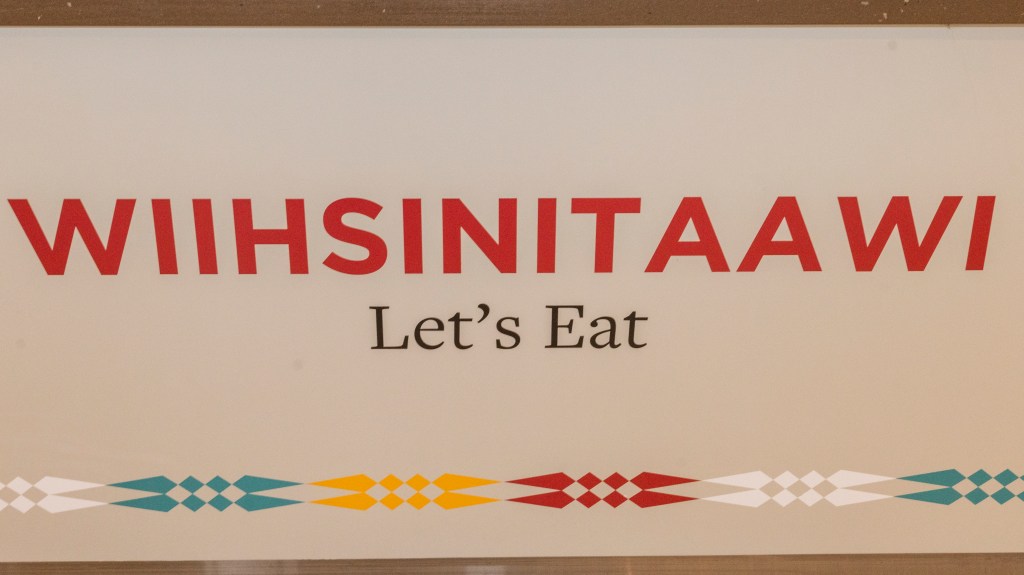
Written by: Hunter Thompson Lockwood, Language Research
Food is a fundamental part of human life. Across all cultures, food brings us together, sustains us, and connects us to our ancestors, to each other, and to the land. And, as Dr. Haley Shea has pointed out, food is a key part of nahi meehtohseeniwinki ‘living well’.
So how do Myaamia people talk about food? Let’s start off by talking about eating.

Different Verbs for Different Foods
In Myaamiaataweenki, there are four different verbs to choose from, depending on what you’re eating and whether the food you’re eating uses a common (inanimate) noun or an animate (special) noun:
- weehsiniaani ‘I am eating’
- Stem: wiihsini-
- Use this verb when you just want to say you’re eating, without specifying what you’re eating!
- meeciaani ‘I am eating it/them’
- Stem: miici-
- Use this verb when you’re eating something that uses a common (inanimate) noun, like teekwahaminki ‘cornmeal’ or naloomini ‘wild rice’!
- eemwaki ‘I am eating him/her’
- Stem: amw-
- Use this verb when you’re eating something that uses a special (animate) noun, like noolintia ‘hominy’ or waapanswa ‘rabbit’!
- meenihkwiaani ‘I am eating something liquid/drinking medicine’
- Stem: minehkwi-
- Use this verb (without an object) when you’re eating something liquid, like nipoopi ‘soup’!
If that “eat soup” verb looks familiar to you, it might be because you’re already familiar with the word minehkwaakani ‘cup’ — literally, a “thing you drink from”!
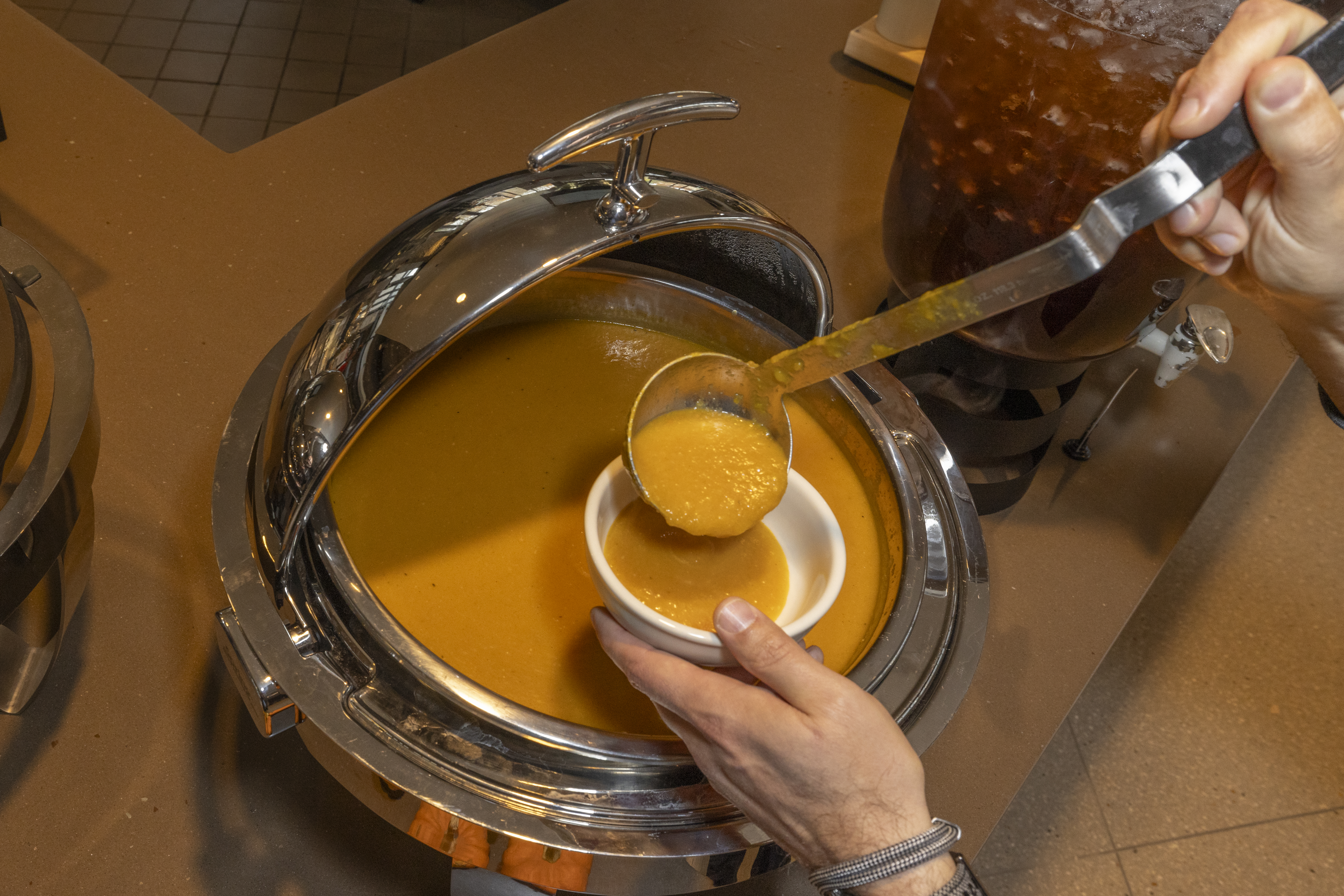
It’s important to learn both miici- and amw- verbs, because delicious and nutritious Myaamia foods can be either common (inanimate) or special (animate) nouns, and you can’t really predict which is which.
Well…sort of.
Especially Common and Uncommonly Special Foods
If you’re out hunting and want to talk about eating a specific kind of meat, you can just use the animal’s name. So if you want to say “I’m eating rabbit”, it’s eemwaki waapanswa; if you want to say “Are you eating beef?”, it’s amwaci-nko lenaswa?.
Animal names are always animate, so that’s easy enough — you use amw-.
But if you want to just generically say you’re eating wiiyoohsi ‘meat’, or you want to use a compound noun like moohswa wiiyoohsi ‘deer meat, venison’, then you use miici-, because wiiyoohsi is a common (inanimate) noun.
Remember: a lot of very important foods are grammatically ‘common’, but that doesn’t make them any less culturally special!
For example, pimi ‘butter, oil, grease, lard, tallow’ is a common (inanimate) noun, but different kinds of grease were really significant to Myaamia people — mahkwa pimi ‘black bear grease’ even shows up in one of the winter stories!
And we’ve written a few times about the importance of iihkisaminki ‘maple syrup’, but it’s still a common (inanimate) noun in the grammar of the language.
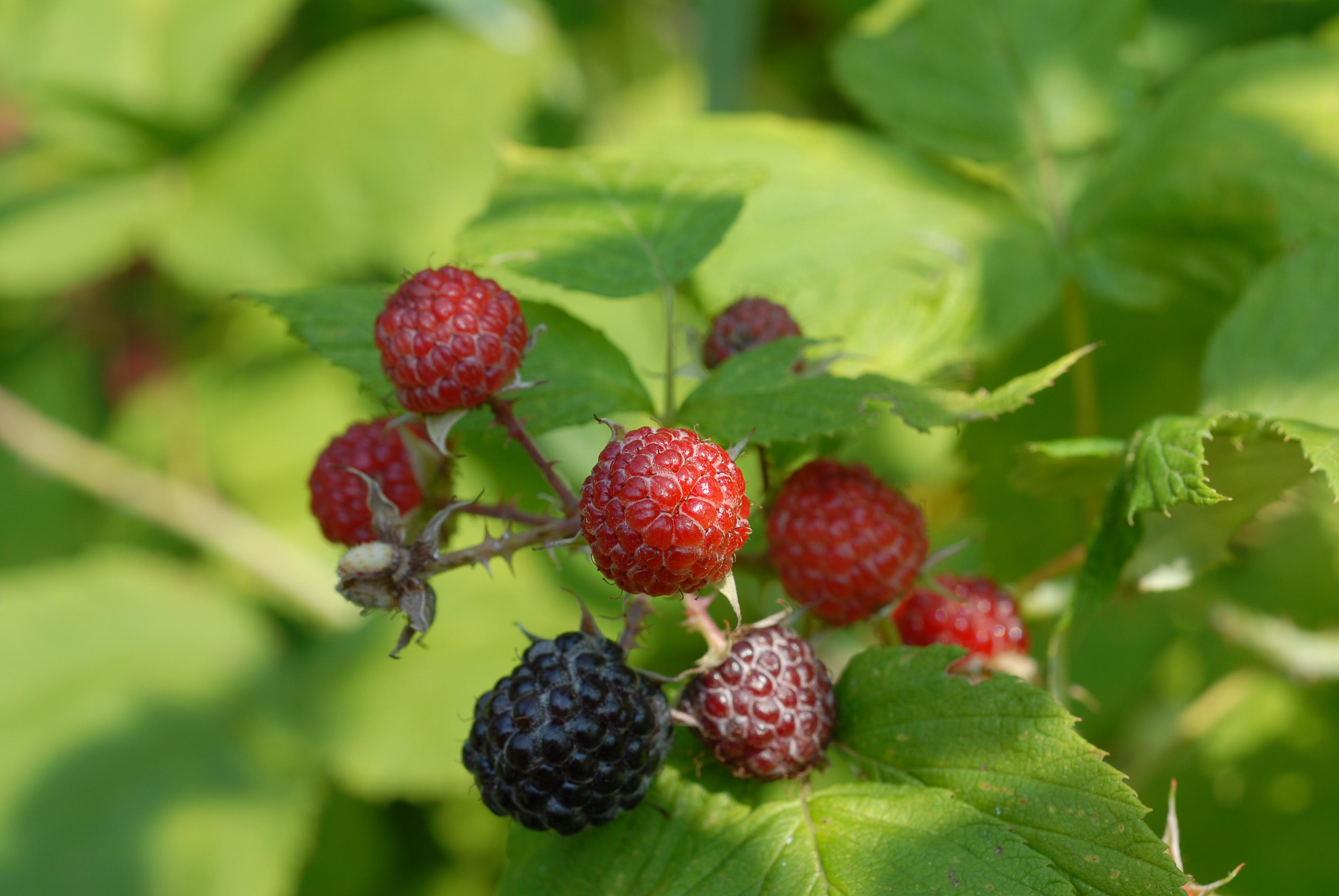
Are berries common (inanimate) or special (animate)? Depends on the berry — neehpikicia ‘cranberry’ is a special noun, but pyaakimini ‘persimmon berry’ is a common noun.
And don’t even get me started on corn.
A Little More Food
With all that out of the way — how do you just say ‘food’, without being any more specific?
The ordinary word for ‘food’ in general is miicioni — as you can easily tell, that’s related to the miici- ‘eat it’ verb stem we saw earlier! But if you only want a small snack, that’s miicionhsi.
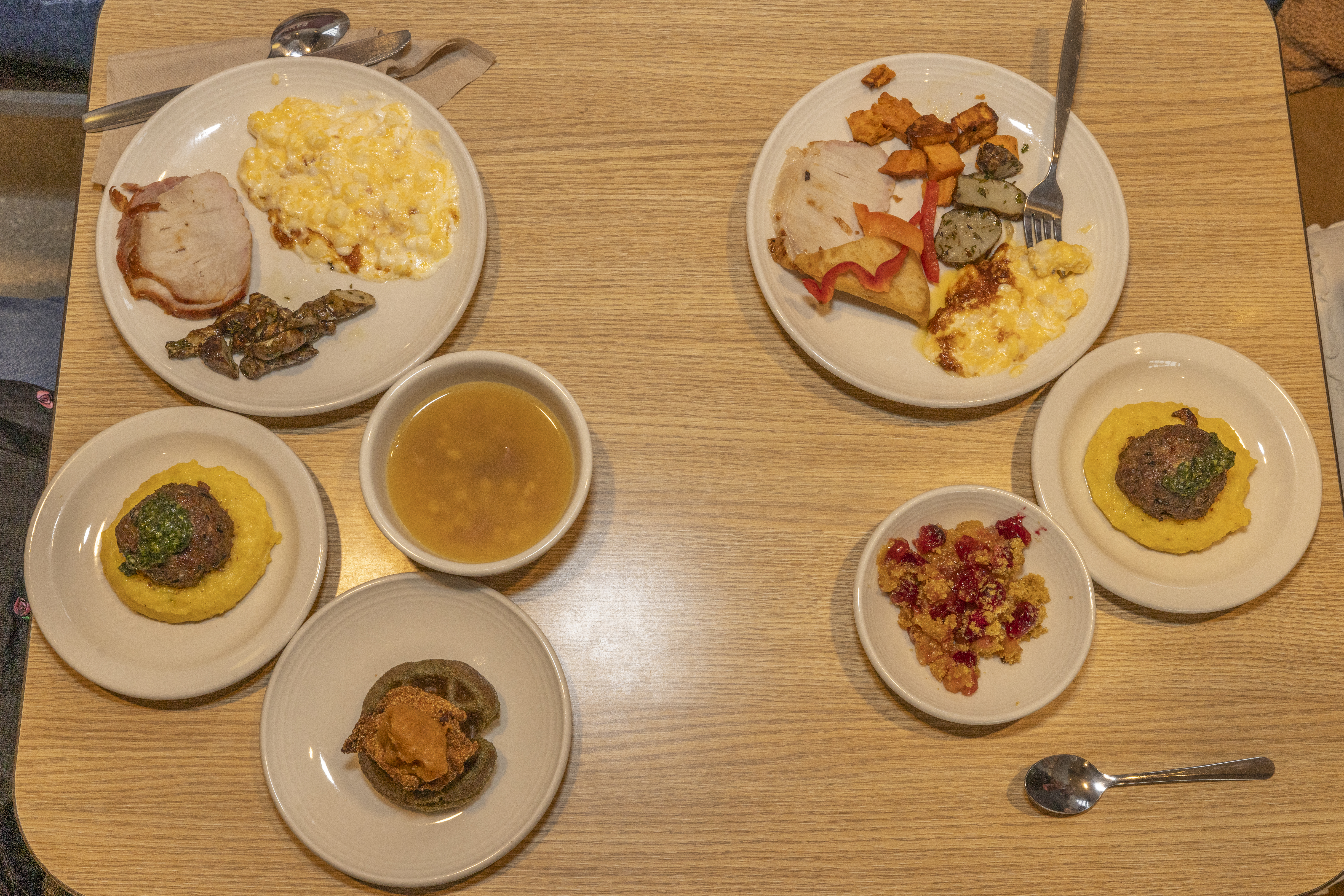
Here’s another really useful one: you can talk about your own food, that you or someone else possesses, using the noun stem -iilaw. So that gives you niilawi ‘my food’, kiilawi ‘your food’, and everyday phrases like pinšiwa awiilawi ‘cat food’, alemwa awiilawi ‘dog food’, etc.!
If you’ve had enough, don’t forget to say paakociaani ‘I’m full!’ or we might never stop feeding you!
But if you haven’t yet had your fill, let us know in the comments, or on social media, what other food-related language you might like to learn about.
Credits:
Featured photo by Miami University.
 Aacimotaatiiyankwi
Leave a comment