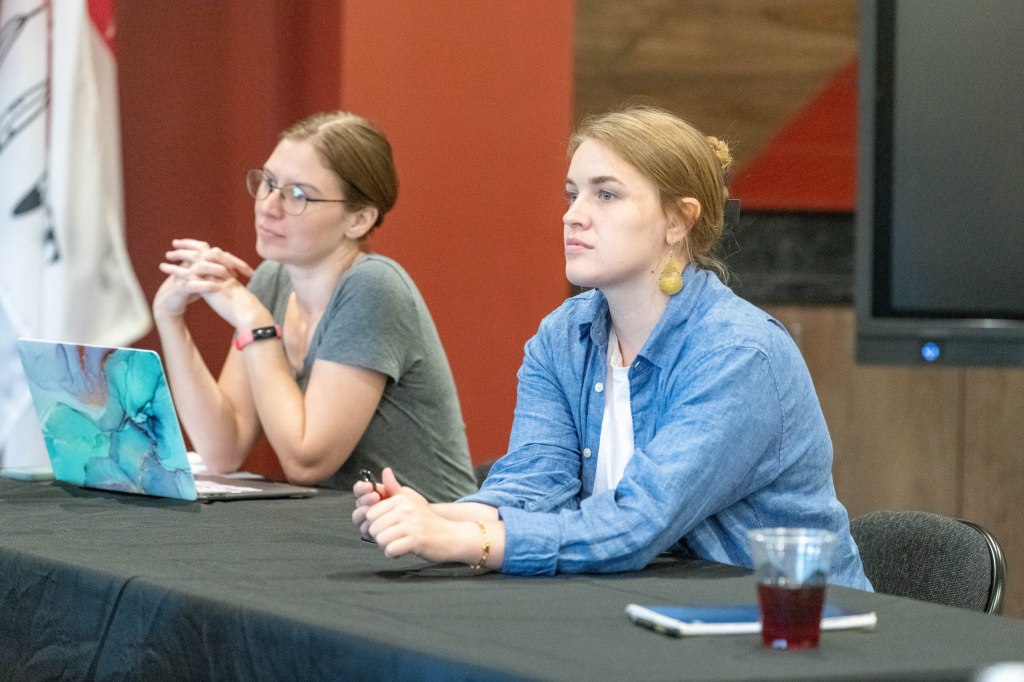
This summer, historian Madison Bastress successfully defended her dissertation, “Sustaining Lands: Enduring Myaamia Connections to Place, 1600-1702,” and completed her two years as a visiting scholar at the Myaamia Center.

Madison was previously profiled on this blog back in October of 2023 when she was just beginning her residency at the Center. Over the intervening two years, Madison conducted countless hours of research into the history of Myaamia people. As a visiting scholar, Madison was able to connect directly with the staff of the Myaamia Center and thereby ethically include Myaamia language and culture into her historical work. As a non-Native scholar, Madison always carried herself with the utmost respect for the sovereignty of the Miami Tribe of Oklahoma. Madison was also an active member of the community on campus. She helped with student activities and engaged deeply and meaningfully with the Aancitaahkia graduate students in their shared office.
For those unfamiliar with advanced academic degrees, a dissertation is a lengthy, in-depth scholarly writing that reflects time-intensive investigation of an original question or topic relevant to the researcher’s area of study. Madison’s dissertation was guided by her primary advisor: Dr. Elizabeth Ellis. Liz is a citizen of the Peoria Tribe of Indians of Oklahoma and is considered a great friend and colleague by the Myaamia people working on the Reclaiming Stories Project. Another great friend of this effort, Dr. Robert Morrissey, also participated in reading and commenting on Madison’s work. I was also lucky enough to read and comment on each draft chapter of her dissertation as well as the completed manuscript. It was an honor to work closely with Madison and felt all along that I and other Myaamiaki were learning as much from Madison as she was from us. Her work is a great example of how to work in a community-engaged manner from the very beginning of a project.
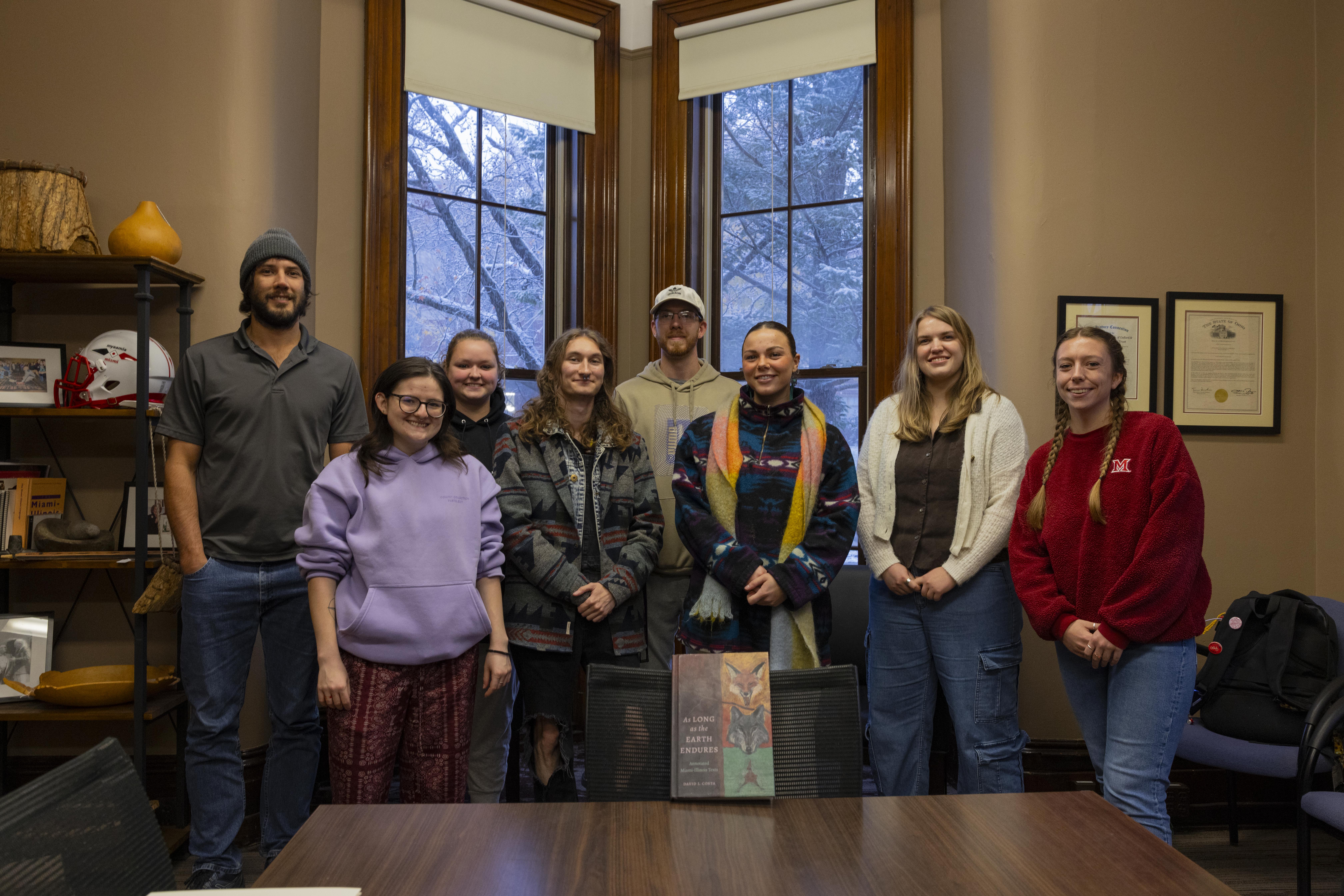
Madison’s dissertation is a wonderfully deep analysis of a very difficult period in Myaamia history. Her research examined how Myaamia people made, maintained, and remade connections to Myaamionki ‘Myaamia lands’ during a time that warfare pushed many Myaamiaki to lands that were distant from the core heartlands of the Wabash River Valley. This period of time, often called the Beaver Wars or Fur Trade Wars, was also an era of first encounters with Europeans like the French and the British (read more about that era in this post). Excitingly, Madison’s work finds evidence that Myaamiaki maintained connections with our heartlands through limited residency, hunting, gathering, and the use of controlled burns. In time, I am certain that Madison’s writings will result in a wonderful book that we will be able to wholeheartedly recommend for our community to read.
In July of 2025, I joined together with the rest of Madison’s dissertation committee to participate in two hours of intense discussion of her work, which is called a “defense” in academia. Despite the name, these sessions are usually quite friendly, though mentally engaging and exhausting. It was great to be a part of the process, and quite heartwarming to watch (via Zoom) as Liz Ellis recognized Madison as “Dr. Bastress” for the first time. The next time you see Madison, you too can greet her with “aya aya Dr. Bastress!”
After completing her dissertation, Madison moved to Šikaakonki ‘Chicago’ to take up the position of Director of the D’Arcy McNickle Center for American Indian and Indigenous Studies at the Newberry Library. The Newberry is an excellent institution with a solid track record of engaging with Native nations (see the Indigenous Chicago Project as one example).
We will miss Madison at the Center but are so proud of all that she has accomplished, and we know she will go on to do great things at the Newberry… mayaawi teepi Madison!

 Aacimotaatiiyankwi
Leave a reply to Peepinšihšia (Nate Poyfair) Cancel reply