For nearly three decades, the Myaamia community has gathered in Noošonke Siipionki ‘Miami, Oklahoma’ during the last weekend of January for the Miami Tribe’s Winter Gathering event. This year, the two-day event, held on January 30-31, 2026, brought Myaamia people together to celebrate culture and learn important updates within the community.
In addition to participating in Stomp Dances and listening to Winter Stories, tribal leadership shared information about the return of an 18th-century quillworked bag that once belonged to Akima Mihšihkinaakwa ‘Chief Little Turtle’, the Tribe’s developing relationship with Strawtown Koteewi Park in Indiana, and the 25th anniversary of the Myaamia Center at Miami University.
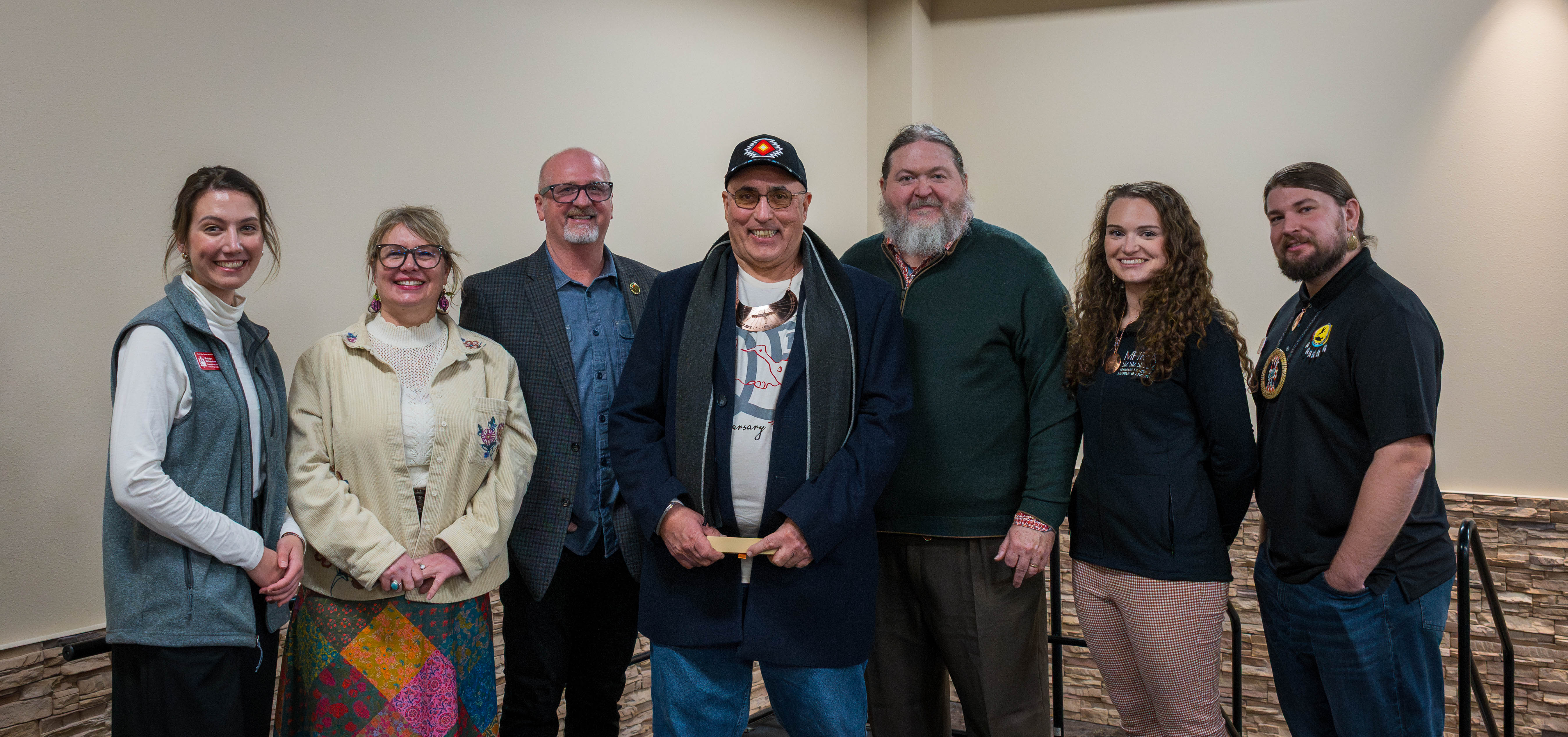
Before dinner and storytelling on Friday evening, leadership and staff from the Miami Tribe were joined on stage by representatives from Fort Orange Club, a country club in Albany, New York. This club had been in possession of an 18th-century quilled bag, once belonging to Mihšihkinaakwa.
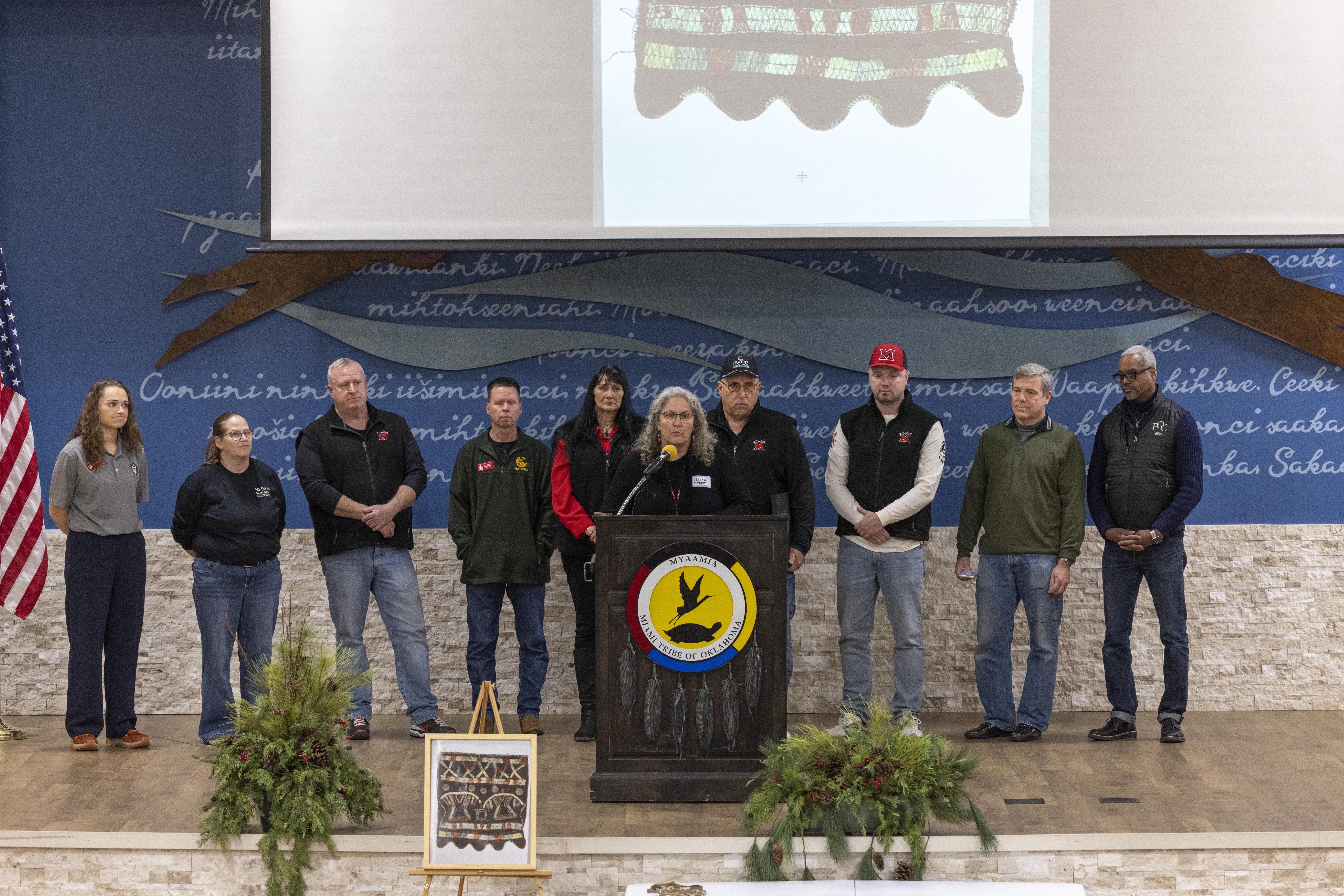
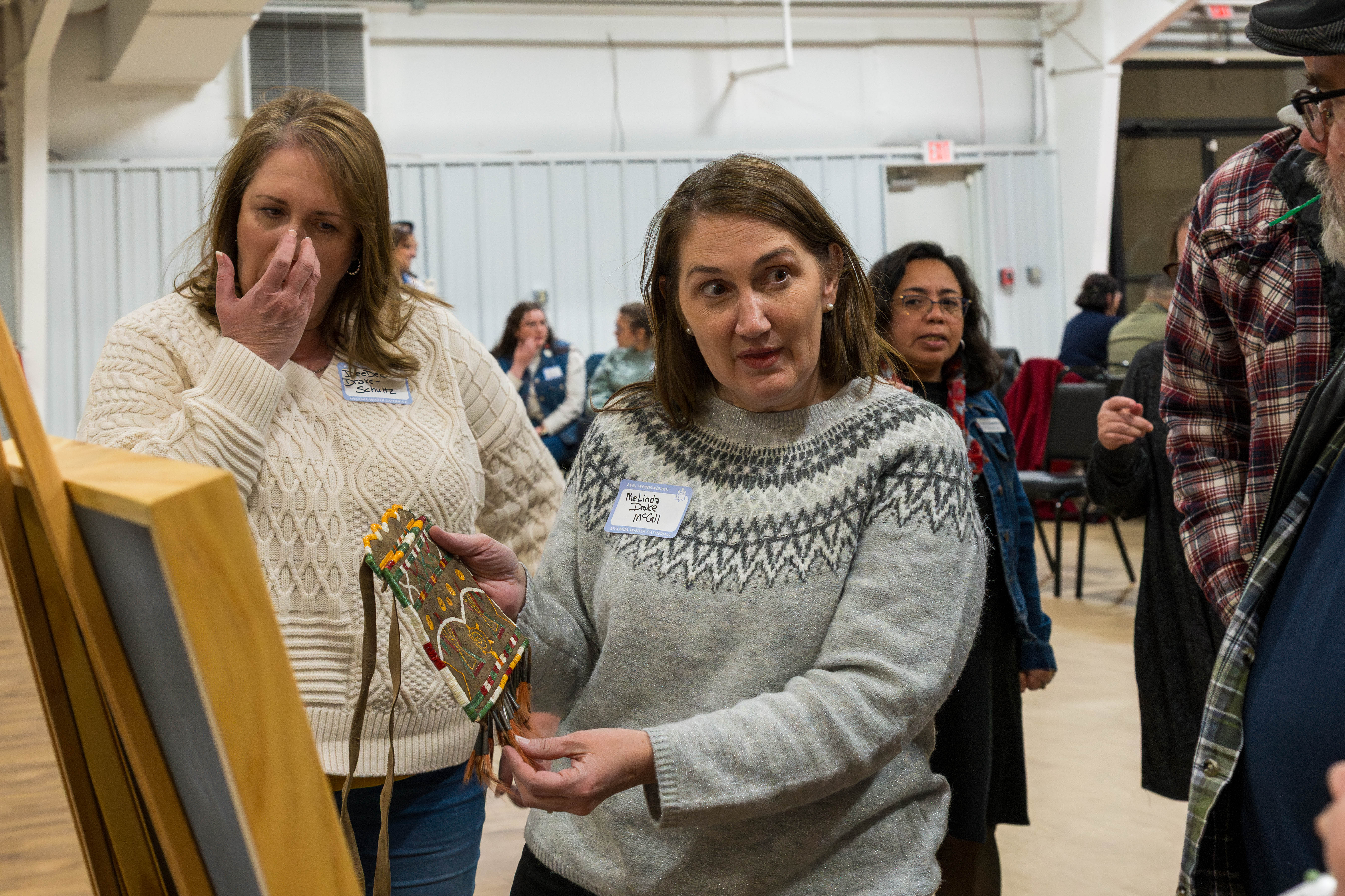
While the club is unsure when or how they came to possess this bag, their leadership made the important decision to return it to its rightful owners, the Miami Tribe, in recent years. The bag is now being stored in the Miami Tribe’s National Archive in Miami, Oklahoma, while it is prepped for display in the Myaamia Heritage Museum.
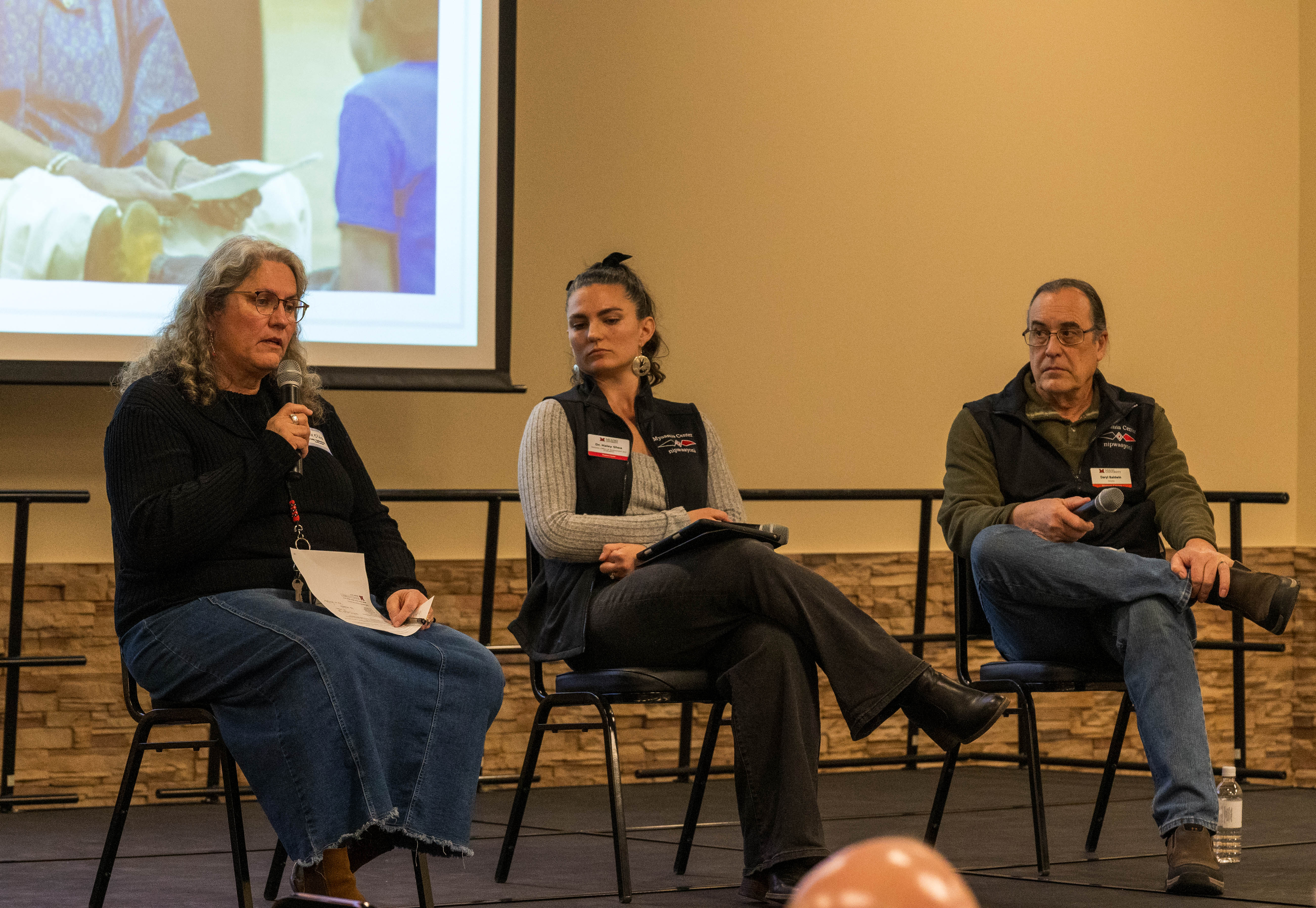
This year also marks the 25th Anniversary of the Myaamia Center at Miami University. Daryl Baldwin, executive director of the Center, kicked off the celebrations during the gathering by sharing plans for a major capital campaign to expand and renovate the Center’s home in Oxford, Ohio.
Following Daryl’s announcement, historian Cameron Shriver shared insights on Myaamia education he found while researching for the new book, Our People Believe in Education: the Unlikely Alliance of the Miami Tribe and Miami University. A panel featuring Julie Olds, Haley Shea, and Daryl Baldwin reflected on how the “unlikely alliance” between the Tribe and the University has transformed from a small research project into a cornerstone of the Tribe’s cultural revitalization work.
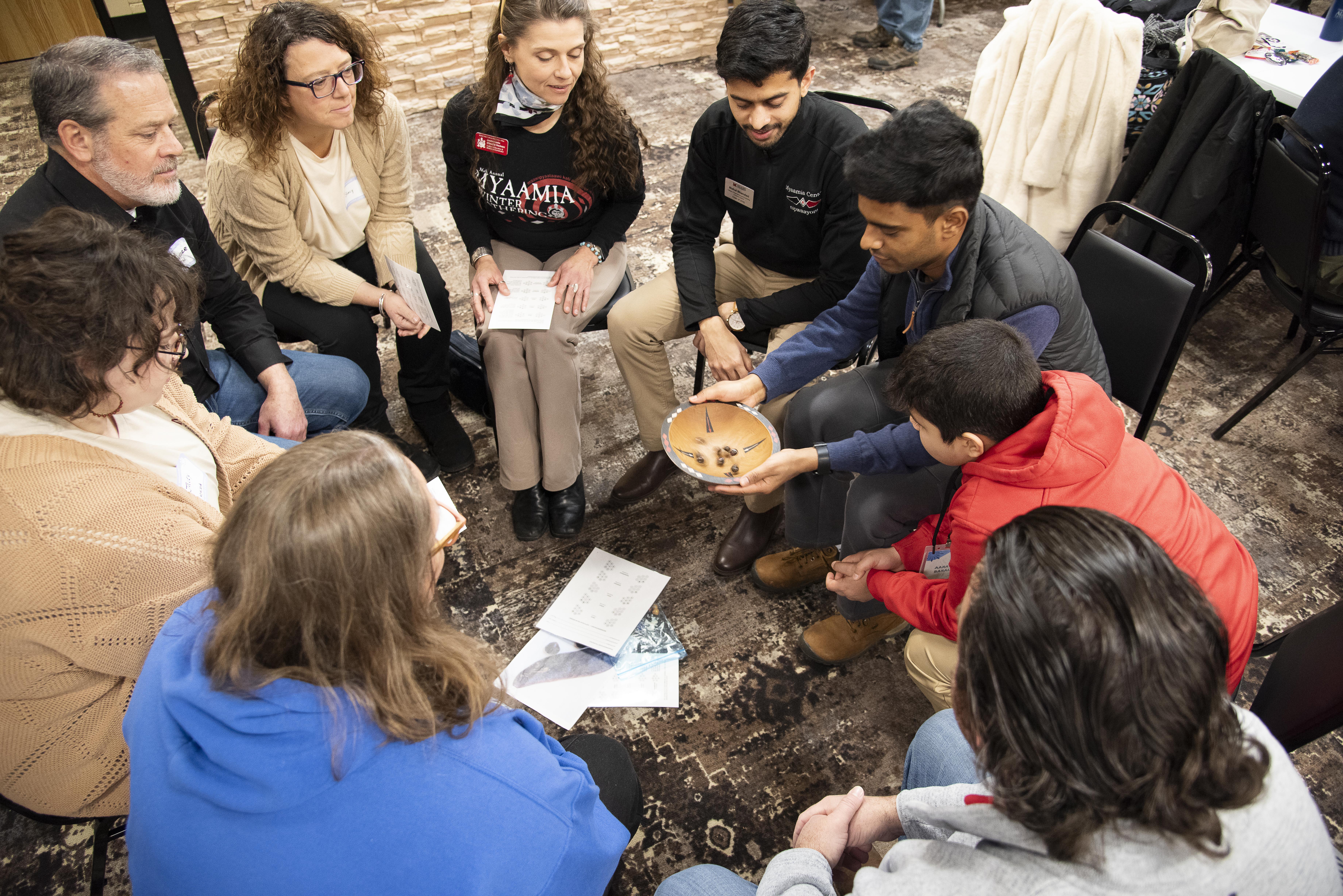
On Saturday, community members received an update regarding Strawtown Koteewi Park in Indiana, a nearly 800-acre park that was once home to a Myaamia village. For 10 years, thousands of ancestral graves and funerary items buried on this land were disturbed without Tribal consultation.
In 2012, the Miami Tribe of Oklahoma, along with the Shawnee and Eastern Shawnee Tribes, filed federal complaints with the National Parks Service, which oversees the Native American Graves Protection and Repatriation Act (NAGPRA). This forced the organization to repatriate the funerary objects and ancestral remains as well as pay a federal fine. The immeasurable harm caused by this disturbance led to very little engagement and communication between the Tribe and the park for many years.
Since 2024, the Tribe has been working with new leadership at the park to mend this fractured relationship. What was once a site of harm and mismanagement is being transformed through an intentional collaboration led by the Cultural Resources Office.
The team is in the process of installing interpretive signage that will welcome visitors to the park, introduce the Miami Tribe, incorporate the Myaamia lunar calendar to help visitors recognize and learn from seasonal ecological knowledge, and share the history of Myaamia prairie burn practices. While the history of this relationship is heavy, park leadership assured the Tribe that they are taking these steps to ensure that the Myaamia homelands are spaces where Myaamia people feel a sense of belonging and pride.
Cultural activities throughout the weekend included the Winter Storytelling event on Friday night and a Stomp and Social Dance on Saturday night.
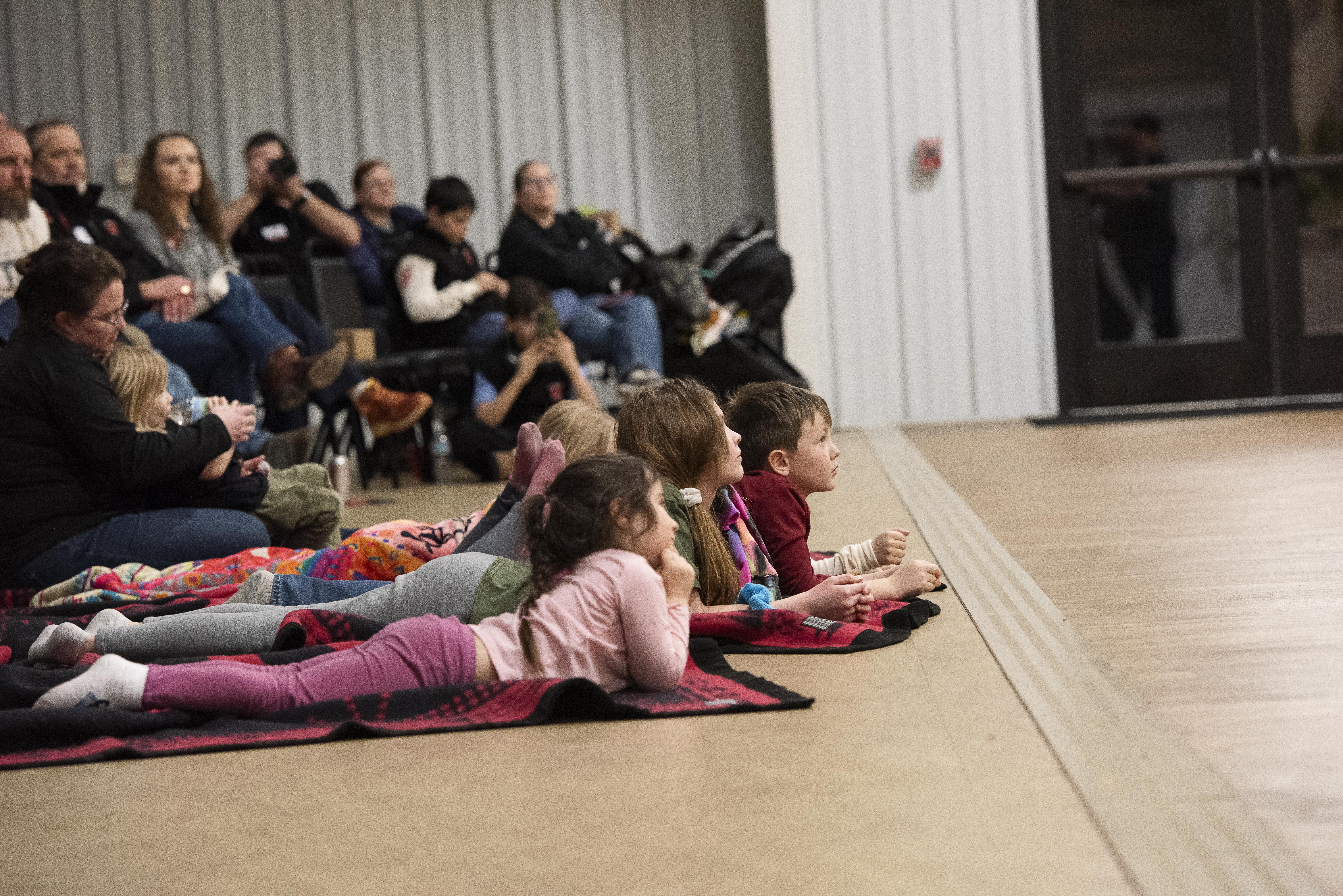
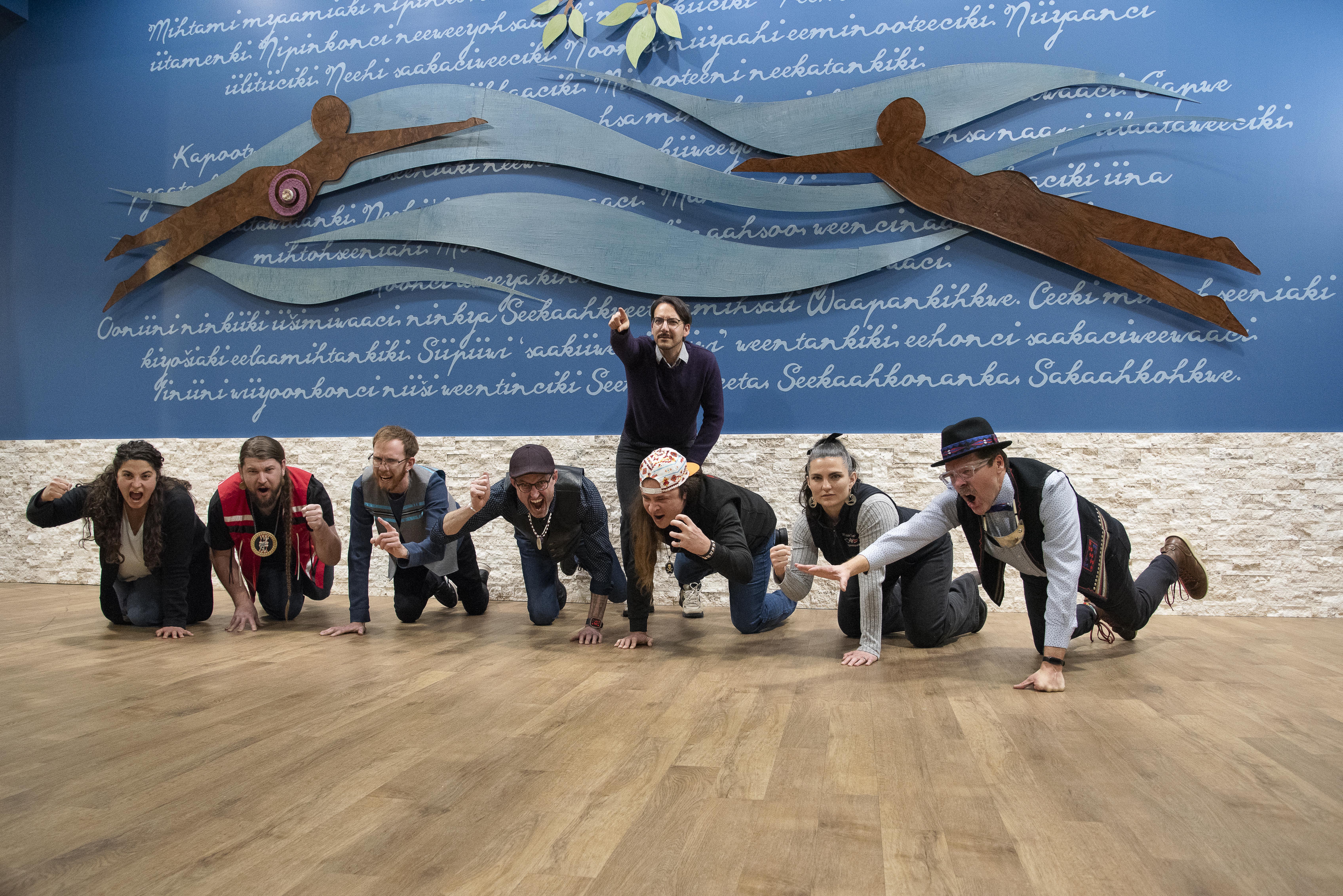
Hearing aalhsoohkaana ‘Winter Stories’ is a highlight of the weekend, as these stories can only be told in the wintertime, and often involve beings that are treated with special respect by Myaamia people. Eight stories were shared with the large crowd, some being told in both Myaamiaataweenki ‘the Miami language’ and English.
The final event of the weekend occurred on Saturday, January 30th, when the community gathered at the Miami Tribe’s Council House for Stomp and Social Dances. The event opened with a gourd dance before dinner was provided by the Miami Tribe. Stomp and social dances began after dinner and carried on until about 1 a.m. The event was hosted by the Miami Tribe, but shakers and callers from different Tribal nations, including the Wyandot, Shawnee, Absentee Shawnee, Seneca-Cayuga, Euchee, and others, joined us to lead their own songs and dances.
Mihši neewe ‘thank you so much’ to the countless individuals and teams who led the dances, shared stories, cooked meals, and planned arrangements for this weekend. We can’t wait to gather in Noošonke Siipionki again!
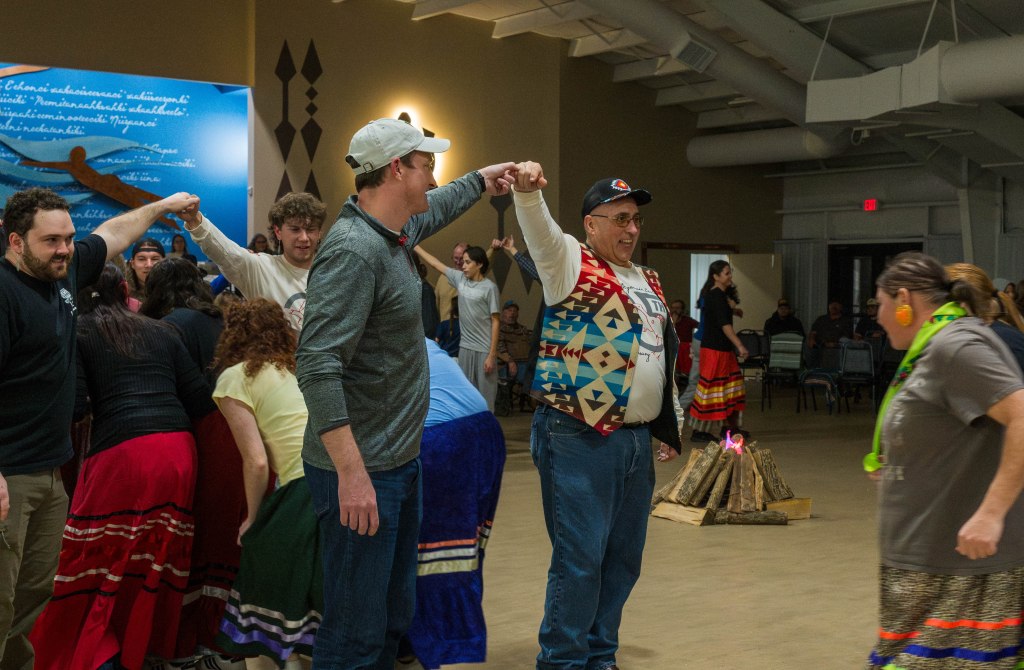
Myaamia community members enjoy Stomp and Social Dances. Photos by Doug Peconge, Miami Tribe of Oklahoma. 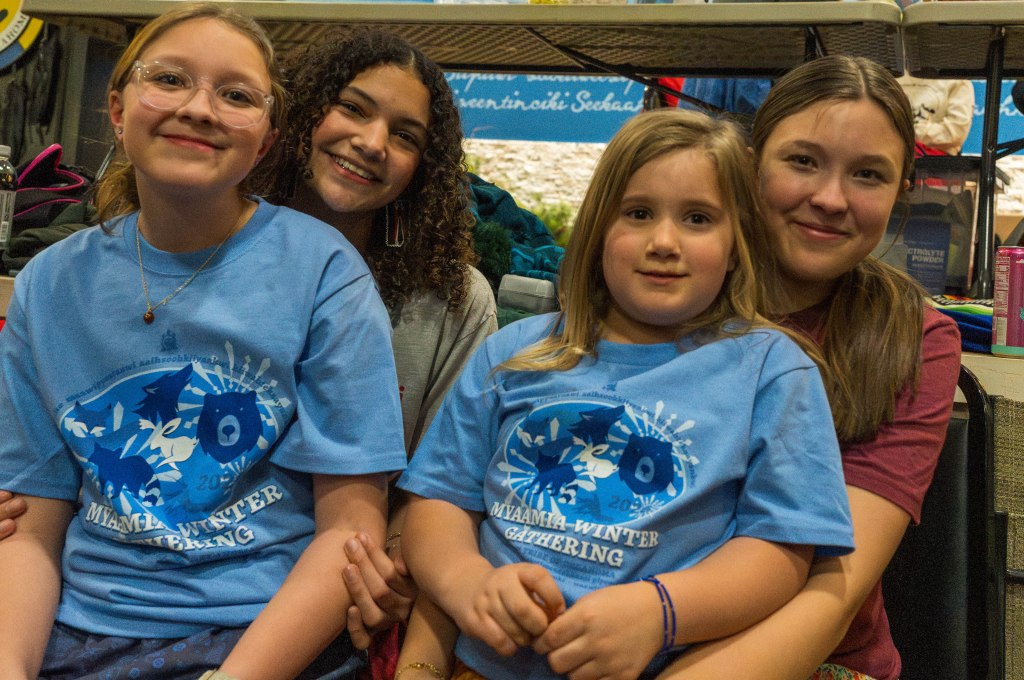
Myaamia community members enjoy Stomp and Social Dances. Photos by Doug Peconge, Miami Tribe of Oklahoma. 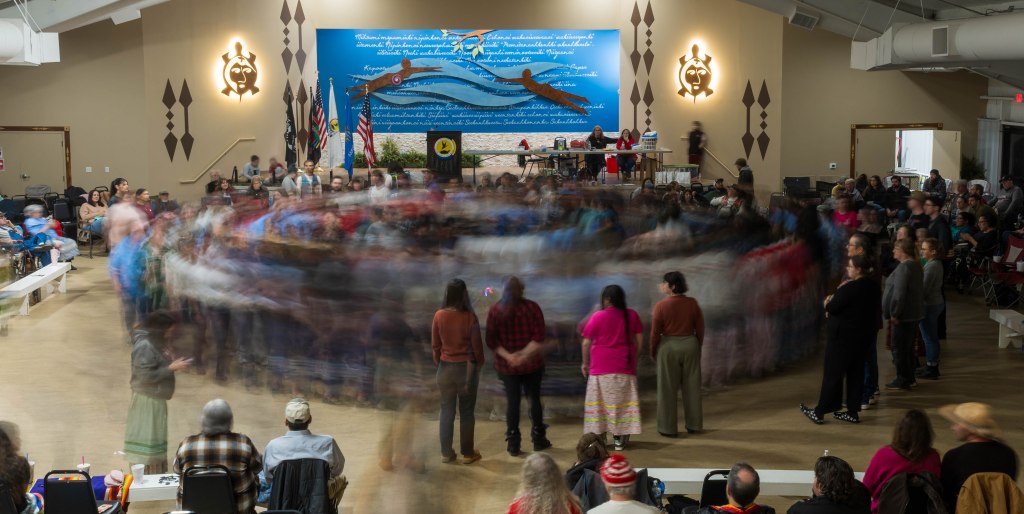
Myaamia community members enjoy Stomp and Social Dances. Photos by Doug Peconge, Miami Tribe of Oklahoma.


 Aacimotaatiiyankwi
Leave a comment