Written by: Tina Fox and Stella Beerman
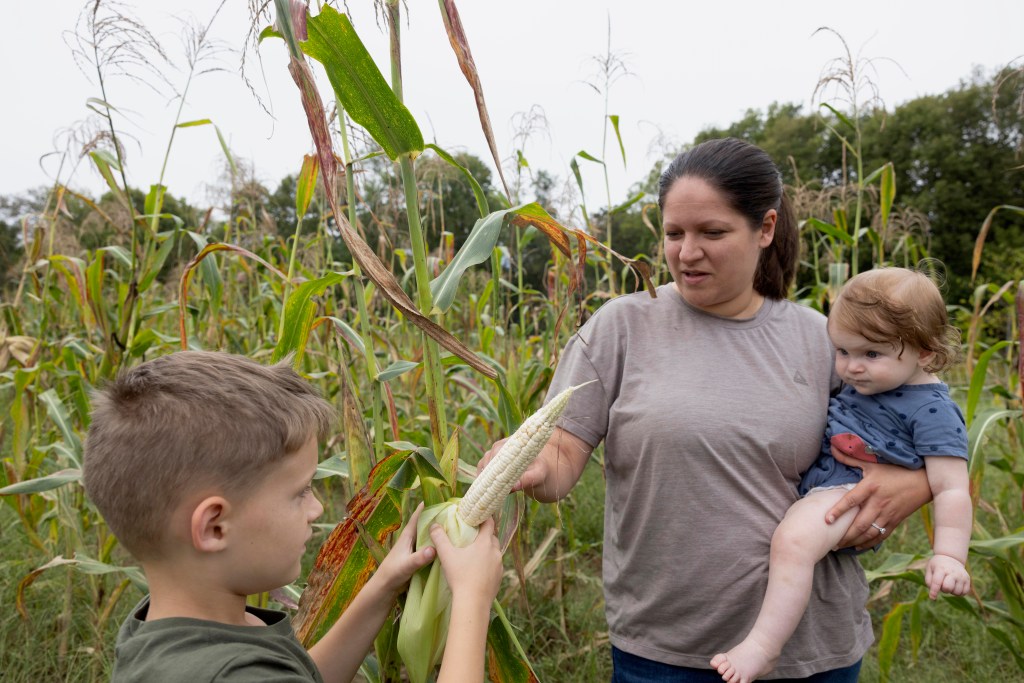
As neepinwiki ‘summer’ transitions into peepoonki ‘winter’, Myaamiaki ‘Myaamia people’ are harvesting miincipi ‘corn’ and closing their gardens for the year.
Planting and caring for miincipi has been practiced by Myaamiaki for generations. This is reflected in the lunar calendar system, with the month Kiišiinkwia Kiilhswa ‘Green Corn Moon’ named for a specific stage of growth, and three other months with strong ecological connections to miincipi.
A historical French record from 1718 states that the Myaamia “raise a kind of Indian corn which is unlike that of our tribes at Detroit. Their corn is white, of the same size as the other, with much finer husks and much whiter flour.” This unique Myaamia miincipi is the same species we still care for today.
While the knowledge and practice of caring for miincipi had been set down for a period of time in the Myaamia community, we are now able to impart it to a younger generation once again.
This season, the Myaamia Center (Oxford, Ohio) and the Cultural Resource Extension Office (Ft. Wayne, Indiana) each planted and maintained their own miincipahka ‘cornfields’ with the help of the Myaamia community. My (Tina) children had the opportunity to work in both of the miincipahka ‘cornfields’.
At Peehkahkionki, home of the Cultural Resource Extension Office, the garden provides an opportunity to learn about sowing and caring for plants. Community Food Director Dani Tippmann also uses the produce to teach how to prepare the plants for meals and storage.
“It’s so important to have received that cultural knowledge from my mother and her sisters and to be able to see it living and passed on…It connects us to the past and on into the future,” Dani said. If you join one of her activities at a community event, you’ll find her surrounded by people of all ages, from toddlers (my 4-year-old loves to join in) all the way to adults.
The garden is planted and cared for by CREO staff and community volunteers. This year’s garden included a large amount of corn, but the growing season was rough, and the local moohsooki ‘white-tailed deer’ helped themselves to a lot of it. Typically, the corn would be sorted into seed stock (Dani is confident in having a solid stock to try again next year!) and corn to process for eating.
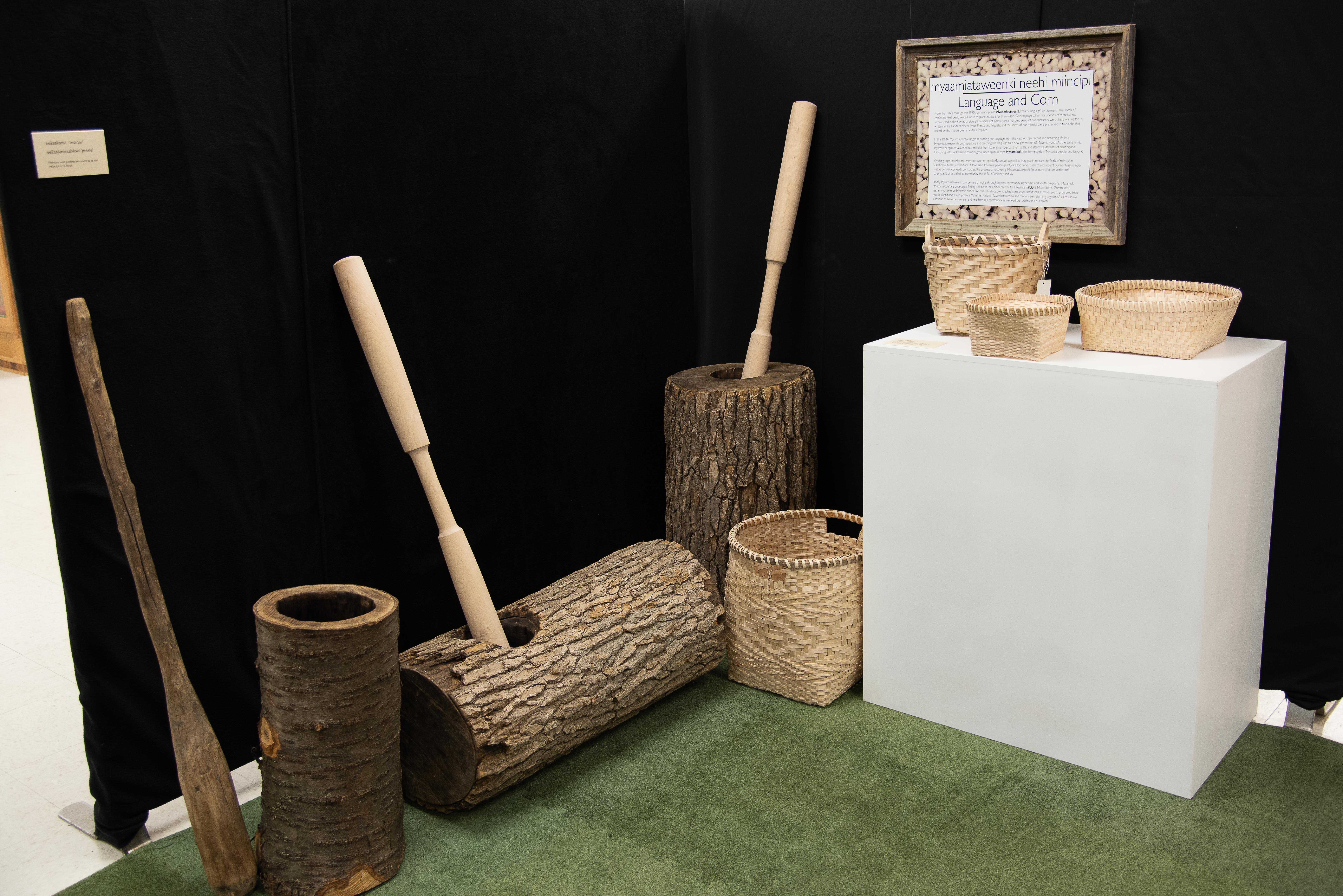
Since Myaamia miincipi is considered a flour corn, it would not be eaten off the cob. Instead, it would be processed into hominy and then ground into flour and used as an ingredient in other dishes. Today, it could be an alternative to cornmeal or masa and, for gluten-free folks, can be a flour substitute in cake recipes. Miincipi can also be turned into hominy, which is a favored ingredient in Myaamia recipes. (Check out the nahi miiciona, nahi weehsininki ‘Proper Foods, Proper Diet’ recipe collection on Šaapohkaayoni to access recipes and learn about Myaamia foods!) I know my family enjoys a good hominy soup on chilly days.
After learning about planting from Dani, my daughter joined a group in Oxford to plant a small plot of miincipi. My children joined our colleague Kayla Becker’s family to care for the miincipahki and photograph the process. This work will eventually become a photobook about miincipi for the Tribal community.
For Kayla, it’s been heartwarming to pass the knowledge to her children and maintain that connection to our ancestors. She has loved seeing her older children teach what they have learned on to their baby sister at home with a garden play set.
“Many times I’ve heard them tell her they are teaching her how to grow miincipi and then they walk her through the steps. It is beautiful to see that they truly tried to absorb what they learned in the fields,” Kayla said.
Sarah Dumyahn, Assistant Teaching Professor in the Institute for the Environment and Sustainability at Miami University, was a huge help with the Oxford miincipahki, as the growing season is also the busiest travel season for Myaamiaki in Oxford. The corn in this miincipahki also had a rough growing season and was frequently enjoyed by the local wildlife. However, we were able to harvest some seed stock and cobs to use as teaching examples.
I asked my daughter about her experiences this season and two things kept coming up in her responses: spending time with others and learning about growing miincipi. She has loved learning from Dani and spending time with her peers in the fields, especially taking time to play between tasks. Most of what I know about caring for miincipi has come from my daughter, and she says it’s important to learn so we can pass it on to others.
While we may not be able to enjoy eating much miincipi from this particular harvest, this season was a great learning opportunity for young Myaamiaki, and we look forward to continuing to care for miincipi together well into the future.
Check out related content on Aacimohtaatiiyankwi:
Additional Credits:
Featured Photo by Jonathan Fox, Myaamia Center.


Leave a Reply